
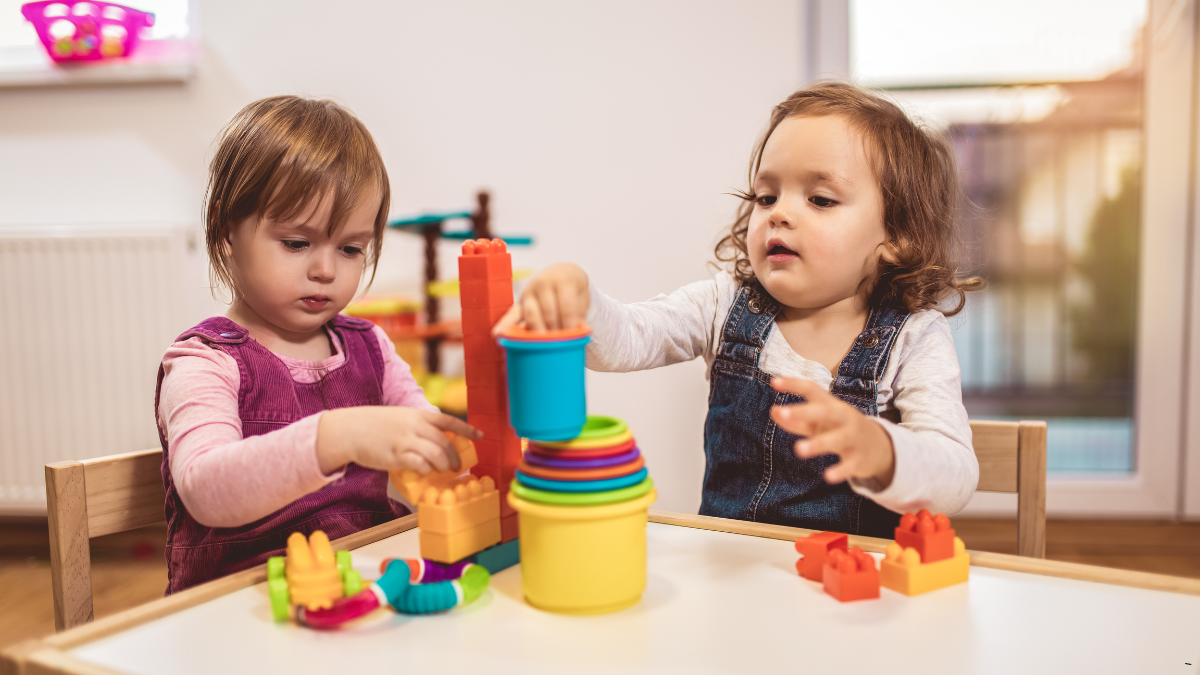
Montessori-inspired activities give preschoolers a chance to learn by doing, and that works especially well between ages 3 and 5. At this stage, children are eager to pour, sort, build, and copy real-life tasks, so simple hands-on play can grow independence, focus, coordination, confidence, and everyday life skills at the same time.
The best part is that you don’t need fancy materials to make it work. A tray, a spoon, dry pasta, or a small pitcher can turn into meaningful learning, and many of these ideas fit right into family routines like snack prep, cleanup, and quiet playtime. If you want more age-based ideas that fit naturally into home life, these activity ideas for preschoolers are a helpful place to start.
Below, you’ll find simple Montessori-inspired activities that are practical, calm, and easy to set up at home. They’re designed to help your preschooler learn through real movement, real tasks, and real independence.
Why Montessori activities fit preschoolers so well
Preschoolers are built for hands-on learning. They want to touch, sort, carry, pour, and repeat, and Montessori activities match that energy with purpose instead of noise.
That fit matters because young children learn best when their hands, eyes, and attention work together. They also do well with clear limits and simple choices, which is why Montessori feels calm, steady, and natural at home. Research on Montessori learning for ages 3 to 5 points to gains in coordination, executive function, and early reading skills, especially when children work with real materials and simple routines.
What makes these activities different from regular play
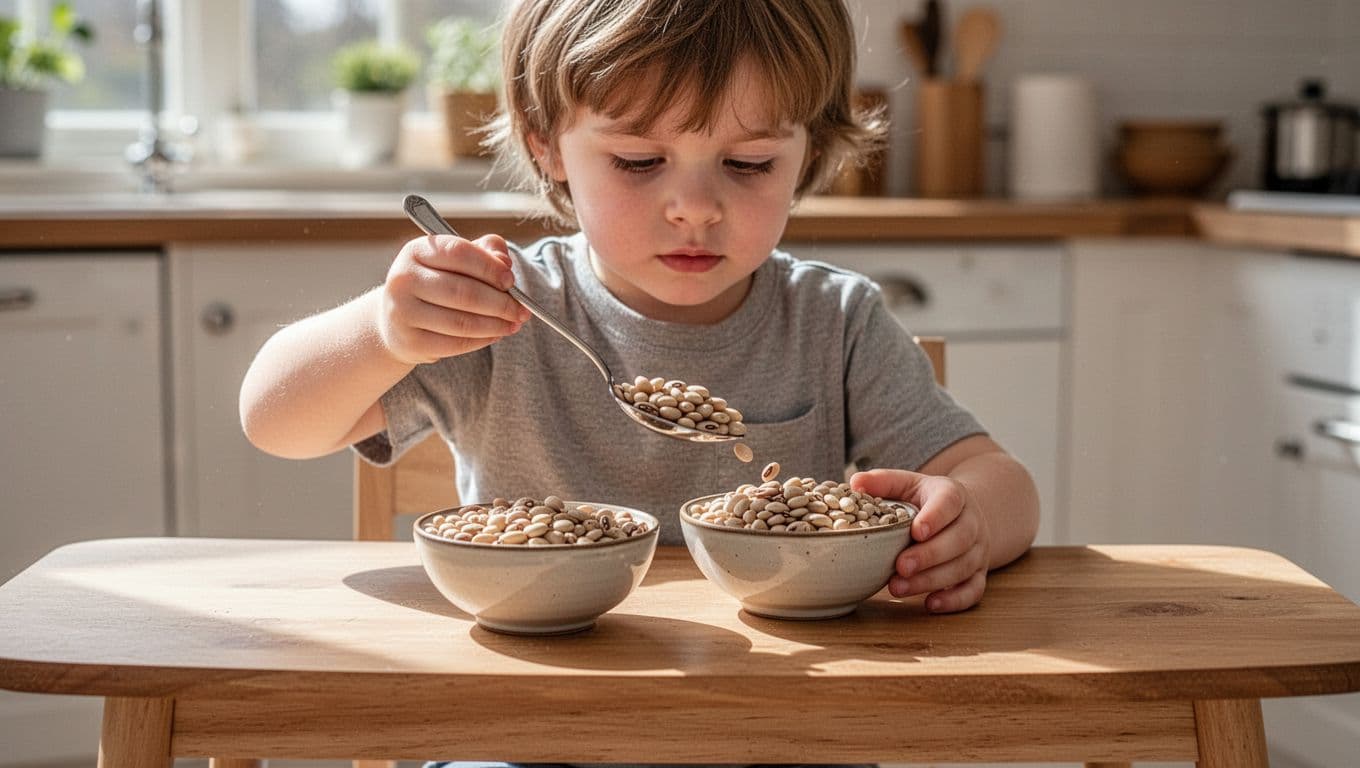
Regular play with toys is often open-ended, which is great in its own way. Montessori-inspired activities are more intentional. A child might transfer beans with a spoon, match lids to containers, or wash a table, and each task has a clear goal.
The difference is the purpose. Instead of just keeping a child busy, the activity teaches a real skill they can use again. That might be toddler sensory bins with household items or a simple pouring tray, but the child is doing the work independently.
The goal is practice, not perfection.
A spill is part of the lesson. So is trying again. When preschoolers repeat a task, they build confidence the same way they build muscle, one careful attempt at a time.
The skills preschoolers build most at this age
At ages 3 to 5, small tasks carry big value. A child who uses tongs to move pom-poms is strengthening fine motor control. A child who pours water from a pitcher is practicing hand-eye coordination and control.
These activities also support concentration. When a preschooler finishes a sorting tray or lines up objects in order, they learn to stay with a task. That same habit helps later with puzzles, drawing, and early writing.
Montessori work also grows language. Children hear and use words for size, texture, color, position, and sequence. A child who says “full,” “empty,” “heavy,” or “next” is building practical vocabulary in a real setting.
Most of all, these activities build independence. Preschoolers love doing things for themselves, whether that means buttoning a shirt, cleaning a spill, or setting out snack plates. Freedom within limits gives them room to try, and that practice turns into confidence.
Set up your home for easy Montessori-style play
A good Montessori setup does not need a special room or a lot of new purchases. It needs a space that children can reach, understand, and use without constant help.
When the area feels simple and ordered, preschoolers can pick an activity, complete it, and return it on their own. That kind of setup supports independence before the first toy even comes out.
Choose simple materials that invite real work
The best Montessori materials are often already in your kitchen or craft drawer. Small bowls, spoons, pitchers, cloths, tongs, puzzles, baskets, and art supplies all give preschoolers a clear job to do.
These everyday items work because they feel real. A child can pour water from a small pitcher, move beans with a spoon, wipe a table with a cloth, or sort crayons into a basket. Each task uses the hands in a purposeful way, and that keeps the activity meaningful.
You do not need a shelf full of specialty toys. In many homes, a few practical items are enough to build a strong routine. If you want more ideas for arranging kid-friendly spaces, practical home organization for kids’ materials can help you shape the area around daily use.
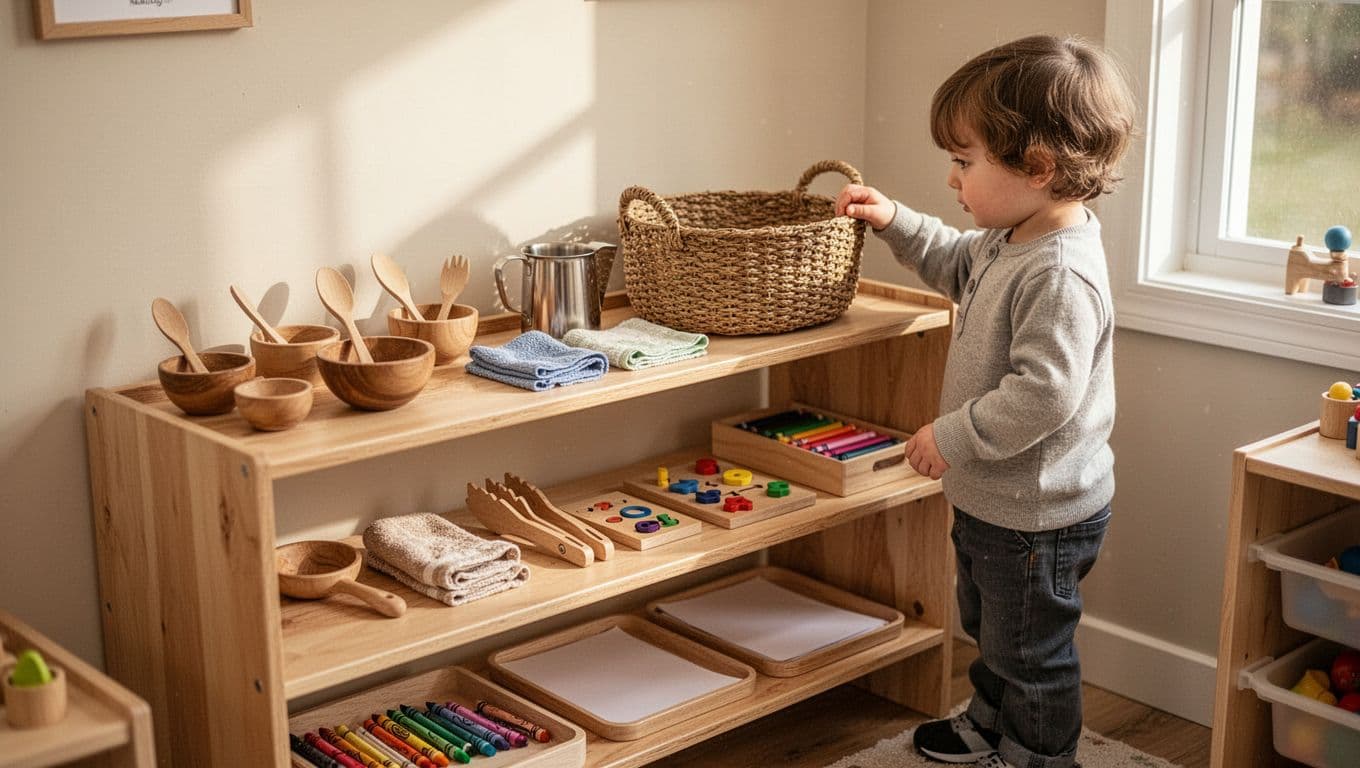
A simple rule helps here, keep only what your child can use well. A tray with one puzzle, a basket with cloths, or a caddy with crayons and paper gives just enough choice without turning the space into a jumble.
Keep the activity area calm and easy to use
A calm play area helps preschoolers focus longer and feel less overwhelmed. Too many toys, too much visual clutter, or crowded shelves can pull their attention in every direction.
Start by reducing what sits out. Rotate materials instead of displaying everything at once, and present only a few choices on the shelf. That way, each activity has room to breathe, and cleanup stays manageable.
Open shelves work well because children can see what belongs where. Low shelves, child-sized tables, and a clear floor mat also make the space easier to use. If you need a helpful model for simple, child-friendly setup ideas, organizing cubbies near the entryway shows the same idea of easy access and clear homes for each item.
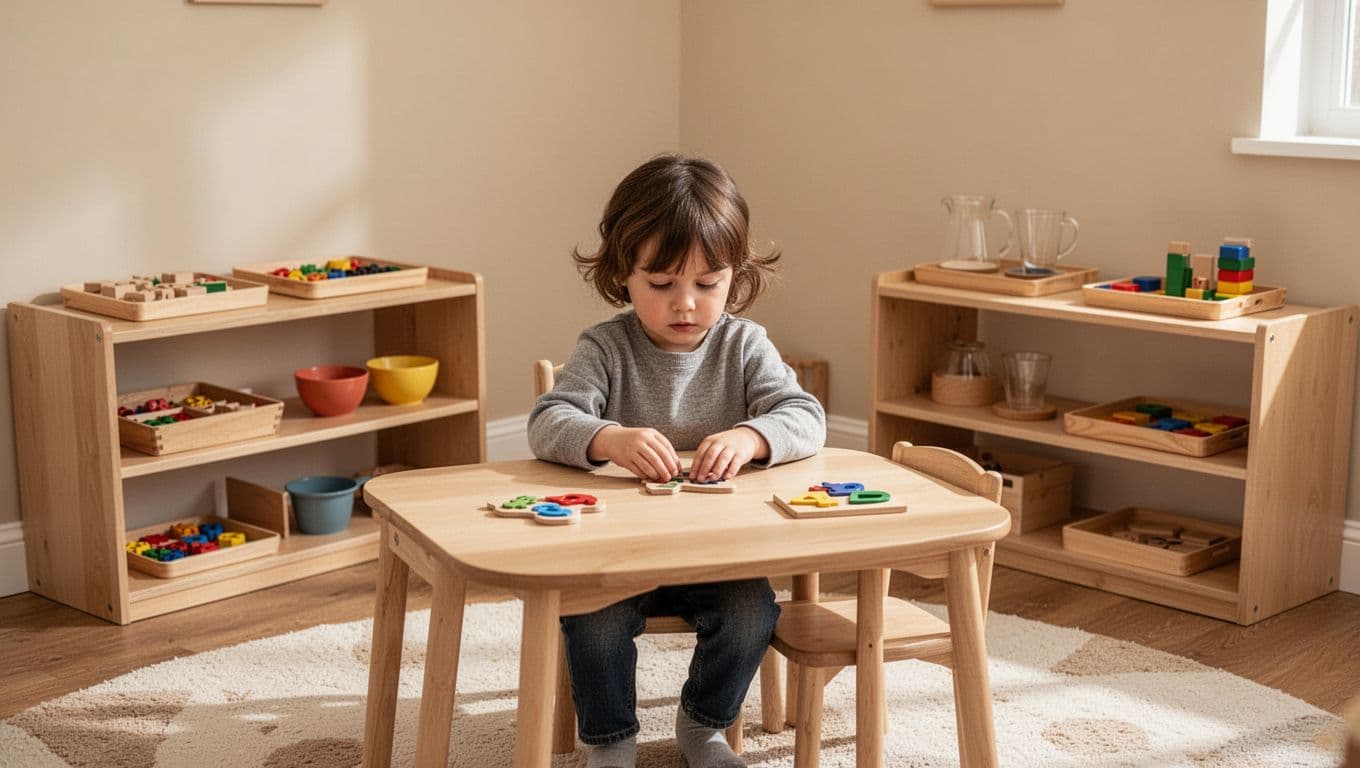
When everything has a place, children can choose, use, and clean up activities on their own. That simple order turns the play area into a calm little work space, which is exactly what preschoolers need at home.
Practical life activities that build independence every day
Practical life is where Montessori really feels useful at home. These are the jobs preschoolers love most because they look and feel like real life, not busywork. When a child helps in ways that matter, they build confidence one small task at a time.
The best part is that these activities fit right into the day. You can use snack time, cleanup time, watering time, or meal prep as natural practice moments. Small, repeatable tasks also teach patience, order, and follow-through, which are skills children use far beyond the kitchen or playroom.
Pouring, spooning, and transferring small items
Start with a simple tray, two small bowls, and a spoon. Dry beans, rice, water, pom-poms, or tongs all work well, and each option gives a different kind of challenge. A preschooler can move beans with a spoon, pour water between cups, or transfer cotton balls with tongs.
These movements may look simple, but they do a lot. They strengthen hand control, eye-hand coordination, and concentration. They also teach children to slow down and keep trying when a spill happens.
A good rule is to begin with the easiest version first. Use large items and wide containers, then move to smaller materials, narrower cups, or tools like child-size tongs. That slow increase keeps the activity calm and successful.
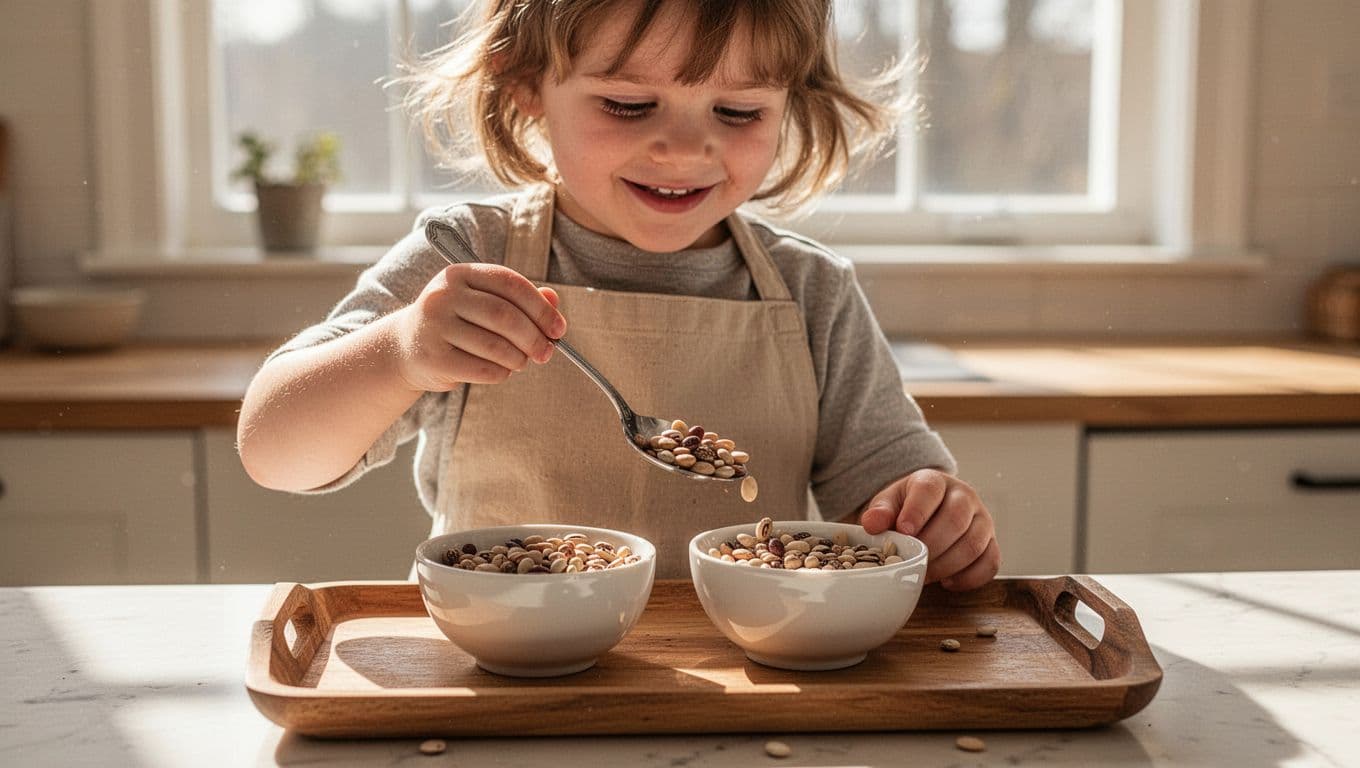
Start easy, then make the task a little harder only after your child feels steady.
If you want more ideas that fit everyday snack prep, finger foods that support independence also build the same self-help habits.
Setting the table and helping with meals
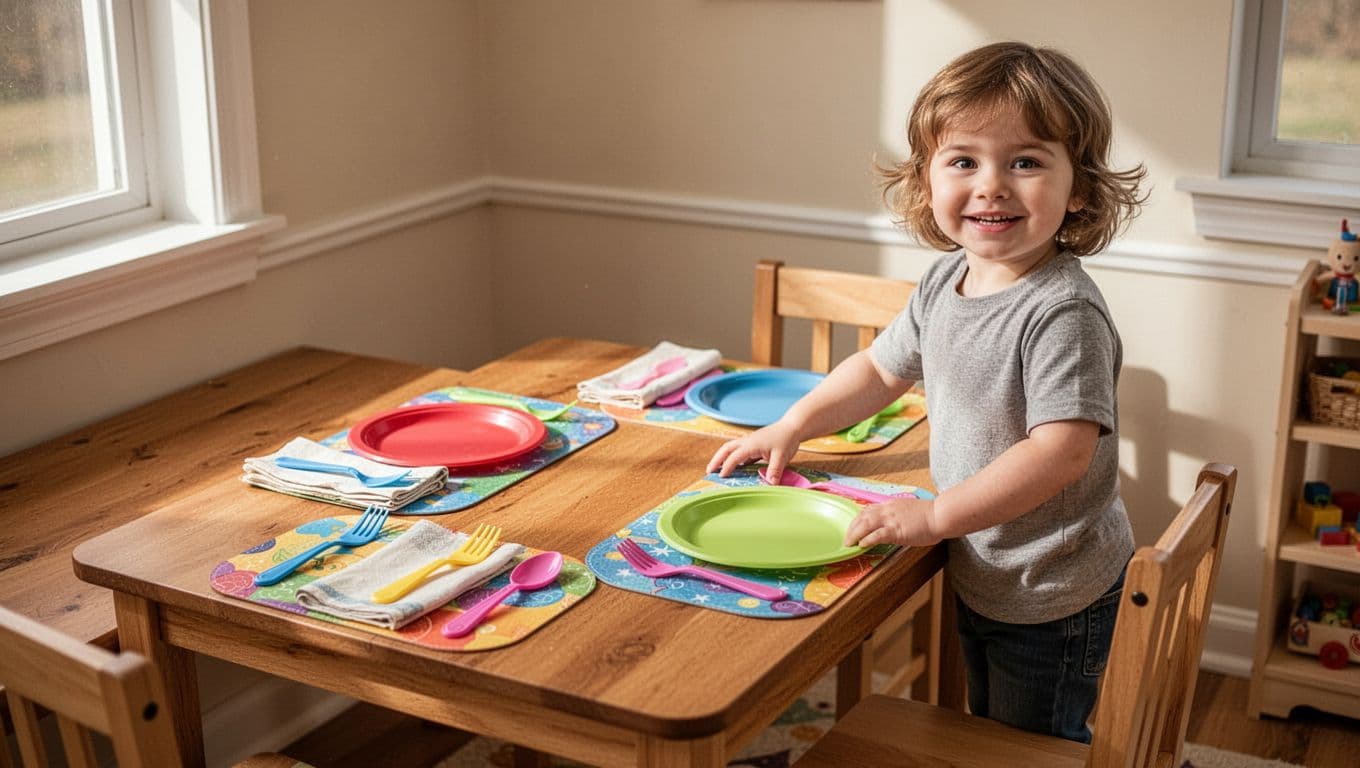
Meal prep gives preschoolers a real role in family life. They can carry napkins, place utensils, sort placemats, wash fruit, or help make simple snacks like crackers and cheese. Even small jobs help them feel included and trusted.
This kind of work teaches sequence, too. First the plates go out, then the cups, then the forks. That order helps young children see that tasks have a beginning, middle, and end.
You can keep it simple with a few repeatable steps:
- Carry napkins to the table.
- Place spoons or forks beside each plate.
- Match placemats to each seat.
- Help set out snack items in small bowls.
The goal is participation, not perfection. A preschooler who helps set the table is learning responsibility in a way that feels natural.
Cleaning up, washing, and caring for the home
Children often enjoy cleanup when the job fits their size. A small cloth, mini broom, spray bottle, or child-safe sponge can turn messes into useful work. Wiping spills, sweeping crumbs, folding cloths, and washing dishes all give preschoolers a clear purpose.
These tasks also build a strong sense of ownership. When children help care for the home, they start to see themselves as part of the household team. That feeling matters, because it makes cooperation feel normal instead of forced.
Montessori practical life activities are built around real work, and that includes caring for the environment. A simple wipe-down after snack or a quick sweep under the table can be enough for a preschooler to practice helpful habits in a meaningful way. For more on this idea, Montessori practical life activities show how daily tasks support independence and coordination.
Keep directions short and clear. Show the motion once, then let your child try. A folded cloth, a little water, and a small job are often enough to keep them engaged.
Caring for plants, pets, or a small pretend farm
Nature care works beautifully in a Montessori-style home. Preschoolers can water a plant with a small pitcher, wipe dusty leaves, or help carry pet food with supervision. These jobs teach responsibility because living things depend on gentle, steady care.
If you have pets, let your child help in small ways. They can refill a water bowl, bring a brush, or help measure food with an adult nearby. If pets are not part of your home, animal figures can still be useful for play and learning.
A pretend farm set gives you room to talk about animal names, sounds, foods, and behavior. A child can sort cows, horses, and sheep, then describe what each one does. That kind of play blends language with practical life thinking, and it keeps the lesson grounded in the real world.
The message stays simple: useful work belongs to children, too. When the task is real, sized for them, and taught step by step, they want to do it again.
Sensory activities that keep preschoolers curious and focused
Sensory play gives preschoolers a calm way to notice details, compare objects, and stay with one task a little longer. It works well at home because you can build these activities with items you already have, like rice, bowls, water, fabric scraps, and color chips.
The key is to keep the setup simple. A preschooler does not need a lot of choices at once, just enough variety to look, touch, sort, and test.
Texture bins, mystery bags, and feel-and-guess games
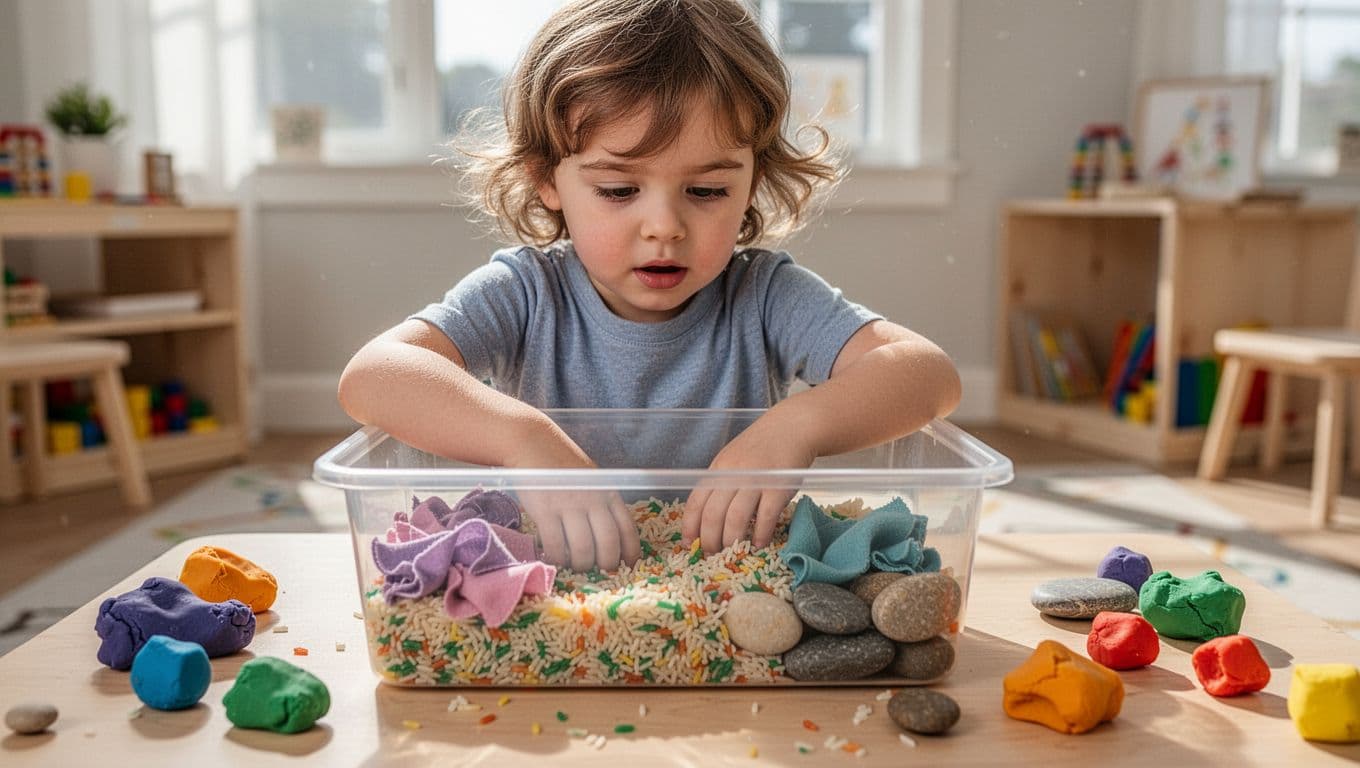
Texture bins are easy to set up with sand, rice, dry pasta, fabric pieces, dough, or small hidden objects. Add a spoon, scoop, or tongs, then let your child dig, pour, and compare what they find. A soft cloth feels different from a rough shell, and that difference gives them language to use.
Mystery bags work the same way with less visual distraction. Place a spoon, pinecone, sponge, or toy car inside a fabric bag, then ask your child to reach in and guess by touch. Words like smooth, bumpy, hard, and squishy start to stick because they match a real feeling.
Use one basket, one texture, and one simple rule. That keeps the activity calm and focused.
You can also name what your child notices while they play. That helps them slow down and observe instead of rushing to the next thing. For more simple texture-based ideas, sensory play ideas for preschoolers gives a helpful starting point.
Water play and sink-or-float experiments
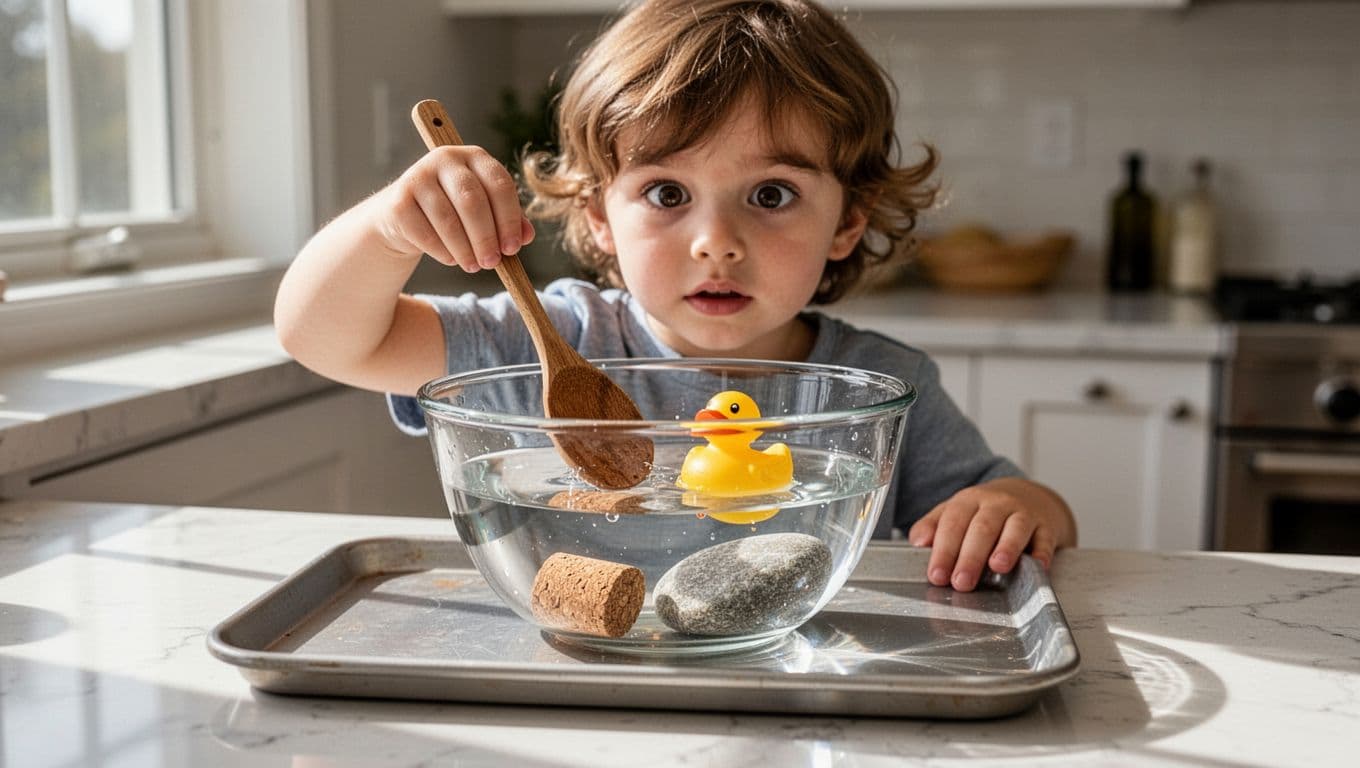
A bowl of water can hold a whole science lesson. Set out everyday items like a spoon, cork, rock, plastic animal, leaf, or block, then ask your child to predict what will happen before each drop.
That quick guess builds early science thinking. After each test, children watch carefully, compare results, and start spotting patterns on their own.
Reusable water boards and shallow trays add even more variety. Preschoolers can trace shapes in water, move floating toys, or use a sponge to soak and squeeze. These simple tasks support hand control and keep attention steady without feeling like work.
Color sorting and matching activities
Preschoolers usually love naming colors, grouping objects, and matching things that belong together. You can use toy cars, bottle caps, crayons, pom-poms, art supplies, or color chips for easy sorting practice.
Start with two or three colors, then add more as your child gets comfortable. Matching socks, sorting blocks by shade, or grouping markers into cups all help children notice details and organize what they see.
Color work also builds vocabulary. As children say “red,” “blue,” “yellow,” or “green,” they are strengthening both language and visual memory.
If you keep the materials mixed but contained, the activity stays interesting without becoming chaotic. That balance is what helps preschoolers stay curious, focused, and ready to try again.
Language, math, and thinking skills through play
Montessori-inspired play can build school-ready skills without turning home into a classroom. When preschoolers listen, sort, match, count, and notice patterns, they practice the same thinking skills used for reading and math later on.
The difference is that it feels natural. Your child learns through real objects, simple conversation, and hands-on work, so the lesson stays light and useful.
Read aloud, talk often, and play word games
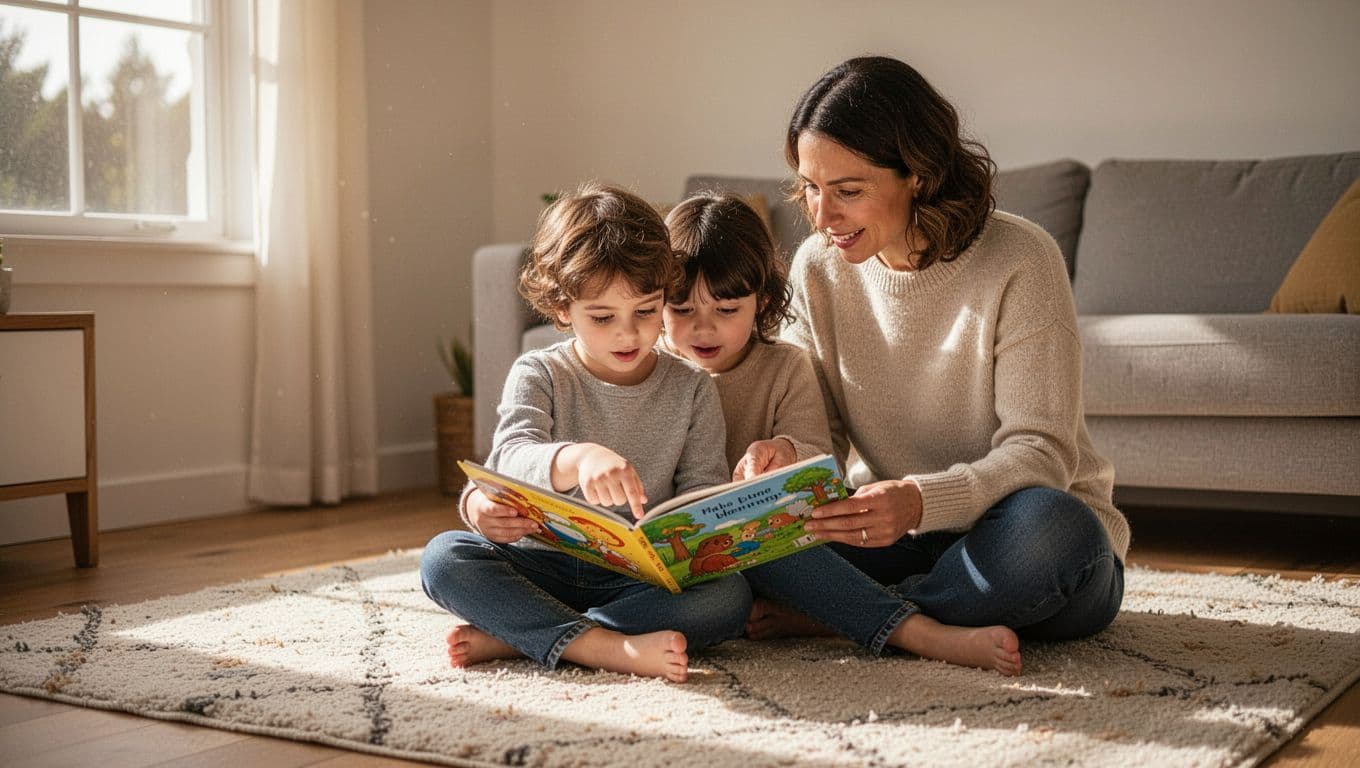
Read together every day, even if it’s only for a few minutes. Pause to name pictures, ask what might happen next, and let your child retell parts of the story in their own words.
Daily talk matters just as much. Name objects on walks, point out signs, and use clear words for size, color, and position. Games like I Spy make listening fun while building attention and vocabulary.
Children learn words best when they hear them in real life, not only in books.
Simple word play also helps preschoolers hear sounds in language. Rhymes, songs, and repeated phrases give them practice with memory and rhythm. For more ideas, Montessori language activities show how object baskets and sound games support early reading.
Puzzles, matching trays, and simple sorting work
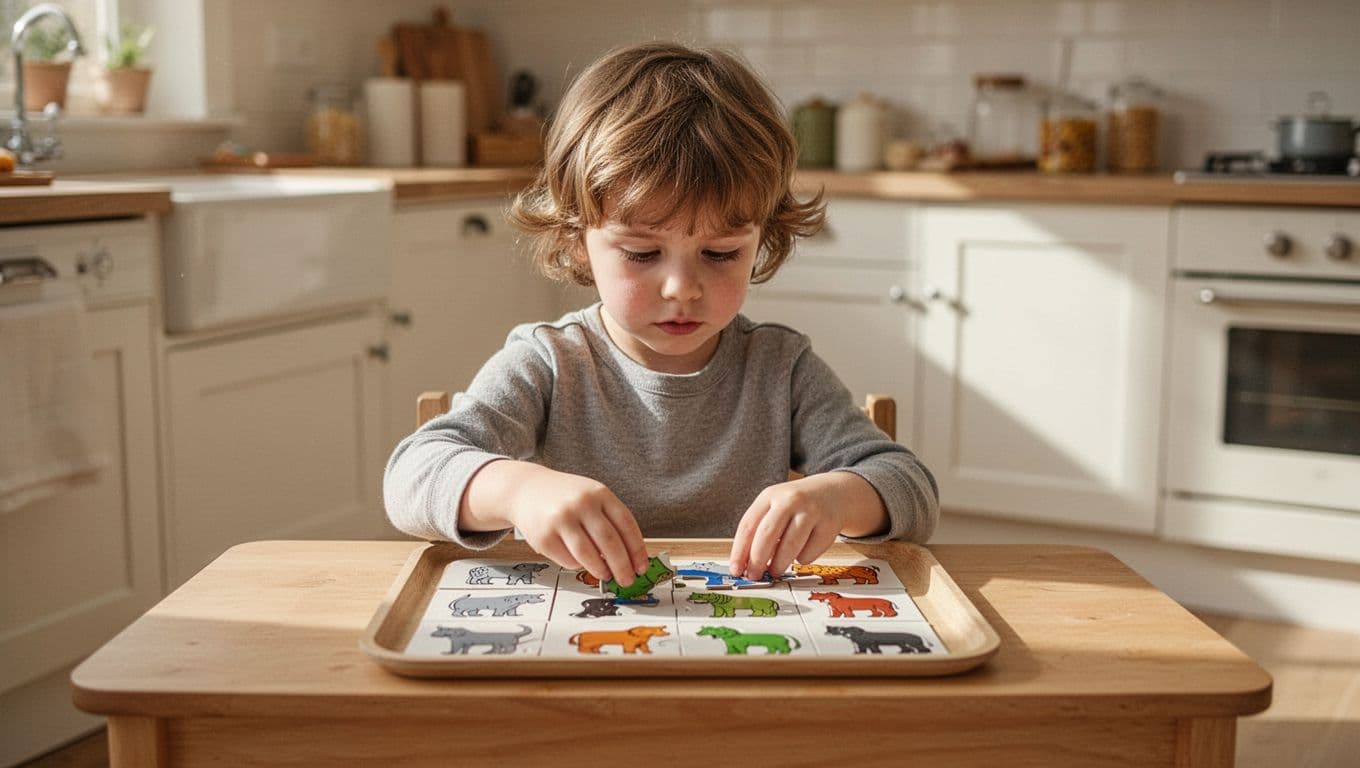
Puzzles are a strong fit for preschoolers because they teach children to look closely and try again. Start with a small puzzle, then move to one with more pieces as your child gets more confident.
Matching trays work the same way. Children can pair socks, match lids to containers, or group cards with the same picture. These tasks sharpen visual thinking and help them notice details.
Sorting also supports problem-solving. Ask your child to separate buttons by color, shells by size, or toys by type. The task feels like play, but it trains the brain to organize information.
Early counting, patterning, and comparing
Counting works best when children can touch the objects. Count crackers at snack time, steps on the stairs, or blocks in a tower. Real objects make numbers easier to understand.
You can also sort by size and compare what is more, less, longer, or shorter. Those words help children notice relationships, which is the start of math thinking.
Pattern play is simple, too. Clap, tap, clap, tap. Line up red, blue, red, blue. When your child spots what comes next, they are practicing logic without a worksheet in sight.
Keep it light, and keep it real. A few minutes of counting, matching, and talking each day gives preschoolers a strong base for language, math, and clear thinking.
Easy Montessori-inspired activities you can start this week
You don’t need a full shelf of materials to get started. A few calm, repeatable activities are enough to help your preschooler practice focus, movement, and independence at home.
Use short work periods and simple setups. If your child is tired or new to the activity, keep it brief and use larger materials. If they stay engaged, you can make the task a little more detailed the next time.
Indoor activities for quiet focus
At the table, try folding cloths into a basket, threading large beads, or doing sticker work on plain paper. Water painting is another easy win, since it gives your child a clear job without much cleanup.
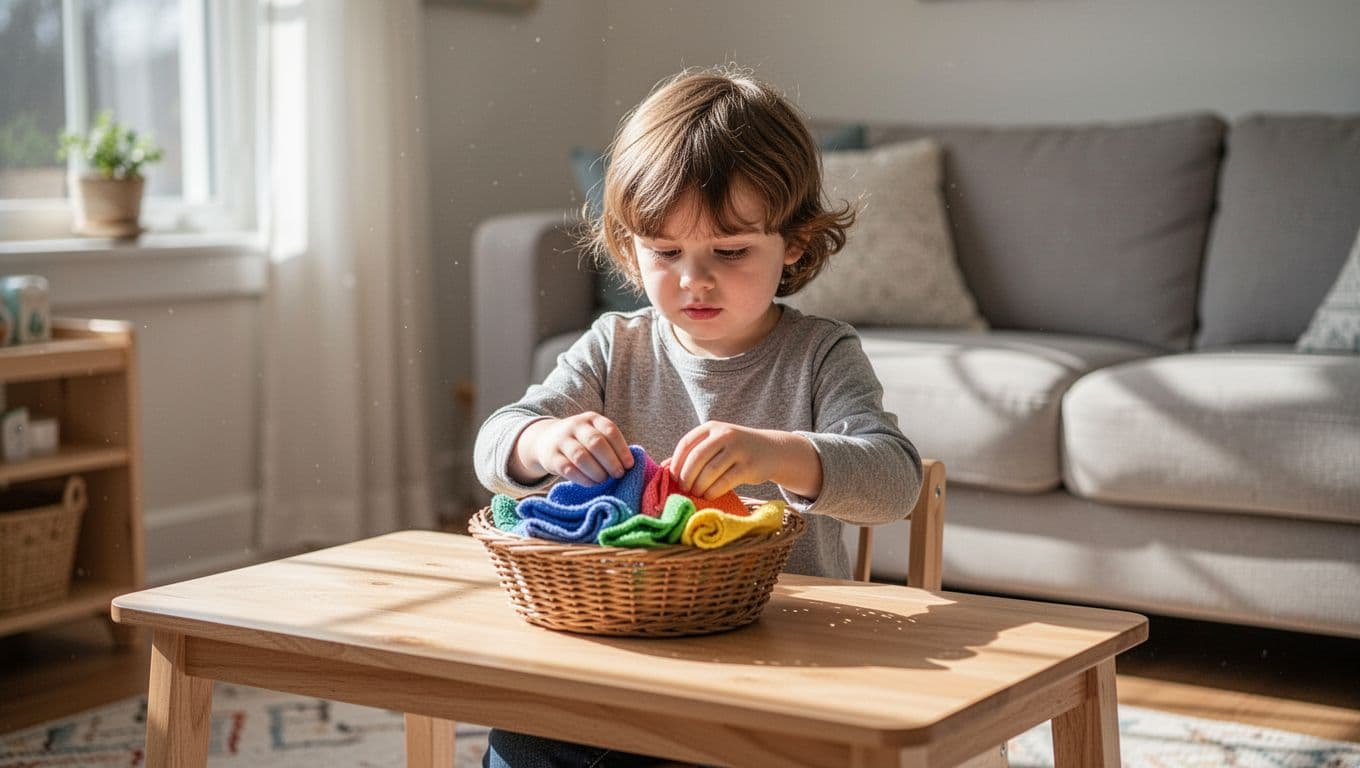
Simple art works well when you keep the supplies high quality and the choice small. A few good crayons, thick paper, or child-safe scissors can hold attention better than a big pile of random craft items. For more ideas that fit neatly into home routines, Montessori activities at home gives a helpful mix of practical options.
Outdoor activities that support movement and observation
Outside, a slow walk can turn into a learning game fast. Invite your child to name objects they see, then add hide-and-seek, garden help, building with sticks or blocks, and nature scavenger hunts.
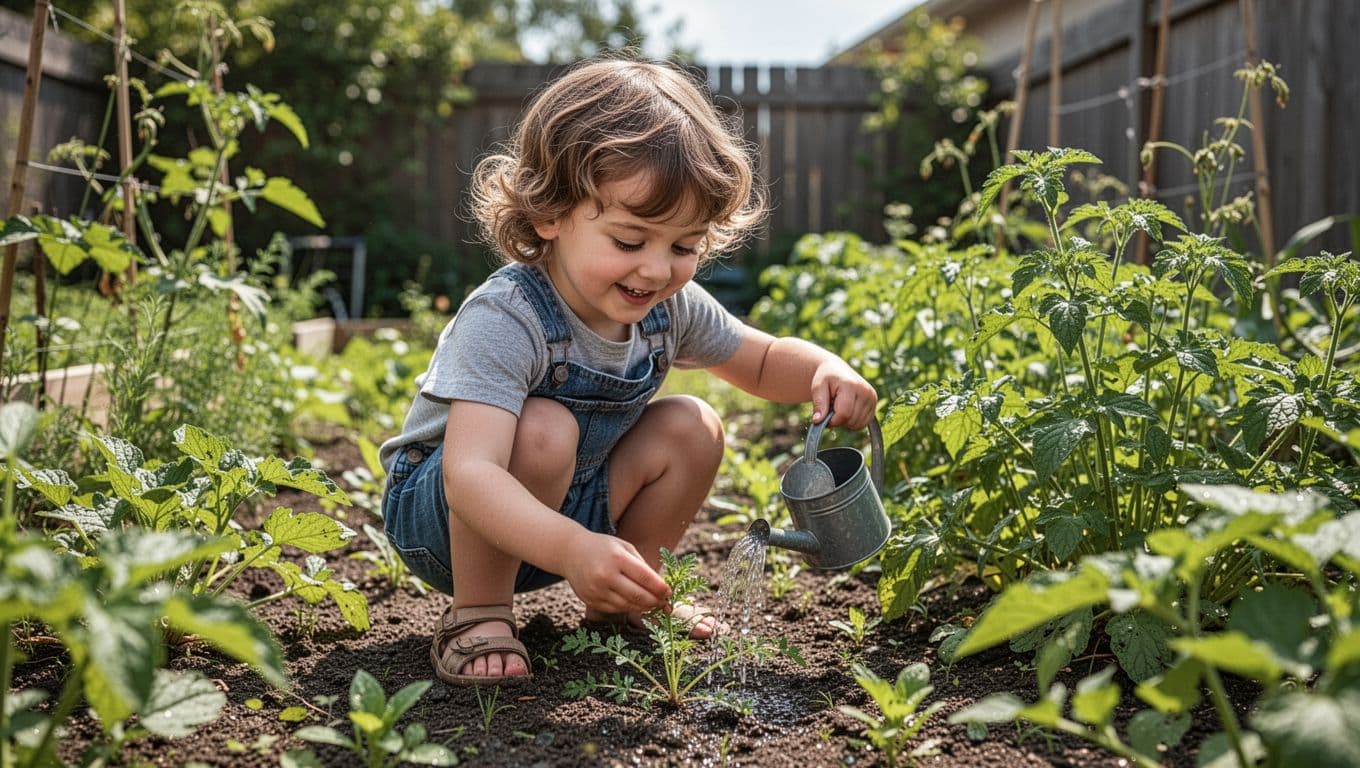
These outdoor tasks work because they mix movement with observation. A child can search for a pinecone, count rocks, or carry a few sticks to a pile. If you want more ideas for fresh-air play, Montessori outdoor activities has plenty of simple starting points.
How to adjust each activity for your child
Make the activity easier by using larger materials, fewer steps, and more help. For example, use big beads instead of small ones, or ask your child to place just one sticker instead of finishing a whole page.
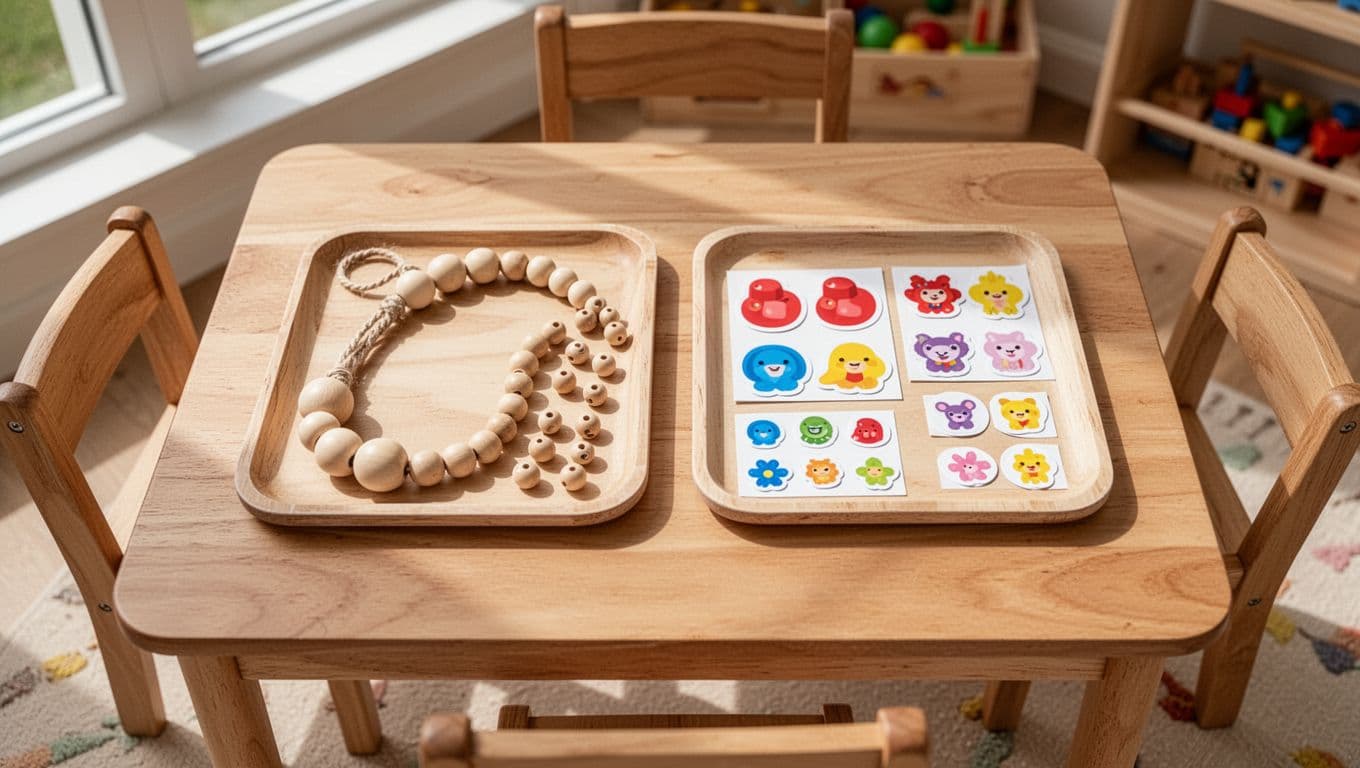
To make it harder, shrink the materials, add another step, or step back and let your child try more on their own. That kind of small adjustment keeps the work just challenging enough to hold interest without causing frustration.
How to keep Montessori-style activities working in real life
Montessori activities work best when they fit your child, your space, and your day. That means the goal is not a perfect setup. The goal is a routine that your preschooler can use again and again without turning your home upside down.
A few small habits make the biggest difference. Watch what your child reaches for, keep materials simple, and accept that some mess is part of the process. When you set things up this way, the activity feels useful instead of forced.
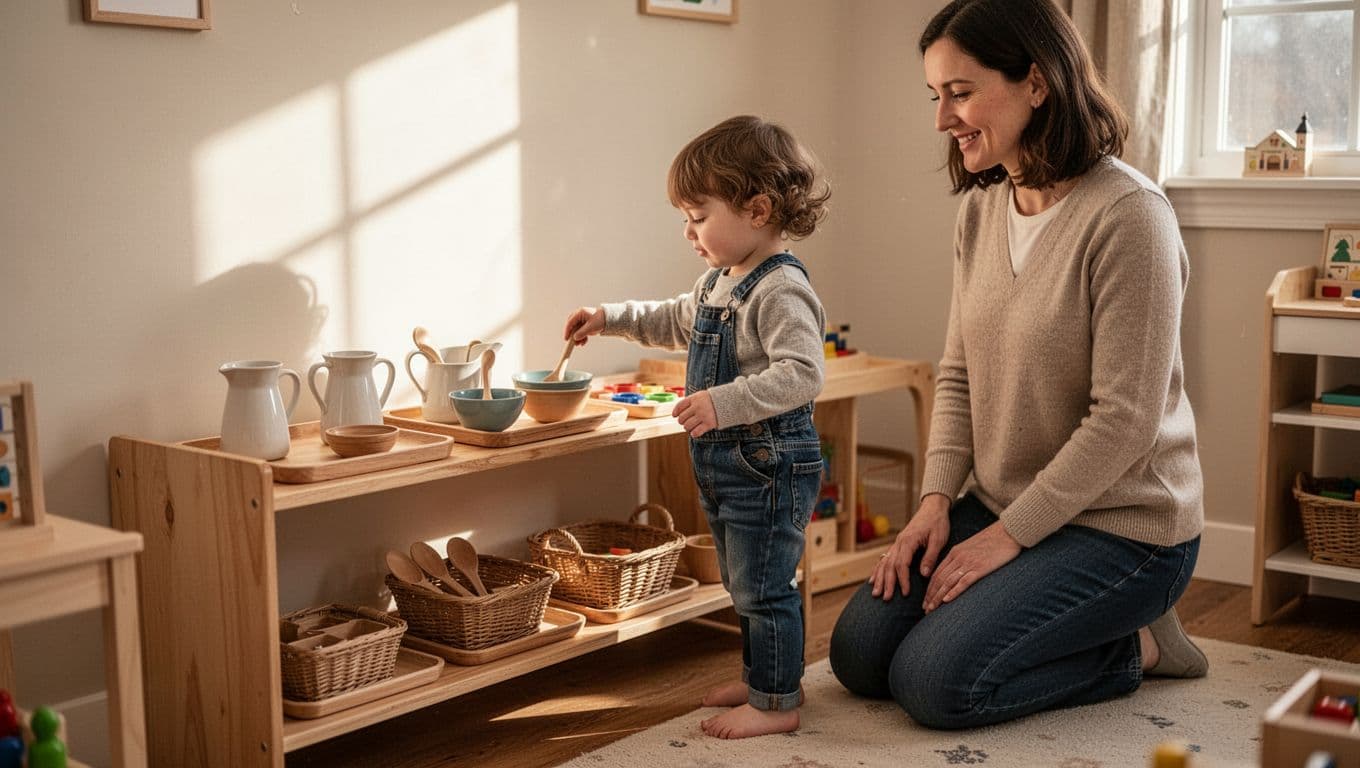
Follow your child’s interest instead of forcing every activity
Children stay engaged when an activity feels timely. Maybe your preschooler wants to pour water today, sort blocks tomorrow, and ignore both next week. That shift is normal, and it tells you a lot about what they are ready for.
Observation matters more than pushing. If you notice your child returning to the same tray, watching you cook, or lining up objects again and again, that is your cue to offer more of that kind of work. The activity lands better when it matches their interest and development.
You can keep choices simple:
- Offer two or three activities, not ten.
- Notice what gets repeated.
- Rotate in new materials only when attention starts to fade.
That approach keeps the experience calm and useful. It also saves you from setting out activities your child is not ready to use.
Use repetition as a strength, not a problem
Preschoolers often want the same task over and over, and that is a good sign. Repetition helps them build control, remember the steps, and feel proud of what they can do on their own. A child who spoons beans for the tenth time is not wasting time, they are getting better at it.
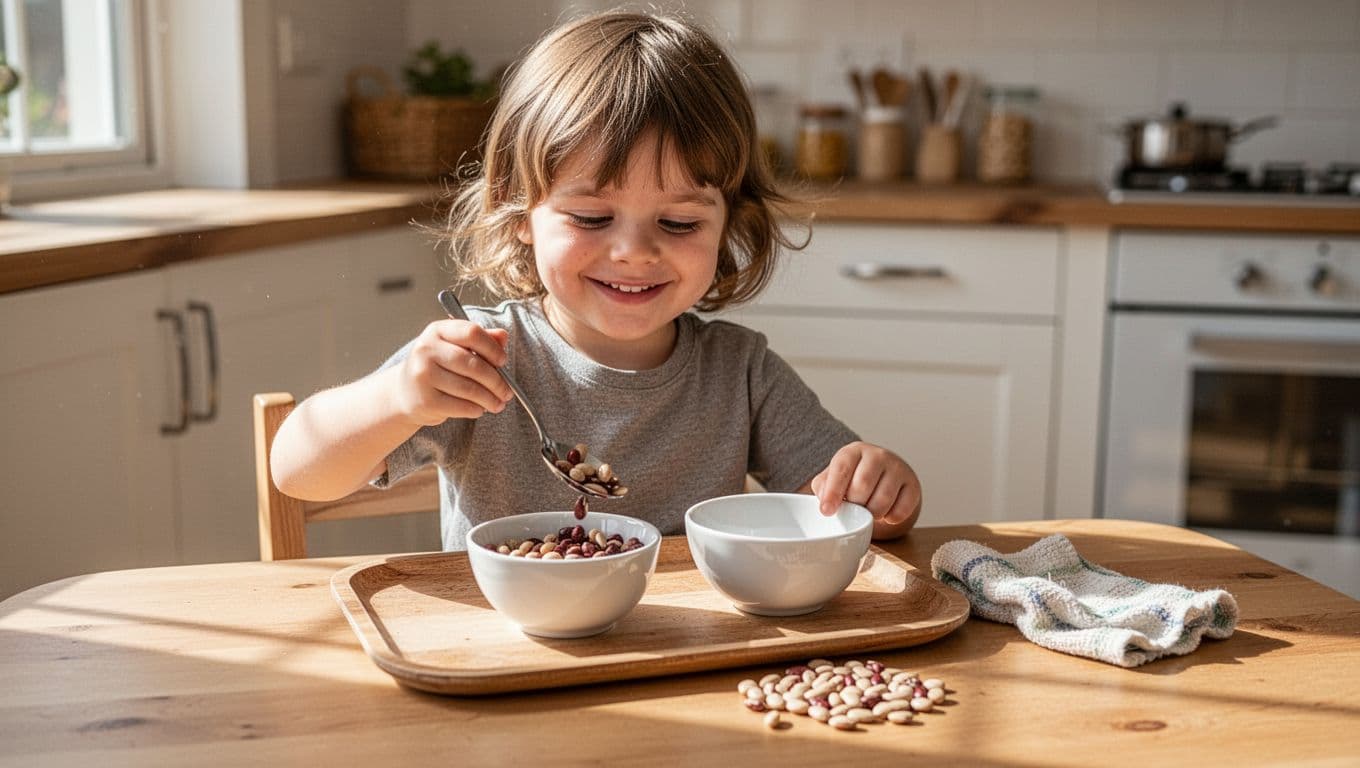
If your child repeats an activity, let them. That steady practice builds confidence the same way a favorite story becomes easier to follow each time it is read. If they want something new, keep a few simple backups ready, but do not rush to replace a favorite too soon.
Mess is easier to handle when you expect it. Use trays, small bowls, and a cloth nearby, so cleanup becomes part of the lesson. For more ideas that support calm, child-led play, Montessori-style activities for preschoolers can help you keep the routine simple and realistic.
Conclusion
Montessori-inspired activities for preschoolers work best when they stay simple, real, and calm. A child who pours, sorts, wipes, matches, or counts is building focus and independence through hands-on learning that makes sense to them.
The strongest takeaway is that these activities do not need fancy supplies or a long setup. A small tray, a clear task, and respect for your child’s pace are enough to create meaningful practice at home.
Start small, repeat what your preschooler enjoys, and let the routine grow naturally. Those ordinary moments at the table, sink, or shelf can make a big difference.
Save pin for later

- 12 Things Pregnant Women Do When They’re Alone - June 7, 2026
- 25 Healthy Pregnancy Snacks You Should Try - June 7, 2026
- 100 Funny Baby Jokes That Will Make You Laugh - May 15, 2026