
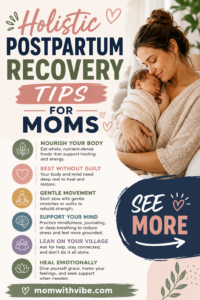
The first weeks after birth can leave you tired, sore, and unsure where to begin, and that’s normal. Holistic postpartum recovery looks at the whole picture, including rest, food, hydration, gentle movement, pelvic floor care, and your mental health.
You don’t need a perfect routine to start healing. Small, realistic habits can help you feel steadier through newborn days, especially when you’re trying to recover and care for a baby at the same time. If you want a deeper look at why healing takes time, this postpartum recovery guide is a helpful place to start.
The simple tips below are made for busy moms who need support that fits real life, not a long to-do list. For a quick video on nutrition support after birth, watch this postpartum diet tip video.
What holistic postpartum recovery really means
Holistic recovery is about looking at your well-being as a connected system rather than a list of separate symptoms. It recognizes that you are a whole person, meaning your physical healing, mental health, and daily environment all influence how you feel. Instead of focusing only on the number on a scale or the healing of birth wounds, this approach honors the major transition your entire life just underwent.
Whether you had a vaginal birth, a C-section, or experienced unexpected complications, your path to feeling like yourself is unique. There is no standard timeline for this process, and expecting to bounce back quickly often creates unnecessary pressure. Instead of chasing perfection, this method focuses on what your body and mind truly need to feel supported day by day.
Why full-body healing matters after birth
It is easy to view postpartum symptoms in isolation, but your body works as one integrated unit. Sleep loss triggers hormonal shifts, which often increase physical soreness and heighten emotional sensitivity. When you are exhausted, your body has less capacity to repair tissue or manage stress, creating a cycle that can feel impossible to break.
Caring for one area creates a positive ripple effect throughout your entire system. For example, prioritizing hydration and nutrient-dense food provides the fuel your body needs for tissue repair. This energy boost often makes it easier to handle the mental load of newborn care. Similarly, getting even short bursts of restorative rest lowers cortisol levels, which helps stabilize your mood and reduces physical tension.
When you address your needs as a whole, you stop fighting against your recovery. You are not just healing from a specific injury; you are supporting your system as it returns to a new baseline. If you need specific c-section recovery advice, remember that your body needs grace to rebuild strength after surgery. By nurturing your physical health, you provide the foundation for your mental and emotional resilience to grow.
How to think about recovery in small steps
Recovery is not a race to a finish line, and it shouldn’t be measured by how fast you return to your old routines. True progress is often quiet and incremental. Start by identifying your most basic needs, such as a hot meal, a moment of silence, or five minutes of gentle stretching. Once these basics feel manageable, you can slowly add more support to your day.
Measure your success by how you feel in the present rather than by past standards. You might notice that you have a little more energy for a walk, or perhaps the physical aches are fading, or maybe your thoughts feel steadier during a difficult moment. These are significant wins.
Focusing on these small, consistent actions helps you reclaim your rhythm without burnout. If you are looking for ways to balance these needs, these tips for easier postpartum recovery offer practical strategies for your daily life. Remember that being gentle with yourself is a productive part of the healing process. You are doing the hard work of recovery every time you choose to prioritize your own stability.
Give your body the rest it is asking for
Rest is not a luxury or a sign of laziness. It is a fundamental requirement for your physical recovery. Think of your body as an athlete that just finished a marathon. You need significant downtime to repair tissues, stabilize hormonal shifts, and replenish your energy stores. Ignoring these signals often leads to longer healing times, increased physical soreness, or deeper exhaustion. By prioritizing rest, you provide the essential conditions your body needs to rebuild strength.
Nap, sit, and stay off your feet more often
Gravity is not your friend in the early weeks postpartum. Standing for long periods or moving around the house too quickly can increase swelling, pelvic pressure, and vaginal bleeding. Your goal is to keep movement gentle and minimal while you are in the initial phase of recovery.
Try these simple habits to keep your physical strain low:
- Sleep when the baby sleeps: It is a classic piece of advice for a reason. Even a 20-minute nap during a daytime feeding session helps your nervous system reset.
- Sit during feedings: Avoid standing while rocking or soothing your baby. Sit in a comfortable chair or stay in bed, keeping your feet propped up if you notice swelling.
- Limit vertical time: Use your time in bed or on the sofa to catch up on rest. Avoid chores that require you to stand at the sink, stove, or laundry machine for more than a few minutes at a time.
- Skip the stairs: If your home has multiple levels, try to set up a station on the main floor with everything you need. This keeps you from making unnecessary trips that put stress on your pelvic floor.
Taking these steps helps prevent the “postpartum crash” that often happens when you push yourself too hard. For more insight on how to pace yourself, recovering from birth guidelines emphasize that listening to your body is the most effective way to heal.
Protect your time and energy with boundaries
Setting boundaries is a way to guard your recovery space. You are currently in a high-demand season, so it is necessary to say no to requests that take away from your rest. Your energy is finite, and you need to direct it toward yourself and your baby.
Start by being clear about what you can handle with family and friends:
- Manage your visitors: It is perfectly acceptable to limit visitors or request shorter visits. Let people know that you are prioritizing rest, and suggest they help with a chore instead of just holding the baby.
- Delegate daily chores: If someone asks how they can help, give them a specific task. Ask them to tackle the laundry, prep a few simple meals, or look after an older child.
- Release the pressure for perfection: Your house does not need to look tidy right now. Let the dishes sit and skip deep cleaning. Focusing on recovery means accepting that temporary chaos is part of the process.
- Simplify your schedule: Say no to social plans, errands, or appointments that aren’t strictly necessary. If a task feels like an extra burden, push it off for a few weeks.
Establishing these boundaries is not about being difficult; it is about honoring your recovery. Remember that you are setting the foundation for your long-term health. If you feel overwhelmed by a rigid morning schedule, how to start your day as a new mom can help you prioritize rest over early rising. When you protect your time, you give your body the permission it needs to truly repair.
Fuel healing with easy, nourishing food and fluids
Your body is working overtime to repair tissues and produce milk, so think of your meals as essential recovery tools rather than just chores. You don’t need elaborate recipes or hours in the kitchen to get the support you need. Focusing on a few core nutrients helps stabilize your energy, keeps your mood steady, and supports your baby if you are breastfeeding. When you prioritize simple, nutrient-dense ingredients, you provide your body with the raw materials required for true healing. For a broader look at how what you eat impacts your recovery, see these healthy snacks to boost breast milk.
Build meals around protein, fiber, and healthy fats
Combining protein, fiber, and healthy fats at each meal helps keep your blood sugar stable and your energy levels consistent. Protein is the building block for tissue repair, while fiber keeps your digestion moving smoothly and fats support hormone balance. Aim for simple combinations that require little to no cooking. You might grab a bowl of oatmeal topped with nuts and berries or a quick bean soup with avocado.
Focus on these accessible options to create balanced plates without the stress:
- Proteins: Keep hard-boiled eggs, canned beans, rotisserie chicken, or Greek yogurt on hand for instant, high-protein additions to any meal.
- Fiber: Stock up on oats, berries, apples, and leafy greens. These foods keep you full longer and provide the steady fuel you need to manage newborn demands.
- Healthy fats: Keep avocados, walnuts, chia seeds, and olive oil in your pantry or fridge. A quick drizzle or a handful of nuts adds the calorie density necessary for recovery and milk production.
Following these best foods to boost breast milk supply provides extra confidence if you are breastfeeding. When you keep these staples ready, you can assemble a nourishing meal in seconds. As American Pregnancy Association notes, breastfeeding moms specifically benefit from extra protein and calories, so don’t be afraid to eat frequently throughout the day.
Make hydration part of the routine
Dehydration is a common hurdle, especially when you are nursing or recovering from blood loss during birth. It often creeps up on you, causing headaches, fatigue, and a dip in your milk supply. Instead of trying to track ounces, make hydration a natural part of your nursing or pumping habit. Keep a water bottle at every spot where you regularly sit with your baby.
Drink a glass of water every time you sit down to feed or soothe the baby. If plain water feels boring, add a slice of lemon or cucumber for flavor. You can also rely on herbal teas, soups, or even milk to meet your daily fluid needs. Making nutrition choices that include liquid-rich foods ensures your body stays hydrated, which is a critical piece of the postpartum diet plan for long-term health.
Prevent constipation so recovery feels easier
Constipation is more than just an annoyance after birth; it increases pain, pressure, and general discomfort in your pelvic floor. Keeping your stool soft is a non-negotiable part of healing safely. High-fiber foods and consistent fluid intake are the most effective ways to manage this issue naturally.
Gentle movement, like a short, slow walk around the house or simple stretches, also encourages your bowels to stay active. If you feel increased pelvic pressure or pain during bowel movements, prioritize adding more soluble fiber—like oats, pears, and beans—to your snacks. Staying ahead of this issue allows your body to focus its energy on physical repair rather than managing secondary digestive pain. You deserve to heal with as much comfort as possible, so keep water nearby and choose fiber-rich, simple foods until you feel completely like yourself again.
Move gently without rushing your comeback
Your body just finished a significant physical event, and it needs time to recalibrate. Movement in the postpartum period is about supporting your recovery rather than testing your fitness level. You don’t need to jump into intense workouts to see progress. Instead, view movement as a way to improve circulation, boost your mood, and ease the stiffness that comes with caring for a newborn.
Start with walking, stretching, and breathing
Safe movement often begins with very basic activities. If your doctor or midwife approves, start with short, slow walks around your home or neighborhood. Walking helps you reconnect with your body and clears your mind. When you feel ready, add simple, light mobility work like gentle neck rolls or ankle circles to keep your joints fluid.
Deep, rhythmic breathing is another helpful tool for early recovery. Practice belly breathing to help your core and pelvic floor adjust after pregnancy. This simple technique encourages relaxation and provides a foundation for more movement later. As guidelines for staying fit and healthy after birth suggest, you can start these gentle activities as soon as you feel up to it, provided your birth was straightforward.
Know when to wait before higher-impact exercise
Resist the urge to jump into high-impact activities like running, jumping, or heavy weightlifting before your body is ready. These actions place significant stress on your joints, pelvic floor, and healing tissues. Your ligaments and joints remain flexible for months after birth, which increases your risk of injury if you overexert yourself.
Most medical guidance recommends waiting until your six-week postpartum checkup before introducing more intense workouts. Everyone heals at a different pace, so focus on your personal recovery timeline rather than outside expectations. If you are looking for safe postpartum fitness activities with your infant, choose options that prioritize stability and support over speed or intensity.
Listen to warning signs from your body
Your body communicates what it needs if you pay close attention. Slow down immediately if you experience pain, increased bleeding, pressure, or dizziness. These are clear signs that your system needs more time to rest. Other red flags include leaking urine, sharp soreness, or worsening fatigue after a short session of movement.
When these symptoms appear, stop the activity and allow yourself a few days of total rest. Check in with your healthcare provider if concerns persist or if you feel unsure about your healing progress. You gain nothing by pushing through discomfort. Instead, honoring these signals ensures that you build strength from a place of health, not exhaustion.
Support pelvic floor healing and core recovery
Your pelvic floor and core support everything you do, from standing to carrying your baby. After birth, these muscles often feel tired, stretched, or disconnected. Healing is not about performing intense exercises right away; it is about protecting these structures while they find their way back to a new normal. Giving them space to rest, paired with mindful movement, helps you rebuild a stable foundation for your long-term health.
Be careful with lifting, straining, and pressure
Everyday tasks often involve movements that place sudden stress on your pelvic floor. Heavy lifting, holding your breath, or straining during bathroom trips adds pressure to the pelvic floor muscles, which are already in a delicate state of recovery. If you feel pressure, heaviness, or leaking, your body is telling you that the load is too great.
You can reduce this strain by changing a few small habits:
- Exhale on effort: Always breathe out as you lift your baby, a heavy laundry basket, or a car seat. Exhaling prevents your breath from holding in your chest, which keeps abdominal pressure lower.
- Keep items close: Carry your baby or heavy objects close to your center of gravity. This simple shift reduces the force your core muscles must exert to keep you balanced.
- Use your legs: Bend at your knees and hips when picking things up, rather than folding at your waist. This technique engages your larger leg muscles instead of putting the entire burden on your abdomen.
- Manage constipation: Straining on the toilet puts significant, unnecessary pressure on the pelvic floor. Prioritize hydration and high-fiber foods to keep your digestion smooth, which makes going to the bathroom easier.
If you are struggling to manage these physical demands alone, do not hesitate to ask for help. Asking a partner or friend to lift the heavy groceries or move the car seat is not a sign of weakness. It is a smart way to prevent injury while you recover. Avoiding harmful health habits to avoid postpartum helps ensure you are not setting yourself back during this important season.
Consider pelvic floor therapy if symptoms linger
Many people assume that discomfort or leaking is just the new reality after birth, but that is not the case. If you notice symptoms like pain, constant heaviness, or ongoing bladder issues, a pelvic floor physical therapist can offer significant support. These providers specialize in helping new moms understand their body’s unique signals and provide tailored exercises to improve function.
Seeking support is a positive, proactive step toward feeling like yourself again. It is common to feel unsure about what is normal, but a professional assessment can provide clarity and relief. According to research on advancing care for postpartum health, early physical therapy is an effective way to address muscle imbalances and improve long-term recovery outcomes.
You do not need a referral to feel frustrated for things to be worth checking out. Whether you had a vaginal birth or a C-section, pelvic floor therapy for postpartum women can guide you safely through the recovery process. Normalizing your symptoms by talking about them with a specialist often reduces anxiety and helps you develop a realistic, supported plan for your recovery.
Take care of your mental and emotional health too
Your emotional well-being is just as vital as your physical recovery. The weeks following birth involve massive hormonal shifts, sleep deprivation, and a major shift in your identity. It is common to feel overwhelmed, anxious, or sad during this adjustment. Please remember that needing help is not a failure; it is a smart way to protect your long-term health and your bond with your baby.
Watch for signs that you need more support
It is normal to feel tired or tearful after birth, but some feelings are signals that you need professional guidance. Keep an eye on how you feel over time. If your mood does not lift, or if your thoughts start to feel heavy and unmanageable, listen to your instincts.
Be aware of these red flags that indicate you should reach out to a doctor, therapist, or a trusted friend:
- Intense or persistent sadness: You feel hopeless, worthless, or find that you cannot stop crying, even when nothing specific is wrong.
- Panic or overwhelming anxiety: You experience racing thoughts, heart palpitations, or fear that something terrible will happen to you or your baby.
- Feeling disconnected: You struggle to bond with your baby or feel numb and detached from your daily life.
- Scary or intrusive thoughts: You have recurring, upsetting thoughts about harming yourself or your baby.
- Loss of interest: You no longer find joy in activities you usually love, or you struggle to focus on basic daily tasks.
If you experience these symptoms, please contact your healthcare provider. You can also call or text the National Maternal Mental Health Hotline at 1-833-852-6262 for free, confidential support. If you ever feel like you might hurt yourself or your baby, seek emergency care immediately by calling 988 or going to the nearest emergency room.
Use simple habits that steady your mood
You don’t need a massive time commitment to support your emotional health. Small, consistent actions can act as anchors during the unpredictability of the newborn phase. Choose one or two of these habits and see if they help you find a little more peace in your day.
- Capture your thoughts: Keep a notebook nearby for short, honest journaling. Writing down your fears or frustrations can help you process them so they don’t loop in your mind.
- Get outside for fresh air: Even five minutes sitting on a porch or walking around the block can change your perspective. Natural light and fresh air help regulate your internal clock and mood.
- Find pockets of silence: When the baby is sleeping, use a few minutes for quiet reflection, prayer, or simple deep breathing. This helps lower your cortisol levels.
- Talk to someone safe: Share your honest feelings with your partner, a friend, or a family member. Being heard by someone who listens without judgment can immediately reduce the weight you are carrying.
If you struggle with the pressure to be a perfect mom, remind yourself that perfection is not the goal. Coping with breastfeeding guilt or other feeding decisions is one way to ease your mental load. Focus on what is true today rather than on what you think you should be doing.
Let support groups and trusted people help
You are not meant to do this alone. Isolation often makes the emotional load of postpartum life feel much heavier than it needs to be. Leaning on your community provides a vital safety net that keeps you grounded.
Connecting with other moms can normalize your experience and remind you that you are not the only one feeling lost or overwhelmed. Many find relief in sharing their stories with people who are in the same stage of life. If you have friends or family who offer help, take them up on it. Ask them to watch the baby while you shower, sleep, or simply sit in another room for a while.
If you are struggling, remember that finding support for perinatal depression is a brave step toward feeling like yourself again. Professional therapy is a powerful tool to help you navigate this transition with clarity. You deserve to feel supported, steady, and capable as you grow into this new season of motherhood.
Build a realistic support system at home
Healing after childbirth is not a solo endeavor. Your home environment acts as a container for your recovery, and it needs to support your needs just as much as it supports the new baby. Many moms feel they must manage every household detail alongside newborn care, but this mindset often delays physical repair and increases emotional strain. Creating a sustainable support system is about shifting the focus from perfect housekeeping to shared responsibility and clear communication. When you surround yourself with practical assistance, you give your body the time and space it requires to heal fully.
Ask for help with the jobs that drain you most
Asking for help is a direct investment in your long-term health, not a sign that you are failing. Friends and family members often want to support you, but they frequently lack clear directions. Instead of waiting for them to guess what you need, keep a running list of specific tasks that feel heavy. When someone visits and offers to help, you can immediately hand them a task from your list.
Think of the roles in your home as rotating responsibilities. You can delegate the following items to free up your physical and mental energy:
- Kitchen maintenance: Let others handle the daily dishes, kitchen cleanup, or meal prep. If cooking feels like a massive chore, ask a friend to prepare a double batch of simple soup or stock your freezer with easy snacks.
- Laundry and housekeeping: Washing, drying, and folding clothes takes a lot of time. If a visitor asks how they can help, tell them the laundry is your biggest hurdle.
- Grocery runs: You don’t need to visit the store during these weeks. Provide a list to a partner or neighbor, or set up a recurring delivery for your basic kitchen staples.
- Older children: If you have other kids at home, their needs can feel overwhelming during your recovery. Arrange for family or friends to take them to the park, host a playdate, or simply read stories with them in another room while you focus on the baby or your own rest.
- Bedtime routines: Even if you are breastfeeding, your partner or another caregiver can manage the bedtime routine for older children or help with the baby’s nighttime soothing to give you a solid block of sleep.
For guidance on how to organize these requests, you can look at how to line up help after birth. Remember that you are setting boundaries to protect your energy levels. If you feel hesitant about asking, remember that these small acts of service help you remain a calm, present parent. For more advice on managing these tasks, 12 ways new parents can ask for help provides practical strategies for communicating your needs.
Create a simple daily rhythm instead of a perfect schedule
A rigid schedule often creates more stress because newborn needs are inherently unpredictable. Instead of tracking the clock, try thinking in blocks of time centered around your basic human needs. This rhythm is fluid, allowing you to adapt to the baby while ensuring you eat, hydrate, and rest enough to keep your body moving forward.
Focus your day on these repeating, low-pressure blocks:
- Rest and reset: Prioritize a horizontal position whenever the baby sleeps. Use this time for a nap or simply to let your pelvic floor and back muscles relax without the pull of gravity.
- Fuel and hydrate: Aim for small, frequent meals rather than large, complex ones. Keep a water bottle near your primary feeding spot so you always have a drink within reach while nursing or bottle-feeding.
- Gentle movement: Incorporate a few minutes of slow walking around your home. This keeps your joints limber and encourages blood flow, which is helpful for healing.
- Basic hygiene: A quick shower or simply changing into clean clothes can act as a mental reset button. Don’t feel pressured to do this at a specific time; just aim to fit it in when the baby is settled.
- Connection: Spend a few minutes of intentional, quiet time with your baby or partner when the house is calm. This is an important part of staying emotionally healthy during pregnancy and throughout the early months, as it buffers the stress of daily transition.
This rhythmic approach keeps the day manageable. If you miss a block or the baby’s needs shift everything, simply pick up the rhythm at the next opportunity. For additional ideas on how to organize your day, 12 tips on how to ask for help with your new baby offers excellent ways to loop others into your new daily flow. By keeping your expectations flexible, you stop fighting against the reality of newborn life and start moving with it.
Make recovery feel better with comfort and self-care
Postpartum recovery is often physically demanding and emotionally draining. You are managing a healing body while adjusting to the constant needs of a newborn. Simple shifts in your daily environment can significantly reduce your discomfort and help you feel more cared for during this transition. Prioritizing small comforts is not about indulgence; it is about providing the physical support your body requires to repair effectively.
Try warmth, gentle hygiene, and soothing routines
Small, intentional habits during your daily routine can offer immediate relief from soreness. Warmth is often one of the most effective ways to ease tension in your muscles and soothe lingering birth-related pain. If you had a vaginal birth, your provider might suggest specific hygiene practices to speed up the healing of sensitive tissues.
Consider these simple ways to increase your daily comfort:
- Soothe with warm baths: A sitz bath provides significant relief for perineal soreness. Sitting in shallow, warm water for a few minutes can reduce irritation and help you relax.
- Use gentle cooling packs: If you experience swelling, cool the area with an ice pack or a chilled witch hazel pad. These offer quick relief for localized discomfort.
- Prioritize clean, soft layers: Swap restrictive clothing for soft, breathable cotton fabrics. Fresh, loose clothes help you feel cleaner and prevent irritation against sensitive skin.
- Keep blankets nearby: Having a cozy blanket on your favorite chair provides instant warmth. Feeling physically comfortable helps your nervous system settle, which is essential for your overall recovery.
Consistency is key when it comes to these routines. Even if you only have a few minutes, these moments of care help your body recover more predictably. For more ideas on finding time for yourself, explore these essential self-care routines for busy moms.
Keep your body supported during the day and night
A well-prepared space reduces the physical effort required to care for your baby. When you have everything you need within arm’s reach, you limit the amount of walking, bending, or lifting you have to do throughout the day. This preparation prevents unnecessary stress on your pelvic floor and abdominal muscles while you are trying to rest.
Create a “support station” in the places you spend the most time, like your bed or the sofa. Include the following items to minimize your need to get up constantly:
- Large water bottle: Dehydration affects your mood and energy, so keep a full bottle of water exactly where you sit to nurse or feed the baby.
- Accessible snacks: Keep easy, nutrient-dense snacks like nuts, fruit, or crackers in a basket nearby so you can fuel your body without a trip to the kitchen.
- Extra pillows: Use pillows to support your back or to raise your feet if you notice swelling. A good nursing pillow can also take the weight of the baby off your arms and shoulders.
- Essential supplies: Keep your phone, a charger, diapers, wipes, and a clean change of clothes for yourself in one spot.
By setting up these stations, you save energy for the moments that matter most. You do not have to move across the house for every minor need. Caring for yourself physically and emotionally requires this kind of thoughtful planning. When your environment supports you, you gain more time to simply rest and bond with your baby, which makes the early days feel much more manageable.
Conclusion
Postpartum recovery is a gradual journey rather than a race to finish line. By focusing on holistic care, you support your body as it heals from birth while adjusting to life with a newborn. Prioritizing rest, nourishing food, consistent hydration, and gentle movement allows your system to rebuild its strength naturally.
Your mental and emotional well-being matters just as much as physical repair. Integrating pelvic floor care and leaning on your support system keeps you anchored during these unpredictable weeks. Small, steady habits often create the most lasting change. As you continue to show yourself grace, you will find your rhythm and start to feel like yourself again.
Save pin for later

- 12 Things Pregnant Women Do When They’re Alone - June 7, 2026
- 25 Healthy Pregnancy Snacks You Should Try - June 7, 2026
- 100 Funny Baby Jokes That Will Make You Laugh - May 15, 2026