

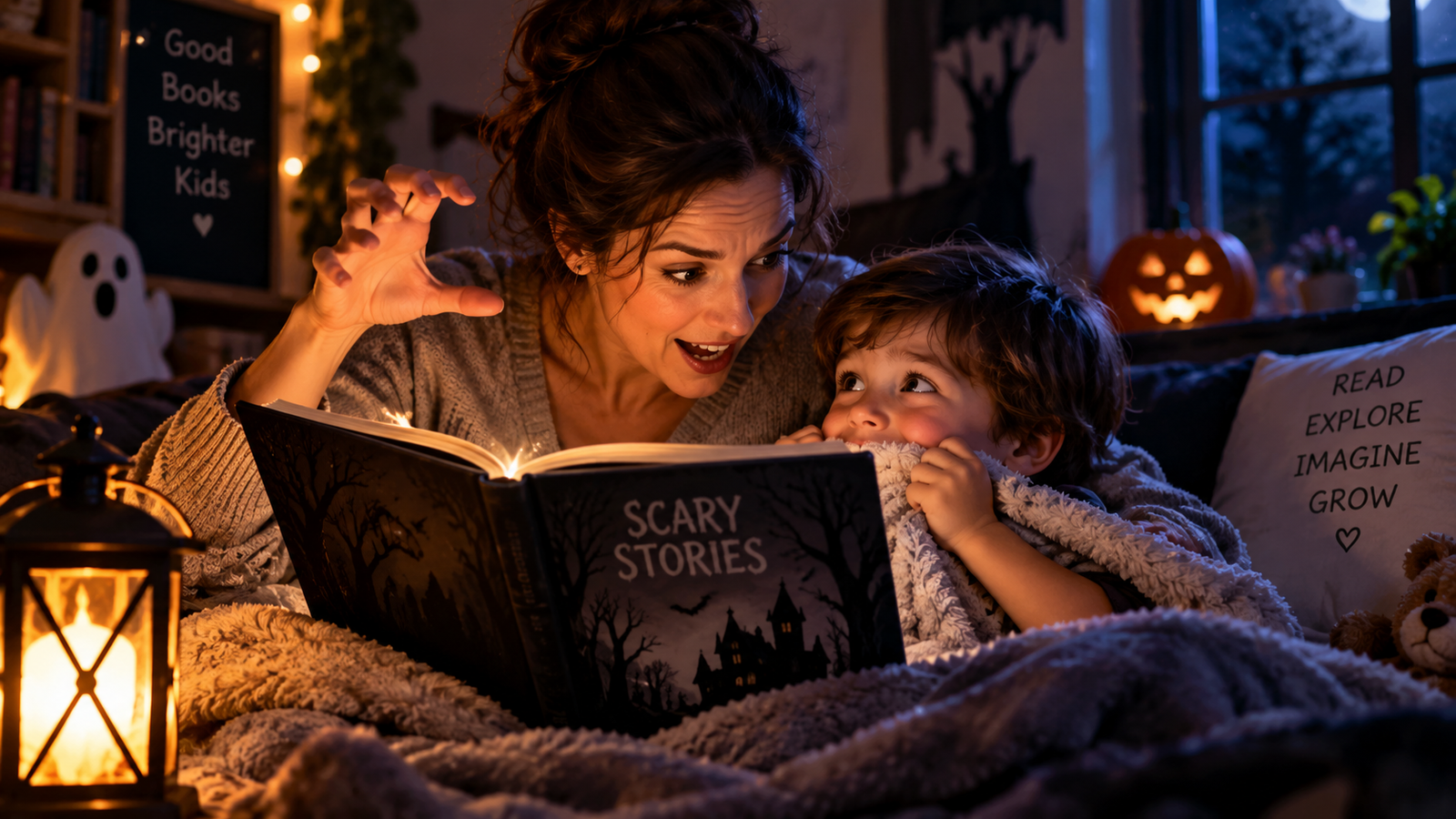
What makes a story stick with a child forever? It’s rarely the perfect hero. It’s the real one, the person who failed, feared, and kept going anyway.
That’s what mortal stories are all about. These are tales about real (or legendary) people whose lives, courage, flaws, and even deaths taught the world something lasting. Kids connect with them because they show that greatness isn’t reserved for storybook characters. Ordinary humans built it, one stubborn choice at a time.
In this post, you’ll find stories worth sharing at bedtime or around the dinner table: inventors who wouldn’t quit, explorers who pushed past fear, athletes who rewrote the rules, and ordinary kids who did extraordinary things. Each one carries a lesson children can carry into their own lives.
Let’s start with the stories that prove an ordinary person can leave an extraordinary mark.
Why Interesting Mortal Stories Every Child Should Know Matter More Than Ever
Kids today have no shortage of entertainment, but most of it features characters who can’t fail. Real people can, and that’s exactly why their stories stick.
When a child hears about someone who actually lived, someone who stuttered through speeches, lost a parent, or got laughed out of the room before succeeding, something clicks. The lesson stops sounding like a lecture and starts sounding like proof. Resilience is hard to teach with rules and reminders, but easy to teach through a life.
These stories also build something quieter: empathy. Learning about real people who struggled, made mistakes, and faced death honestly helps children understand that limits and loss are part of being human. That understanding is the root of emotional intelligence. A child who knows why a friend might feel scared or discouraged is a child who will show up with kindness instead of judgment.
There’s a humility lesson in it too. Mortal stories remind kids that even brilliant people were beginners once, and that no one escapes failure. The point isn’t to frighten them with talk of death. It’s to show that a life gains meaning through what you do with it, not how long you have.
Bedtime is the perfect window. A five-minute story about a real person, told with warmth and honest detail, plants seeds that lectures never will. The stories ahead are chosen exactly for that purpose.
Famous Life Stories That Shaped History
Some lives read like adventure novels, except every word is true. The four people below faced blindness, poverty, slavery, and doubt, and each one changed the world anyway. Their stories work well as bedtime tales because they’re short, surprising, and full of lessons kids can actually use.
Helen Keller: The Girl Who Found Light Without Sight
Helen Keller lost both her sight and hearing before she turned two, after a severe illness. As a small child, she couldn’t see, hear, or speak, and she lived much of her early life in frustration because she couldn’t communicate.
Everything changed when a patient teacher named Anne Sullivan arrived in 1887. Anne spelled words into Helen’s hand, letter by letter. Then came the famous moment at a water pump: as water flowed over one hand, Anne spelled “w-a-t-e-r” into the other. Helen suddenly understood that everything had a name.
She went on to graduate from college, write books, and travel the world fighting for people with disabilities. Her life teaches kids a simple truth: no obstacle is too big if you refuse to stop learning.
Abraham Lincoln and the Long Road From Log Cabin to President
Abraham Lincoln grew up in a one-room log cabin with barely enough books to fill a shelf. He taught himself to read and study, mostly by firelight, because school was a rare luxury.
His path to success was anything but smooth. He lost elections, failed in business, and lost loved ones early. Yet he kept running and kept trying, and in 1860 he won the presidency.
During the Civil War, President Lincoln signed the Emancipation Proclamation, a bold order that declared enslaved people in the rebellious states free. He helped steer the country through its darkest chapter while insisting on fairness and unity.
The lesson for kids? Losing is not the end. Lincoln’s story shows that persistence through failure matters more than any single win.
Harriet Tubman’s Daring Journeys to Freedom
Harriet Tubman was born into slavery in Maryland, where she endured hardship from childhood. In 1849, she escaped north, following the Underground Railroad, a secret network of safe houses and helpers that guided enslaved people to freedom.
Here’s the astonishing part: she went back. Again and again, roughly a dozen times, she returned to the South to lead family members and strangers to freedom, guided by the North Star and her own nerve. She never lost a single passenger, and she became known as “Moses of her people.”
Harriet’s story teaches children about courage that costs something. She had every reason to stay safe, but she chose to help others anyway. Standing up for what’s right, even when it’s scary, is a lesson worth repeating at every age.
Marie Curie: The Scientist Who Glowed With Curiosity
Marie Curie was so curious about science that she studied in secret, sometimes by candlelight, because universities in her home country of Poland didn’t admit women. She later moved to Paris, where she and her husband Pierre worked in a cold, leaky shed with almost no money, stirring tons of ore to isolate a tiny amount of a glowing new element: radium.
Her work paid off in historic ways. Marie Curie became the first woman to win a Nobel Prize, and she remains the only person to win Nobel Prizes in two different sciences.
There’s a bittersweet side to her story. She worked so closely with radiation, long before anyone understood its dangers, that her lab notebooks are still radioactive today. Her sacrifice reminds us she loved discovery more than comfort.
What kids take away: curiosity is a superpower. Ask questions, chase answers, and never let anyone tell you that you don’t belong in science.
Lesser-Known Real People Whose Stories Deserve the Spotlight
Textbook heroes get all the attention, but some of the best true stories hide just outside the popular list. The people below faced impossible odds and responded in ways kids can actually picture: running with one leg, raising a hand in class, or staying calm when everything went wrong. Their lives make great bedtime stories precisely because they’re fresh, so your child is hearing them for the first time.
Terry Fox: The Run That Inspired a Whole Country
Terry Fox was an ordinary Canadian teenager who loved basketball and long-distance running. At eighteen, doctors found bone cancer in his right leg and amputated it. Most people would have counted running out of his life for good.
Terry didn’t. Three years later, in 1980, he launched the Marathon of Hope: he decided to run across Canada, a full 26 miles every single day, on an artificial leg, to raise money for cancer research. He made it more than 3,300 miles before cancer returned to his lungs, and he had to stop.
He died the next year at just 22, but his run had already raised millions. Today, schools across Canada hold annual Terry Fox runs, and his foundation has raised over $800 million for cancer research. The lesson kids can carry: you don’t need to finish a race for it to matter. Starting, and refusing to quit while you can, changes things.
Malala Yousafzai: Speaking Up When It Was Dangerous
Malala was close to your child’s age when her story began. Growing up in Pakistan, she loved school and did well in class. Then a group called the Taliban took control of her valley and banned girls from attending school.
Malala, just eleven years old, started speaking up anyway. She gave interviews, kept writing, and insisted that every girl deserved an education. In 2012, at fifteen, she was shot on her way home from school. She survived, recovered, and kept going.
Two years later, she became the youngest person ever to win the Nobel Peace Prize, at seventeen. Her story shows kids that a young voice can be loud enough to reach the whole world, and that standing up for others often takes more courage than anything on a sports field.
The Boy Who Saved a Village: Courage Comes in Small Sizes
Some bravery stories come from legend, and one of the oldest belongs to a boy in the Netherlands. According to the famous tale, he was walking along a dike, the great wall that holds back the sea, when he spotted a small hole. Water was trickling through, and everyone else was home in bed.
He knew what a single leak could become at that size. So he stayed there all night, his finger plugging the hole, cold and alone, until morning brought adults to help. The village never even knew its nameless hero’s name.
Whether every detail is true, the lesson holds: heroes aren’t always grown, and big acts often start with noticing something small. For more real-world courage stories worth sharing at bedtime, the Terry Fox Foundation keeps his full story alive, and families can explore Malala’s Fund to see her work today.
How to Talk With Kids About Death and Life Lessons in These Stories
Sharing stories about real people who died is one of the gentlest ways to introduce mortality. The story gives you both something safe to look at together, so the conversation doesn’t feel heavy or forced. When Terry Fox’s run ends, or Marie Curie’s notebooks stay radioactive, death enters the room naturally, wrapped in courage rather than fear.
Let the story open the door. You don’t need a separate “big talk.” A simple line like “Terry died young, but look what his run started” invites questions without pressure. If your child wants to keep going with the story, follow their lead. If they go quiet, that’s fine too.
Be Honest, at Their Level
Children handle plain truth better than vague comfort. Saying someone “went to sleep” or “we lost her” can confuse young kids, who may fear bedtime or expect the person to come back. Instead, try age-appropriate honesty: “Terry’s body got very sick and stopped working. He isn’t here anymore, but people remember him every year.” Short, calm, and true works at almost every age.
Preschoolers need simple sentences. School-age kids often want details, especially the “why.” Older children may ask harder questions about fairness and what happens after death. It’s okay to say “I don’t know” when you don’t.
Focus on Legacy, Not Loss
The heart of every story in this post is the same idea: a life counts for what it gives. Point your child back to what the person built. Harriet Tubman freed people. Malala changed laws and minds. Lincoln held a country together. Death ends a life, but it doesn’t erase it.
A useful family ritual is to ask, after each story, “What do you want to leave behind?” Even a seven-year-old can answer that in their own way: kindness to a sibling, a drawing, a small habit of helping.
Questions Kids Usually Ask
Expect a few classics, and keep answers short:
- “Will you die too?” Try: “Everyone dies someday, but probably when I’m very old. My job is to stay healthy and be with you.”
- “Did it hurt?” “Yes, it was hard, but people who loved them helped. That’s what we do for each other.”
- “Where did they go?” Answer from your family’s beliefs, or honestly: “Different people believe different things. What we know is their story stays with us.”
However the conversation goes, what your child remembers most is your calm. Honest words, a steady voice, and a good story do most of the teaching for you.
Fun Ways to Bring These Stories Home
A story only sticks when a child does something with it. The good news: turning these tales into family activities takes almost no prep.
Make bedtime telling interactive. Instead of reading straight through, pause at the tense moment and ask, “What would you do?” Let your child guess before you reveal what really happened. This works especially well with Harriet Tubman’s crossings, since each trip back was a genuine gamble.
Draw it or act it out. After a story, hand over paper and crayons and ask your child to draw their favorite scene, like water spelling “w-a-t-e-r” into Helen Keller’s hand. Older kids might prefer acting: one night, my son played Terry Fox crossing Canada while I narrated from the couch. He remembered every detail for weeks.
Take a virtual trip. Many museums offer free online tours that connect to these lives, including exhibits on Marie Curie’s laboratory work and historic sites tied to Lincoln. Even ten minutes of looking at real objects, like an old lantern from the Underground Railroad era, makes a story feel touchable.
Build a small biography shelf. Picture-book biographies, like Brad Meltzer’s I Am series, are perfect for ages 4 to 8, while longer chapter books suit independent readers.
Play “story and lesson” at dinner. One person tells a story in under two minutes. Everyone else guesses the lesson, then shares one way it could show up this week. Keep it light and quick, and kids will start asking to take a turn.
Conclusion
The best mortal stories are never really about death. They’re about how to live: with curiosity like Marie Curie, persistence like Lincoln, and courage like Harriet Tubman and Terry Fox. When children hear these true tales, they learn that ordinary people, and even ordinary kids, can leave something lasting behind.
You don’t need a special occasion or a perfect script to share them. Pick one story from this list and tell it tonight, maybe over dinner or at bedtime. Pause at the hard moment, ask what your child would do, and let the conversation go wherever it leads. Five minutes is enough to start.
Which story did your family love most? Share it in the comments so other parents can find it too. The more these lives get retold, the more kids grow up believing their own story can matter just as much.
Save pin for later


- 10 Things You Shouldn’t Do in Front of Your Baby (and What to Do Instead) - September 22, 2026
- 15 Effective Ways to Deal With Stubborn Children (Without Yelling) - September 22, 2026
- Birth Order Influence: 8 Things Parents Should Know About Each Child - September 22, 2026