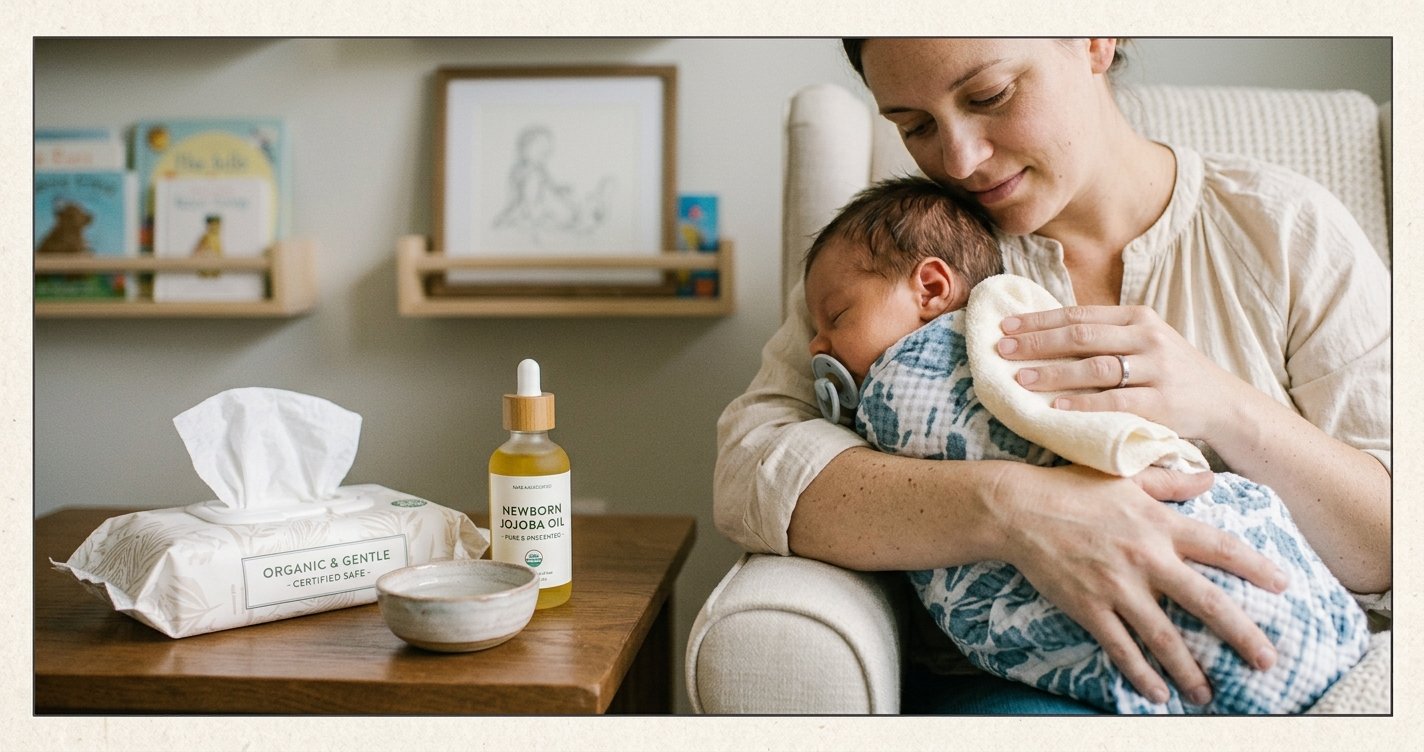
Keeping your baby clean doesn’t mean giving them a bath every day or filling the nursery with special products. Good baby hygiene is about comfort and cleanliness while protecting delicate skin, and a simple routine can cover most daily needs.
Newborns, premature babies, and babies with skin or health concerns may need care tailored to them, so ask your pediatrician for guidance. For most babies, gentle everyday habits are a sensible place to start, beginning with how to care for their skin between baths.
How to Improve Your Baby’s Hygiene With a Simple Daily Routine
A quick clean between baths can keep your baby comfortable without drying out delicate skin. Adjust the routine to your baby’s age and needs, and ask your pediatrician about any skin or health concerns.
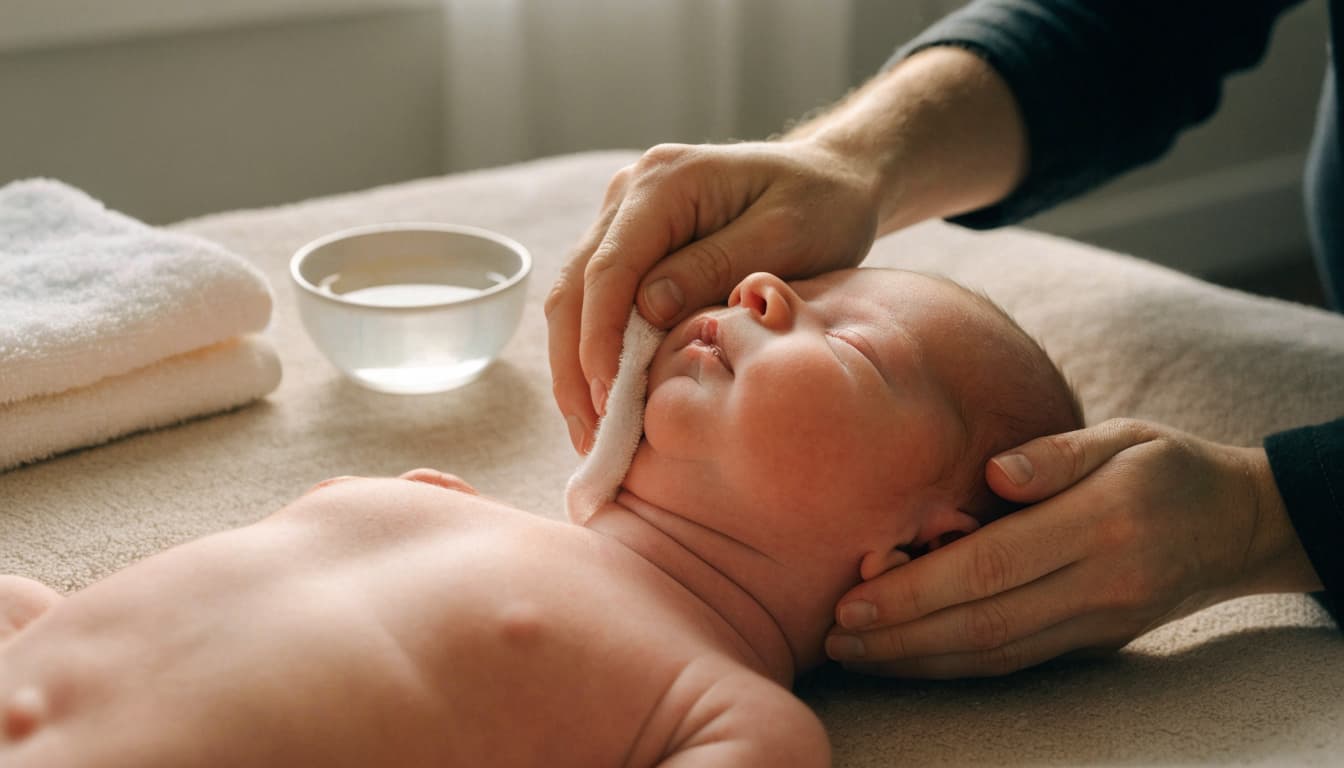
Clean the spots that collect milk, sweat, and moisture
After a feeding or whenever your baby gets messy, use a clean, soft cloth dampened with warm water to wipe the face, under the chin, and inside neck folds. Gently lift the chin to reach the skin, then pat the area dry. Check the hands and other creases, too, since milk, drool, and sweat can collect there.
Between baths, a brief wipe of the face, neck folds, hands, and diaper area is often enough. Use a fresh part of the cloth for each area, and avoid scrubbing or routinely applying scented products. If your baby’s umbilical cord stump is still healing, follow your pediatrician’s care instructions and keep the area clean and dry. The American Academy of Pediatrics’ newborn bathing guidance recommends keeping babies warm during sponge baths by covering the areas you aren’t washing. For more details, see this guide to gentle newborn cleaning.
Make handwashing part of every care task
Wash your hands with soap and water before and after diaper changes, and before touching the healing cord. Clean hands help limit the spread of germs during routine care. If soap and water aren’t available, use hand sanitizer and let it dry fully before handling your baby.
Caregivers and visitors should also wash their hands before holding or feeding the baby. Keep clean cloths, diapers, and other supplies within reach before you begin. Then you can focus on your baby without stepping away mid-care.
Keep your baby warm by uncovering only the area you’re cleaning and covering it again when you finish. Most importantly, stay within arm’s reach throughout care. Never leave your baby alone on a changing surface or in water, even briefly. If you need something, take your baby with you or ask another adult to stay close.
Bathe your baby safely without drying out delicate skin
Your baby probably doesn’t need a bath every day. For many newborns, two or three short baths a week are enough, with spot cleaning between baths when spit-up, drool, or diaper mess calls for it. Bathing too often, especially with soap, can leave delicate skin dry.
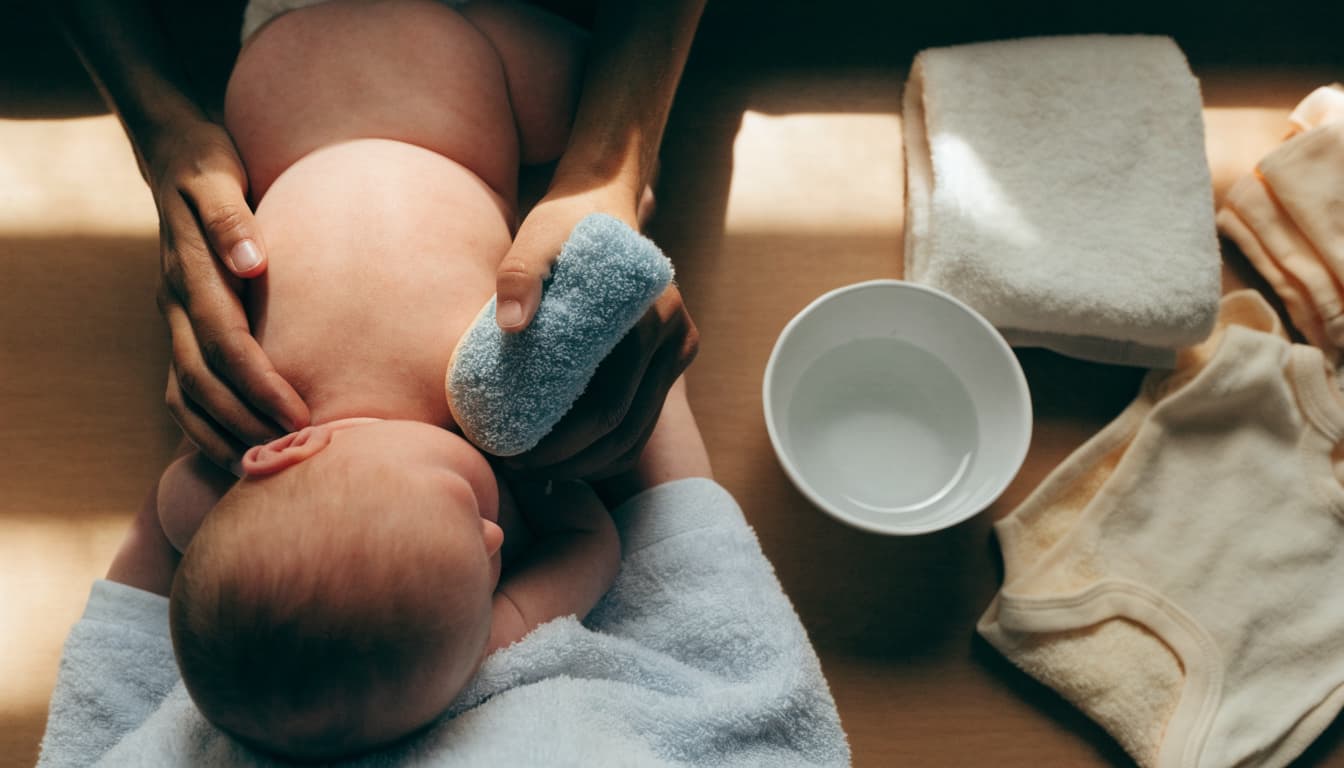
Choose a bath time and setup that keep your baby comfortable
Pick a calm time when your baby is alert and not hungry. Before you begin, gather a soft washcloth, towel, clean clothes, and any diaper-care supplies. Keep the room warm, and make sure everything is within reach so you won’t need to step away.
For a newborn whose umbilical cord stump hasn’t fallen off and healed, use a sponge bath. Lay your baby on a safe, flat surface, keep them wrapped in a towel, and uncover only the area you’re washing. Use a damp washcloth, then gently dry each spot before moving on. For more detail, follow these newborn sponge bath steps.
Once your baby is ready for a shallow bath, place only a small amount of water in a baby tub or basin. Check that it feels comfortably lukewarm, around 37 to 38°C (98.6 to 100.4°F), before you put your baby in. You can test it with your wrist or elbow; a bath thermometer can also help. Mayo Clinic recommends water around 100°F for a baby bath.
Support your baby’s head and neck throughout the bath, and keep one hand on them at all times. A bath can be brief, just long enough to clean the areas that need it. Never leave your baby unattended in or near water, even for a moment. If you need to get something, lift your baby out and take them with you.
Use gentle products and dry skin folds well
During the first few weeks, some guidance recommends bathing newborns with plain water. If you think a cleanser is needed, choose a mild, fragrance-free option and use only a small amount. Strong fragrances and unnecessary soaps can irritate or dry skin, but every baby responds differently. Follow your pediatrician’s advice, especially if your baby was premature or has a medical condition.
After the bath, wrap your baby in a soft towel and pat the skin dry rather than rubbing. Take extra care with the neck, armpits, groin, and other folds, where moisture can linger and irritate skin. Make sure those areas are dry before dressing your baby. If dryness, redness, or irritation persists, ask your pediatrician whether to adjust the bathing routine or try a skin-care product.
Keep diaper changes clean and protect the healing umbilical cord
Prompt diaper changes help limit how long moisture and stool sit against your baby’s skin. A gentle routine also protects the healing cord stump without extra products or handling.

Reduce diaper rash with gentle, frequent changes
Check your baby’s diaper often, and change it promptly after a bowel movement. Clean the area gently with warm water and a soft cloth, or use mild, fragrance-free wipes. Wipe from front to back, especially for girls, and avoid scrubbing or strongly scented wipes that may irritate delicate skin. Let the area dry before putting on a clean diaper.
If you use cloth diapers, fragrance-free, dye-free detergent is a sensible choice. A mild rash often improves when you keep the skin clean and dry and change diapers regularly. For more detail, see this step-by-step diaper changing guide.
Call your pediatrician if the rash worsens, doesn’t improve with basic care, or includes a fever, blisters, or open sores. Those signs need medical advice rather than more vigorous cleaning or added products.
Know what normal cord care looks like and when to call
Keep the stump clean and dry, and fold the diaper below it so it doesn’t rub or trap moisture. Leave the stump alone as it dries and separates; it often falls off within about one to two weeks, though timing varies. If urine or stool gets on it, clean the area gently with water and pat it dry. The American Academy of Pediatrics’ umbilical cord guidance advises keeping the area clean and the diaper below the stump.
Don’t pull at the stump or apply alcohol, powder, lotion, or antiseptic. Avoid soaking it, too, unless your clinician gives different instructions. Contact your pediatrician or another infant-care professional if redness spreads around the base, the stump smells bad, pus or other discharge appears, or bleeding continues. Seek advice promptly if your baby seems unwell.
Care for your baby’s eyes, ears, nose, mouth, hair, and nails gently
These small hygiene tasks don’t need a complicated routine. Use clean, simple tools, keep your touch gentle, and stop if your baby seems uncomfortable.
Clean only the outside of the eyes, ears, and nose
For visible dirt or dried discharge around your baby’s eyes, dampen a clean, soft cloth with water and wipe gently. Use a fresh area of the cloth for each eye. You can also wipe the outer ear and the skin around the nose, but don’t put cotton buds, swabs, fingers, or other objects inside the ears or nose. These can injure delicate tissue or push wax and debris farther in.
A little mucus or eye crust can happen, but contact your baby’s clinician about persistent discharge, blockage, or irritation. Avoid trying to clear a stuffy nose or ear canal with household objects; ask the clinician what care is appropriate.
Keep hair, nails, and the mouth comfortable and clean
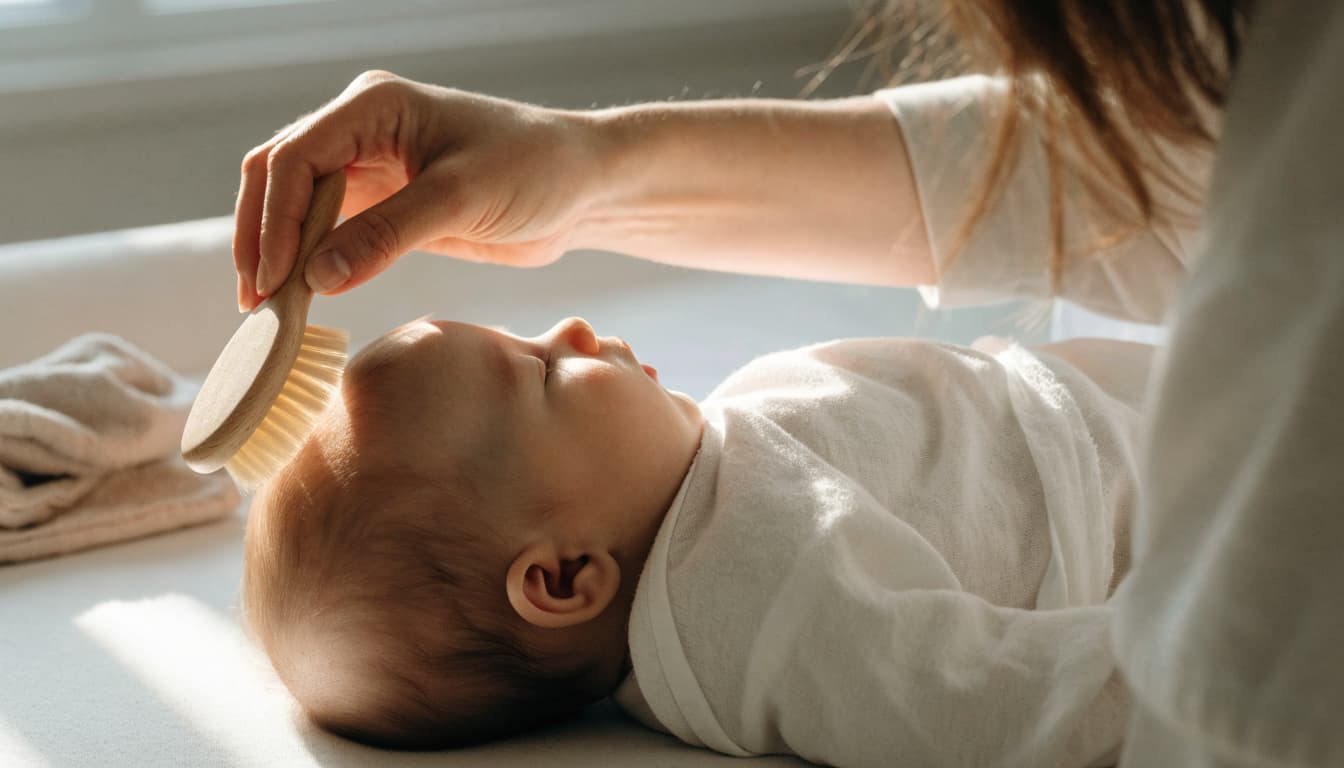
A soft baby brush or comb can smooth hair and loosen flakes without scraping the scalp. For nails, use clean infant nail clippers or a file, and choose a moment when your baby is calm and still. Trim only when needed, with good light and a steady hold. If you’re unsure how to avoid nicking the skin, ask your pediatrician or another pediatric clinician to demonstrate a safe method.
Mouth care changes as your baby grows. The American Academy of Pediatric Dentistry recommends cleaning gums with a soft infant toothbrush or cloth and water before teeth appear. Once the first tooth erupts, brush twice daily with a soft, age-appropriate toothbrush and a tiny smear, about the size of a grain of rice, of fluoride toothpaste for children under 3. A parent should do or closely assist with brushing. See the AAPD’s guidance on infant teeth and fluoride toothpaste, and ask your pediatrician or pediatric dentist about care that fits your baby. You can also read more about baby oral hygiene before teeth appear.
Build safer hygiene habits with clean clothes and fewer products
Clean clothing and a few well-chosen supplies support your baby’s hygiene without adding extra steps. A simple approach also makes it easier to notice whether something is bothering your baby’s skin.
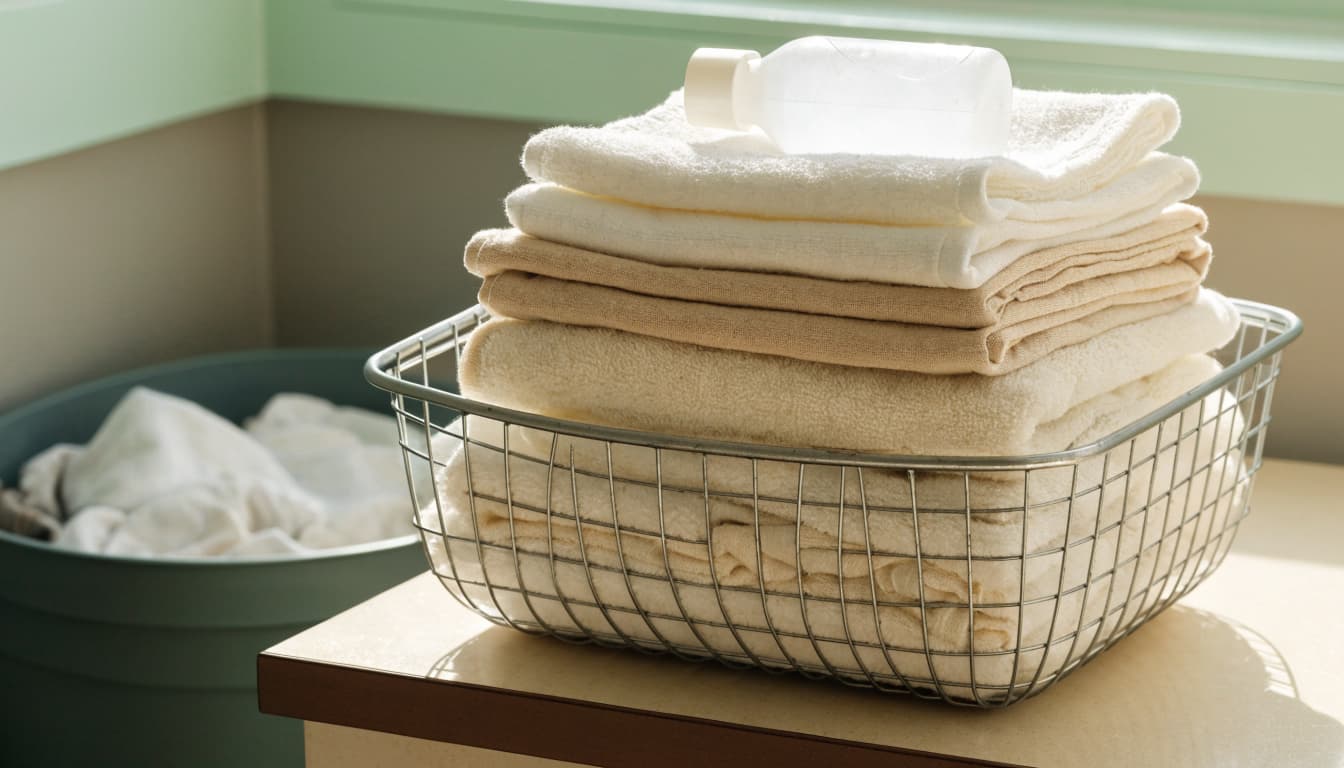
Wash clothes and reusable diapers with care
Wash soiled clothes and reusable diapers according to their care labels. If your baby’s skin is sensitive, try a mild, fragrance-free detergent. Avoid fabric softeners and strongly scented laundry products, since residue can irritate skin. The American Academy of Dermatology’s guidance on eczema-friendly products also recommends fragrance-free, dye-free laundry detergent for sensitive skin.
Keep clean towels, washcloths, and diaper supplies in a dry, separate spot, away from dirty laundry. That way, fresh items stay ready for care, and soiled fabrics don’t mix with clean supplies.
Choose fewer products and watch your baby’s skin
More products don’t mean better hygiene. Warm water and a soft cloth handle many everyday cleanups; when you need a cleanser, choose a mild, fragrance-free product and use it only where needed. Powders and scented lotions, washes, or wipes may irritate delicate skin, so skip them unless your baby’s clinician recommends them.
After introducing something new, watch for redness, dryness, or irritation. If you notice a reaction, stop using the product. Contact your pediatrician if symptoms are significant, persist, or worsen. The goal is to keep your baby comfortable and clean, not to follow a perfect routine.
Avoid common hygiene mistakes
A few simple boundaries help keep routine care safe:
- Never leave your baby unattended during a bath, even for a moment.
- Don’t insert cotton swabs, fingers, or other objects into your baby’s ears or nose.
- Don’t apply alcohol, powders, creams, or other products to the umbilical cord stump unless a clinician advises you to.
If you’re unsure whether a product or care step is appropriate, check with your pediatrician before adding it to the routine.
Conclusion
Improving your baby’s hygiene comes down to steady, gentle care, not a complicated routine. Wash your hands before care, clean spots as needed, give occasional safe baths, change diapers promptly, and keep the cord stump clean and dry. Skip unnecessary products that may irritate delicate skin.
Your baby’s needs can change with age and vary from one baby to another, so keep the routine simple and adjust it as needed. For more simple ways to keep a newborn clean, or if you’re unsure about a skin concern or hygiene practice, check with your pediatrician.
Save pin for later


- 15 Healthy smoothie recipes for your baby - September 26, 2026
- Bed workout tips for moms - September 26, 2026
- How to improve your baby’s hygiene - September 26, 2026