

Pregnancy can feel like a lot, especially when every choice seems to matter for you and your baby. The good news is that a few steady habits can make a real difference, and the 20 things you must do while pregnant start with simple, proven steps that support your health day to day.
This guide pulls from current medical guidance and keeps the focus on what matters most, like nutrition, hydration, movement, rest, and prenatal care. It’s here to support your doctor’s advice, not replace it, and if you’re also gathering your basics, these pregnancy must-haves for first-time moms can help you get ready.
First, let’s look at the habits that give you the strongest start for a healthy pregnancy.
Start with the care and support that protect you and your baby
Pregnancy feels easier when you have a clear care plan. Early prenatal care gives you that plan, plus a provider who can track changes, answer questions, and catch problems before they grow.
The first steps matter most. When you start care early, you give yourself time to confirm important dates, review your health history, and talk through any risks that need attention. If you have a chronic condition, a past pregnancy concern, or symptoms that feel off, sooner is better.
Book your first prenatal visit as soon as possible
Your first prenatal visit usually confirms the pregnancy and helps estimate your due date. Your provider will also review your medical history, past pregnancies, medications, family history, and any symptoms you already have. That gives them a full picture before decisions are made.
The visit may also include blood pressure checks, blood and urine tests, and sometimes an early ultrasound. Your provider may screen for anemia, infections, blood type issues, and other risks. You’ll also talk about prenatal vitamins, vaccines, safe medicines, and any lifestyle changes that fit your situation.
The NICHD says early and regular prenatal visits help your provider monitor your health and your baby’s growth. If you want a little reassurance between appointments, reassuring signs your baby is healthy can help you know what to watch for.

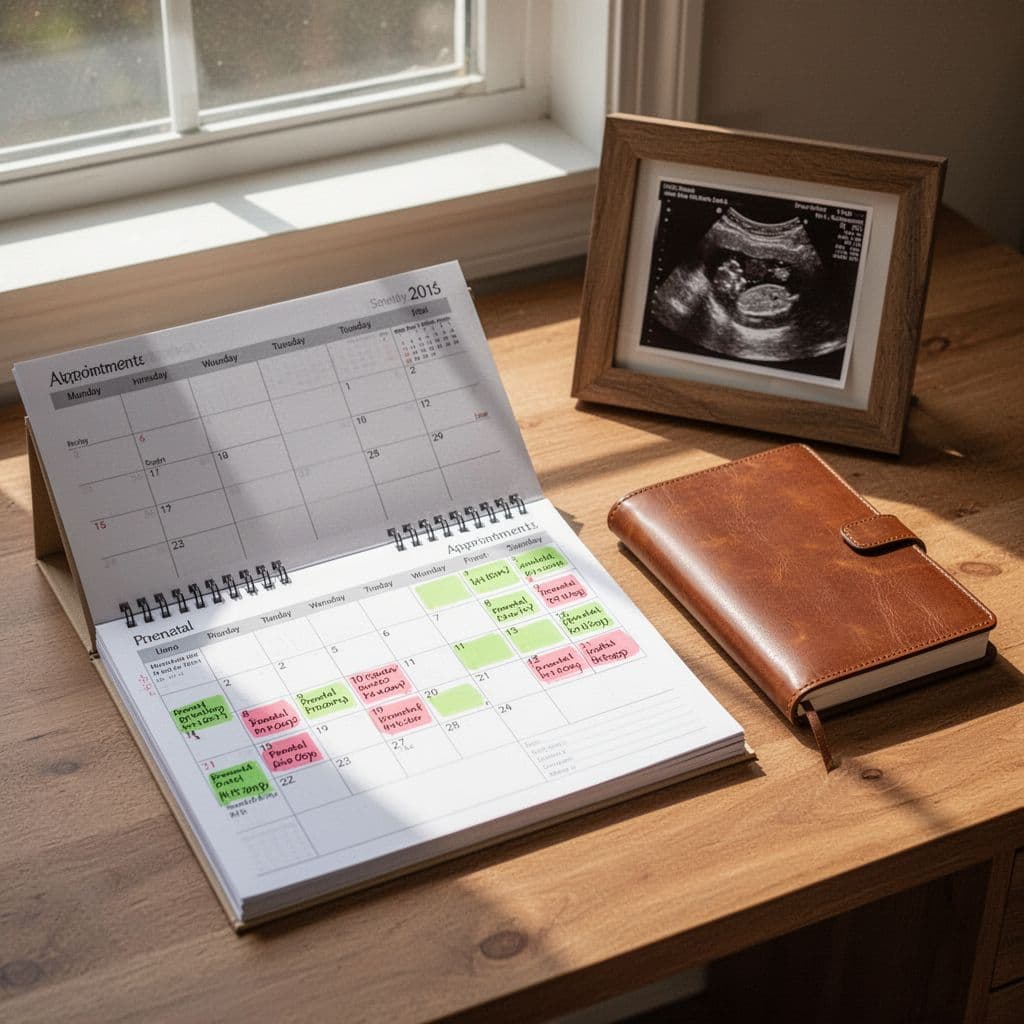
Keep every prenatal appointment on your calendar
Routine visits help your provider follow blood pressure, weight, and your baby’s growth over time. They also give you a steady chance to bring up new symptoms, even ones that seem small at first.
Visit frequency often changes as pregnancy goes on. Many pregnancies start with monthly visits, then move to more frequent check-ins later, so staying on schedule matters even when you feel fine.
It helps to treat these visits like a standing safety check. You may leave each one with simple next steps, but those small check-ins are what make early warning signs easier to catch.
Ask questions and speak up about symptoms
Your provider needs the full picture, so speak up about pain, bleeding, swelling, headaches, mood changes, or anything that feels different. Even symptoms that seem minor can matter in pregnancy.
No question is too small. If something worries you, bring it up right away instead of waiting for the next appointment. That simple habit helps you get answers faster and keeps your care on track.
Build a daily routine that supports a healthier pregnancy
A healthy pregnancy often comes down to small habits repeated every day. When you make food, water, movement, rest, and vitamins part of your routine, you give your body steady support instead of scrambling to catch up.
The goal is simple: keep your days predictable enough that healthy choices feel easy. Start with the basics, then adjust them with your provider as your pregnancy changes.
Take prenatal vitamins with folic acid every day
Prenatal vitamins help fill gaps, and folic acid is one of the most important pieces. It matters early in pregnancy because it helps the baby’s brain and spine develop, which is why the CDC recommends folic acid before and during pregnancy.
Many doctors also suggest other nutrients based on your needs. Iron can help support blood volume and lower the risk of anemia, vitamin D supports bone health, and DHA can help with baby’s brain and eye development. Your provider may adjust the formula if you have low levels, food limits, or a higher-risk pregnancy.
A prenatal vitamin is a support tool, not a substitute for meals. Real food still matters, because your body needs a mix of protein, fiber, healthy fats, and carbs throughout the day.
Eat balanced meals that give you steady energy
Balanced meals help you feel more even through the day, and they also support healthy weight gain in a general, steady way. You do not need perfect meals. You do need enough variety to cover the basics.
A simple plate often works best:
- Fruits and vegetables for fiber, vitamins, and minerals
- Whole grains for longer-lasting energy
- Lean protein like eggs, chicken, beans, tofu, or fish that is safe in pregnancy
- Healthy fats from avocado, nuts, seeds, and olive oil
- Dairy or fortified alternatives for calcium and protein
If nausea, heartburn, or food aversions make eating hard, bring it up with your provider. Small shifts, like smaller meals or bland snacks, can make a big difference. The ACOG healthy eating guidance is a helpful place to compare your routine with common pregnancy nutrition advice.
Drink enough water throughout the day
Hydration supports digestion, energy, circulation, and temperature control. When you do not drink enough, constipation, fatigue, and headaches can show up fast.
Keep it simple. Carry a water bottle, sip often, and drink before you feel thirsty. That works better than waiting until you feel dry or dizzy.
You can also build water into habits you already have, like drinking a glass when you wake up, with meals, and after a walk. If plain water feels boring, add ice, lemon, or a splash of juice.
Move your body in safe, gentle ways
Gentle exercise can lift your mood, ease back pain, and help you sleep better. Walking, swimming, stretching, and prenatal yoga are common pregnancy-friendly options, as long as your doctor says they fit your health needs.
The CDC recommends regular moderate activity in pregnancy for many healthy women. That can look like a brisk walk after lunch, a short swim, or a light stretch session at home.
Before starting a new routine, clear it with your provider. That matters even more if you have bleeding, dizziness, pain, or a history of pregnancy complications. If you want exercise ideas tied to comfort and baby positioning, these safe sleeping positions for the second trimester can pair well with a gentle movement routine.
Make sleep and stress relief part of your routine
Pregnancy can make rest harder, even when you feel tired all day. Hormones, bathroom trips, aches, and a busy mind can all interrupt sleep, so the goal is better rest, not perfect rest.
Side sleeping often feels best, and pillows can help support your belly, back, and knees. Short naps are fine when you need them, and a few minutes of breathing exercises or quiet time can help your body settle.
Ask for help when you need it. A calmer routine is easier to keep when someone else handles a task, a meal, or a school run now and then. Small breaks matter, especially on the days that feel long.
Avoid the things that can harm pregnancy
Some habits matter less than others, but a few choices can raise risk fast. The safest move is to avoid the known troublemakers, then ask your provider about anything you are unsure of.
That includes substances, certain foods, excess heat, and medications that seem harmless on the shelf. When in doubt, pause first and check second. Your body is doing important work, and it deserves a little extra caution.
Skip alcohol, smoking, vaping, and drugs
Alcohol, cigarettes, vaping, marijuana, and illegal drugs can all affect how your baby grows. They can also harm brain development and overall health, which is why there is no safe amount of alcohol or nicotine in pregnancy.

Smoking and vaping expose your baby to nicotine and other chemicals that can lower birth weight and raise the risk of preterm birth. The CDC and ACOG both advise stopping tobacco and alcohol use during pregnancy, and getting help right away if quitting feels hard. Support is available, and you do not have to figure it out alone.
If you want a clear, reliable overview, ACOG’s guidance on tobacco, alcohol, and pregnancy explains the risks and support options in plain language.
Watch caffeine and ask before taking any medicine
Caffeine usually needs to stay limited during pregnancy, so keep an eye on coffee, tea, soda, energy drinks, and even chocolate. A common guideline is to stay under 200 mg a day, but your doctor may give you a different limit based on your health.
Some medications that feel routine can be unsafe in pregnancy, so always check first.
That includes prescription drugs, over-the-counter pain relievers, cold medicine, herbs, and supplements. Even a medicine you have taken for years can act differently now, so never assume it is safe just because it is common.
Before you take anything new, ask your doctor or pharmacist. If you need a quick reference on food and drink limits, foods to avoid during pregnancy is a helpful place to compare notes with your care plan.
Practice food safety and avoid risky foods
Food poisoning can hit harder during pregnancy, and infections like listeria can be serious for both you and your baby. Because of that, food safety is not a small detail, it is part of everyday pregnancy care.
Cook meat, poultry, and eggs all the way through. Wash produce well, avoid unpasteurized milk and cheese, and stay away from raw or undercooked fish, sushi, sashimi, sprouts, and refrigerated smoked seafood unless it has been heated until steaming.
A few simple habits make a big difference:
- Refrigerate leftovers quickly and do not leave cut fruit or cooked food out too long.
- Choose pasteurized dairy and juices.
- Check labels on salads, deli foods, and packaged snacks.
For a broader guide to food risks and smart swaps, the CDC’s pregnancy food safety advice is a solid resource. If meal prep also includes cleaning, pregnancy-safe cleaning alternatives can help you avoid harsh fumes while you cook.
Stay away from too much heat and unnecessary exposure risks
Too much heat can push your body temperature up in a way that is not safe for pregnancy. Hot tubs, saunas, hot yoga, and very high fevers are all concerns, especially early on when your baby is developing fast.
Stay out of hot tubs and saunas, and back off if an exercise class feels too warm. If you have a fever, call your doctor, because the cause matters and so does quick treatment.
You should also tell medical and dental providers that you are pregnant before any X-rays or other tests. Most routine imaging is handled safely, but your care team needs to know so they can use the right precautions and choose the best option for you.
For heat-related guidance, CDC advice on pregnancy and heat gives practical steps you can use right away. When possible, keep cool, rest often, and speak up before discomfort turns into a bigger problem.
Prepare for the tests, vaccines, and birth decisions ahead
A lot of pregnancy prep happens on paper before it happens in the delivery room. The sooner you handle the medical checkups and big decisions, the less rushed everything feels later.
This part is about staying informed, asking clear questions, and making a few choices early. That gives you more control over the process, even when pregnancy itself keeps changing.
Stay on top of prenatal screenings and lab work
Prenatal tests help your provider catch problems early, when they are easier to treat or watch. Blood tests, ultrasounds, glucose testing, and genetic screening can all give useful information without making the process feel overwhelming.
At different points in pregnancy, your care team may check your blood count, blood type, infection risk, and blood sugar. Later on, ultrasounds can look at growth and anatomy, while glucose screening checks for gestational diabetes. Genetic screening can also help you understand the chance of certain conditions and decide whether you want more testing.
The CDC’s routine pregnancy tests page gives a simple overview of what these screenings can look like. If your provider brings up one test you have not heard of before, ask what it checks and when it happens.
Screening gives you information. It does not force a decision.
Get the vaccines your doctor recommends
Some vaccines protect you during pregnancy, and some also help protect your baby after birth. Timing matters, though, so your provider should guide what you get and when.
Common recommendations in the U.S. include the flu shot, Tdap, COVID-19 vaccine, and, in the right season, the RSV vaccine. These shots can lower the risk of serious illness and help pass protection to your baby in the early months. For a current overview, see the CDC guidance on vaccines during and after pregnancy.
Not every vaccine is given during pregnancy. Live vaccines, like MMR and chickenpox, are usually avoided until after delivery unless your provider says otherwise. A quick check now can prevent confusion later.
Think through your birth plan before labor starts
A birth plan does not need to control every detail. It just helps you think through your preferences before labor gets busy.
Talk with your provider about:
- Pain relief options, including natural methods and medical support
- Delivery preferences, such as movement during labor or who cuts the cord
- Hospital plans, including where to go and what paperwork you need
- Support people, like a partner, doula, or family member
- What happens if plans change, because labor can shift fast
The ACOG sample birth plan is a helpful place to start. The best plan is flexible, clear, and easy for your care team to follow.
Get the baby basics in place before the due date
The last stretch feels calmer when the basics are ready. Set up the sleep space, wash baby clothes, stock diapers and wipes, and pack your hospital bag before you hit the final weeks.
It also helps to review insurance details, pre-register with the hospital if needed, and gather any forms your doctor or employer may ask for. Then spend a little time learning the early newborn basics, like feeding cues, diaper changes, and safe sleep.
If you want simple ways to keep the first days less stressful, simplifying life with your newborn is a useful next step. A little prep now can make those first tired days feel much more manageable.
Conclusion
Pregnancy can feel overwhelming, but it gets easier when you focus on the basics. Prenatal care, healthy meals, hydration, movement, rest, and safe choices give you a strong daily routine that supports both you and your baby.
The biggest takeaway is simple. Every pregnancy is different, so your doctor’s advice should always come first. If something feels off, ask early and speak up.
Save this checklist for later, and talk with your provider about any questions or concerns you still have.
Save pin for later


- 10 Things You Shouldn’t Do in Front of Your Baby (and What to Do Instead) - September 22, 2026
- 15 Effective Ways to Deal With Stubborn Children (Without Yelling) - September 22, 2026
- Birth Order Influence: 8 Things Parents Should Know About Each Child - September 22, 2026