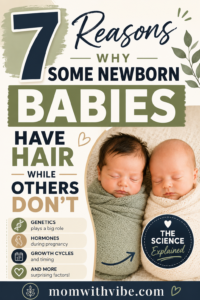
Some newborns arrive with a full head of hair, while others have barely any, and both are completely normal. This difference usually has nothing to do with a problem, and it often comes down to genetics, family background, hormones, lanugo, gestational age, and how that first hair changes after birth.
If you’ve been comparing your baby to other newborns, you’re not alone. Hair can look thinner, patchier, or fuller depending on what happened during pregnancy, and it often changes again in the first months, too. If bath time is on your mind as well, gentle hair washes for newborns can help protect delicate strands. The first reason starts with what your baby inherited before birth.
The biggest reason is genetics
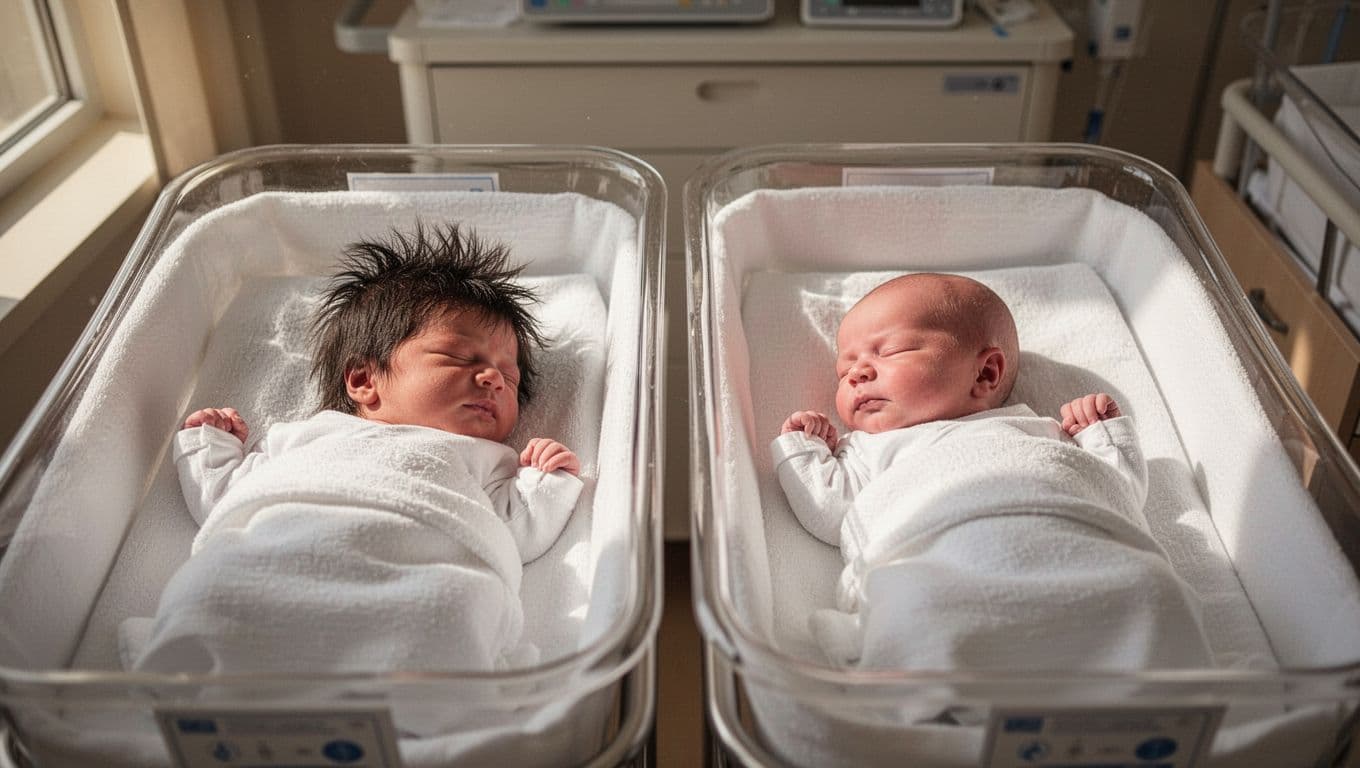
When a newborn has a full head of hair, a light fuzz, or almost none at all, genes are usually doing most of the work. Babies inherit a mix of hair traits from both parents, and that mix can shape how many follicles are active before birth, how fast hair grows, and how thick those strands look at delivery. Research from 23andMe on newborn hair traits shows that more than one DNA marker can influence this trait, which is why the results can look different even inside the same family.
Family history is a clue, not a promise.
How parents pass down newborn hair traits
A baby can inherit more hair from one side of the family, less hair from the other, or a mix of both. That happens because newborn hair is not a simple copy of mom or dad. Instead, many genes work together, and each one can nudge hair growth in a different direction.
If one parent had thick hair as a baby and the other was born nearly bald, the child might land anywhere between those two traits. Even relatives who share the same parents can have very different newborn hair patterns, because they do not inherit the exact same gene mix. So, family history helps, but it never gives a perfect prediction.
Why siblings can look different at birth
Brothers and sisters can start life with very different amounts of hair because genes get reshuffled with every pregnancy. A baby may inherit more of the hair-growth signals from one parent, while a sibling gets a different set.
For example, one child might arrive with a full, dark tuft because both sides passed along strong hair-growth traits. A younger sibling could be born with a smooth scalp because the gene mix tilted the other way. The parents are the same, but the genetic recipe changes each time, which is why newborn hair can vary so much within one family.
Ethnic background can influence how much hair a baby has
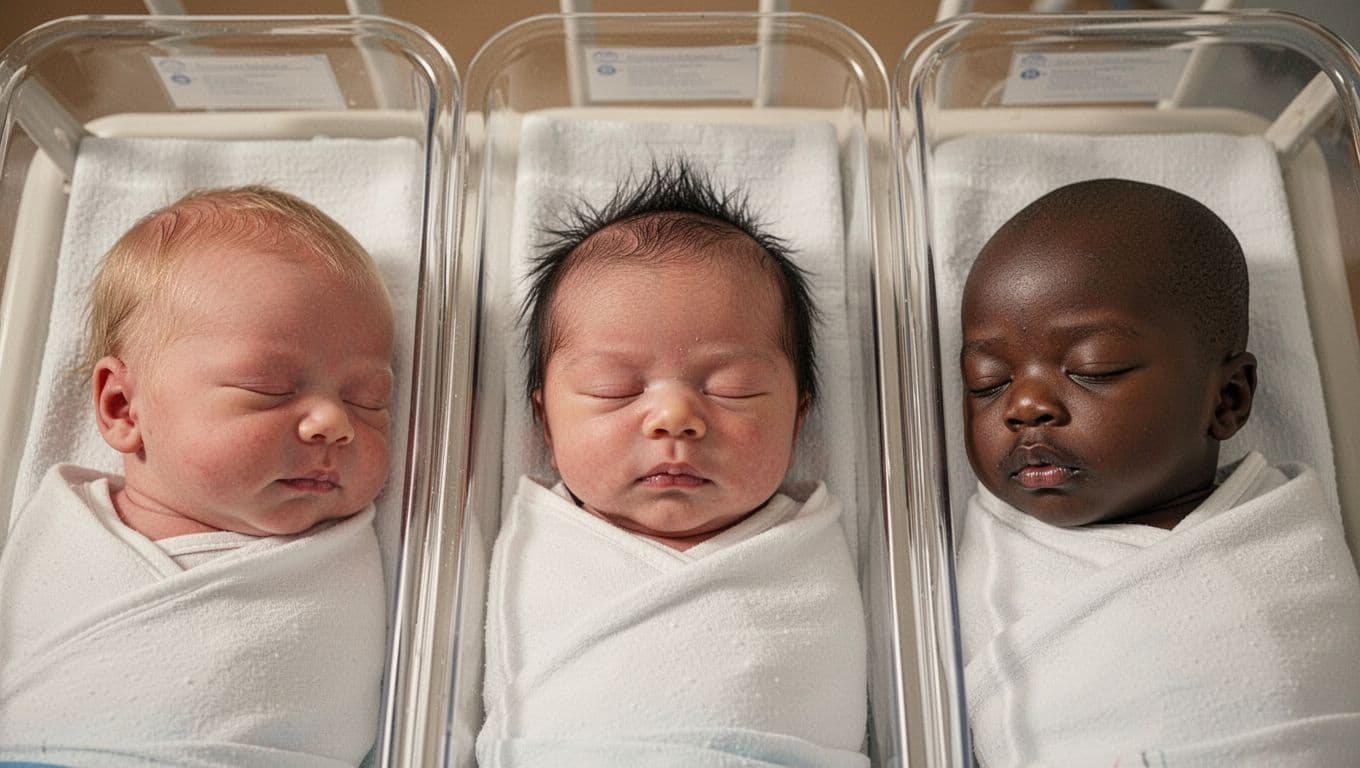
Ethnic background can shape the odds of a baby having more visible hair at birth, but it never gives a sure answer. Hair amount, color, and texture are all inherited traits, and they can vary a lot from one baby to the next.
That means a baby from a group where thicker or darker hair is more common may still be born with very little hair. A baby from another background may arrive with a full head of hair and keep it. For a broader look at how hair traits differ across populations, a study of hair traits across ethnic groups found clear variation in density, color, and shape.
Ethnicity can shift the odds, but it does not write the full story.
Why babies from the same family can still vary a lot
Even within one extended family, newborn hair can look completely different. That happens because babies inherit a mix of traits from both parents, and those traits do not land the same way every time.
Ancestry can influence the starting point, yet it is only one piece of the puzzle. Two babies in the same family may inherit different gene combinations for follicle count, strand thickness, pigment, and curl pattern. As a result, one child may be born with darker, fuller hair, while a sibling has soft fuzz or almost none at all.
This is also why broad patterns are only averages. Babies with darker hair or darker skin often do have more visible hair at birth, but plenty of exceptions exist. A fair-skinned baby can be born with thick hair, and a baby from a dark-haired family can still have a smooth scalp.
The safest way to think about it is simple: ethnic background can influence the odds, but it does not set the outcome. Your baby’s hair at birth is shaped by family traits, not by one fixed rule.
Hormones in pregnancy help shape newborn hair
Pregnancy hormones do more than support growth and development, they also help set up a baby’s first hair. While your baby is still in the womb, high hormone levels can keep hair follicles active longer, which helps explain why some newborns arrive with a fuller head of hair.
After birth, those hormone levels drop fast. That shift helps explain both sides of the story, why some babies are born with more hair, and why many lose some of it in the first months.
How hormone levels can boost hair before birth
During pregnancy, estrogen and other hormones stay high, and that supports hair growth in a simple way. More follicles stay in their active phase, so hair keeps growing instead of resting and falling out.
Your baby also grows in a very hormone-rich environment through the placenta, which affects how the body develops before birth. That includes scalp hair and the soft body hair called lanugo, which often fades before delivery or soon after. A helpful overview from Cleveland Clinic on lanugo explains how this fine hair forms during pregnancy and why it usually goes away.
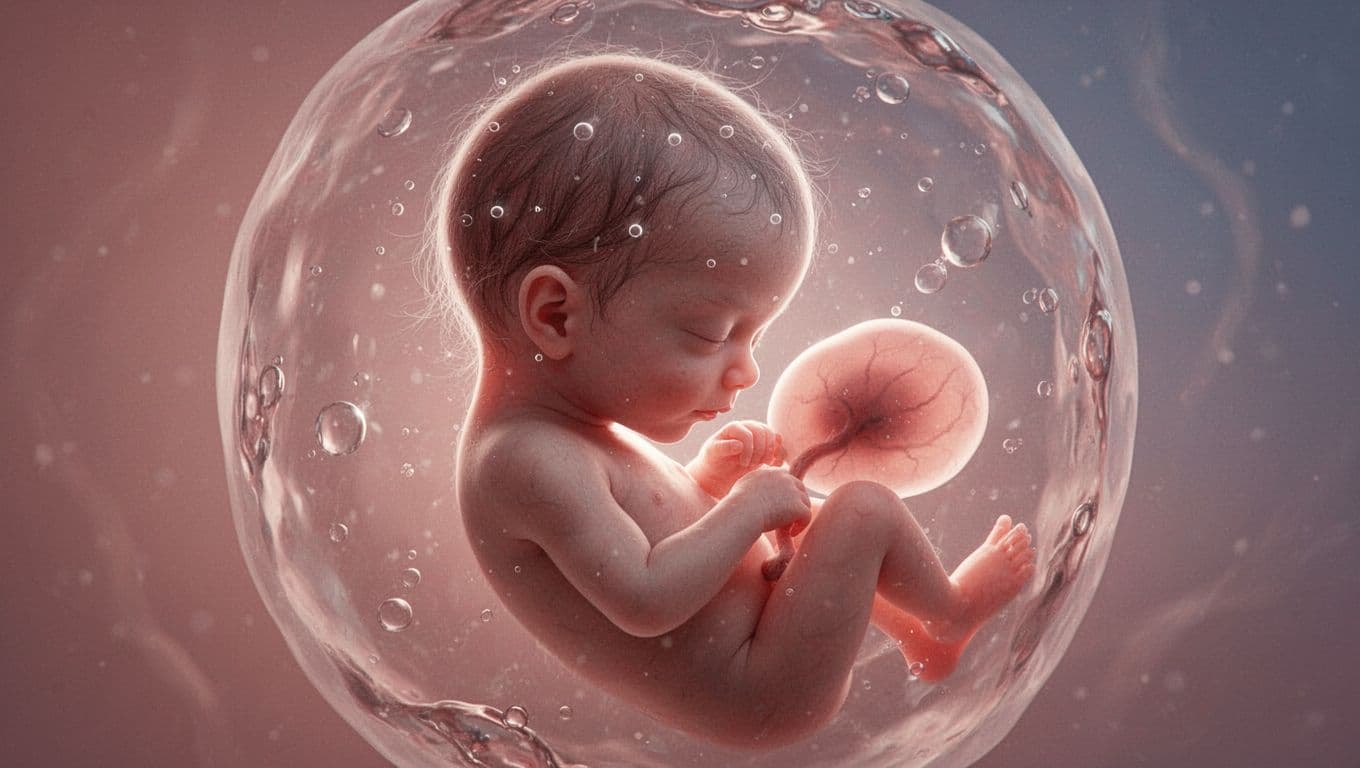
By the third trimester, many babies have already started growing visible scalp hair. The amount they keep at birth depends on genes, timing, and how long those follicles stayed in growth mode.
Why hair often sheds after the baby is born
After delivery, hormone levels fall quickly. That change can push some hair follicles out of the growth phase and into a resting phase, which leads to shedding a few weeks or months later. This is a normal part of the hair cycle, and it does not mean something is wrong.
You may notice more hair loss on the back of the head, especially if your baby sleeps in the same position often. Friction from the mattress or car seat can make that shedding look more obvious.
A baby can be born with plenty of hair and still lose some of it soon after. That pattern is usually temporary.
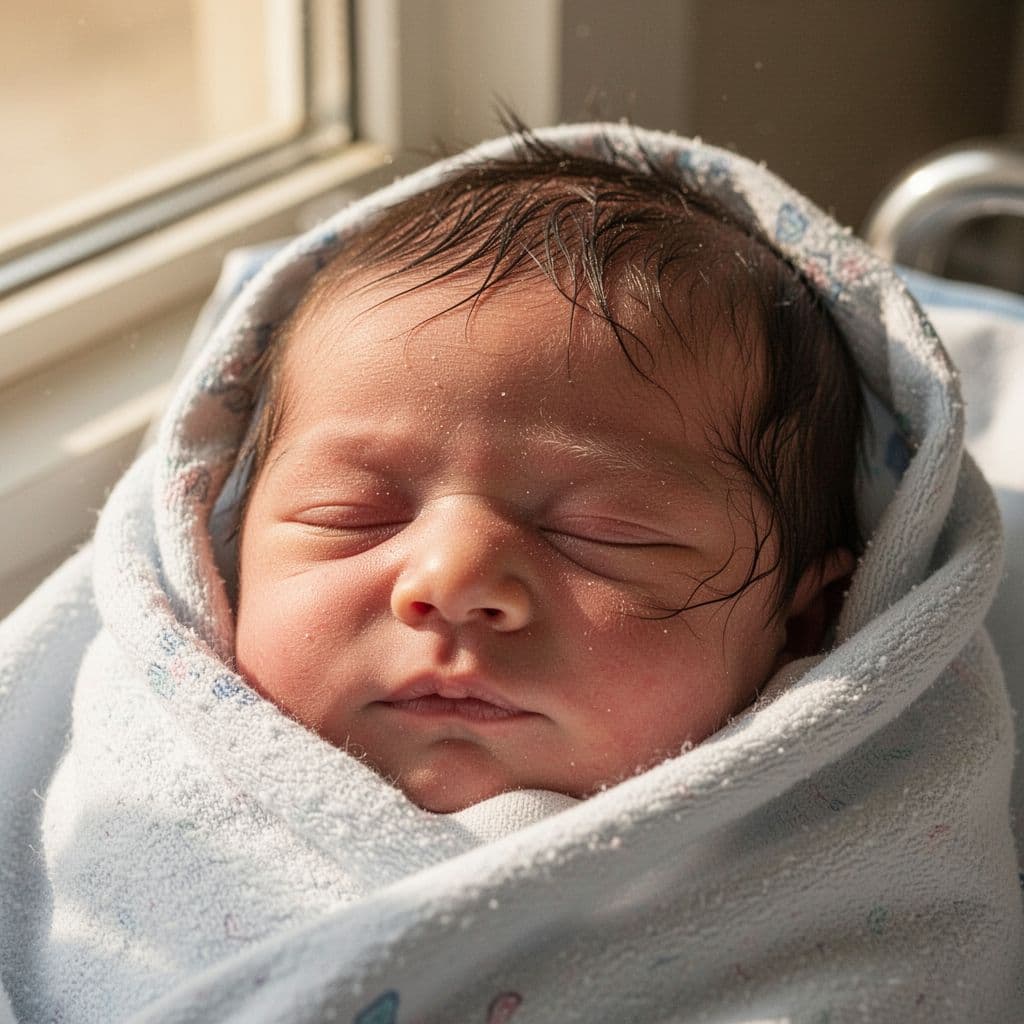
The good news is that this stage usually passes. Hair often grows back over the next several months, and the new growth may look different in color or texture at first. The same sharp hormone drop can also affect moms, which is why temporary hair thinning post-childbirth is so common after delivery.
If your baby’s hair thins out early, it’s usually just part of that first adjustment period. Hormones helped shape the hair before birth, and hormone changes after birth help explain why it changes again.
Lanugo can make a baby look hairier than expected
Sometimes a newborn looks covered in a soft coat of hair, especially on the shoulders, back, cheeks, or forehead. That hair is often lanugo, a temporary layer that starts before birth and usually fades on its own after delivery. It can make a baby seem much hairier than expected, even when the scalp hair is light or barely there.
Lanugo is different from the thicker hair on the scalp. It is finer, softer, and usually more spread out across the body. If you want a simple medical overview, the Cleveland Clinic explains lanugo clearly.
What lanugo does before birth
Before birth, lanugo helps protect a baby’s skin in the womb. It holds vernix in place, which is the creamy coating that shields delicate skin from constant contact with amniotic fluid.
That matters because a baby’s skin is still developing. Lanugo works like a light mesh that keeps vernix where it needs to be, so the skin stays protected and less irritated. In short, it is part of the body’s early setup, not a sign of extra scalp hair.
Why premature babies may still have lanugo
Babies born early often still have visible lanugo because they had less time to shed it. Many full-term babies lose most of it before birth, but preterm babies may still show that soft fuzz at delivery. MedlinePlus notes that this is more common when an infant is born before the due date and that it usually disappears within the first few weeks of life.
The key thing to remember is that lanugo is not the same as true scalp hair. Scalp hair grows from the head and tends to look thicker or darker. Lanugo is body hair, thin enough to look like peach fuzz. So if a premature baby seems extra hairy, that hair is often lanugo, and it usually falls away without any treatment.
Gestational age changes how much hair has time to grow
A baby’s gestational age can shape how much scalp hair is present at birth. Hair follicles start early, but they keep maturing through pregnancy, so the baby who spends more time in the womb usually has more time for that hair to grow.
That timing matters most in the last trimester. By then, scalp hair has had weeks to lengthen, darken, or fill in, which is why two healthy babies can look so different on day one.
Why the last trimester matters so much
Hair follicles begin forming in the second trimester, and scalp hair keeps developing after that. The final stretch of pregnancy is when the baby has the most time to build visible hair on the head.
According to the NCBI hair embryology overview, fetal hair structures are already present well before birth. As pregnancy continues, that hair has more time to grow longer and become easier to see. In other words, the later the baby reaches birth, the more time the scalp hair has had to develop.
This is also why the last trimester stands out. Around 32 to 36 weeks, babies begin shedding much of the fine body hair called lanugo. A baby born before that point may still have that soft fuzz, while a baby born later often has less of it and more settled scalp hair.
More time in the womb usually means more time for hair growth.
What early birth and late birth can mean for hair
A baby born early often has less scalp hair simply because there was less time for it to grow. That hair may look shorter, finer, or patchier at birth, even when the baby is healthy and developing normally.
A baby born at full term may have more visible hair, but not always. Some full-term newborns have a full head of hair, while others still look nearly bald. Timing matters, but it does not work alone.
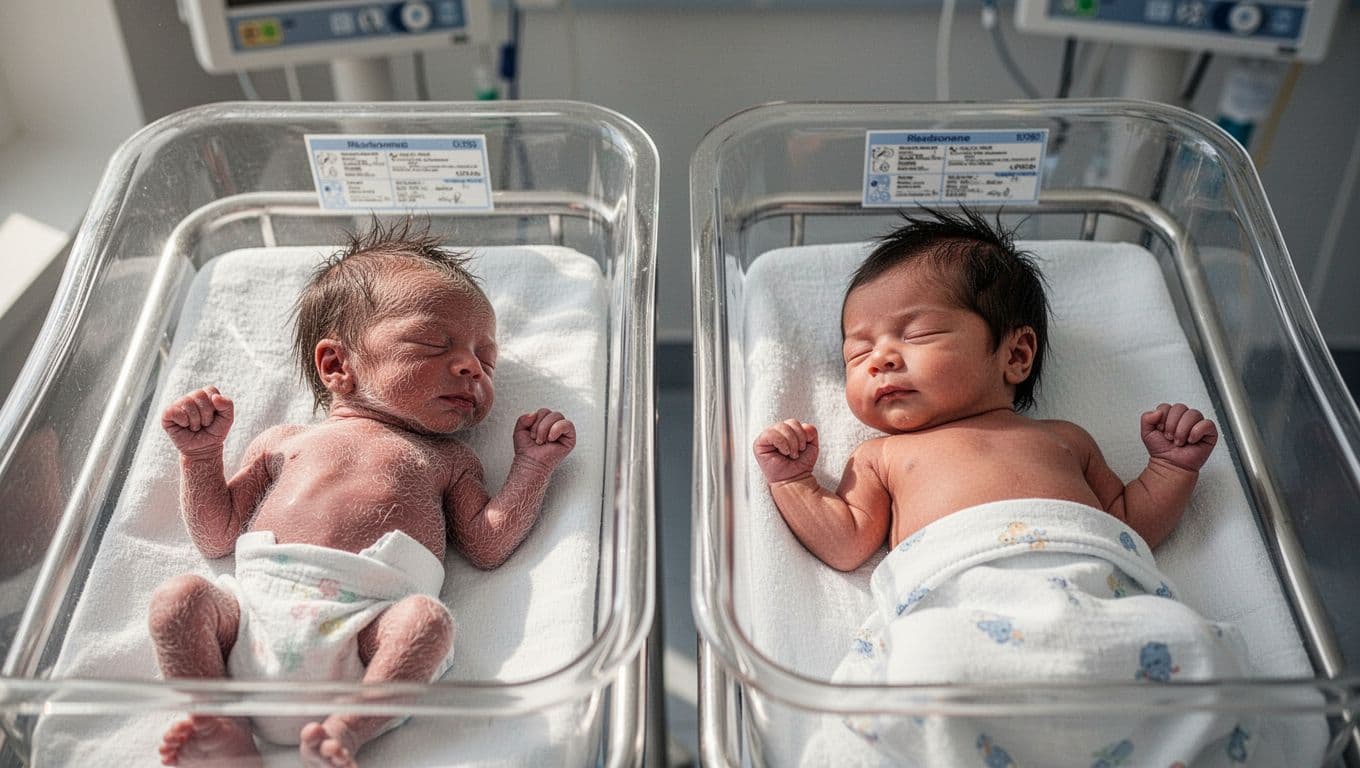
If a baby arrives a little after the due date, that extra time can make scalp hair look a bit fuller. Even then, newborn hair often changes fast in the first months. A baby may start with a full head of hair, then shed some of it, or begin with very little and fill in later.
Here is the simple pattern:
- Premature babies often have less scalp hair and more visible lanugo.
- Full-term babies may have more hair time to grow, so the scalp can look fuller.
- Babies born a little later may have had even more time for hair to show, though the difference can be small.
A newborn hair review on PubMed notes how widely hair amount and texture can vary in the newborn period. That variation is normal. Gestational age just helps explain why one baby arrives with a fuzzy scalp and another with thick, dark hair.
A few lesser-known factors can also affect newborn hair
Some newborn hair differences come from smaller details that are easy to miss. A baby’s head position, the amount of rubbing on the scalp, and the normal hair cycle after birth can all change how hair looks in the first months.
That’s why one baby can seem to lose hair on the back of the head, while another keeps a fuller look for longer. These changes are usually part of normal newborn development, not a sign that something is wrong.
Why hair color and texture can surprise parents later
The hair a baby is born with is often not the hair they keep. New hair can come in darker, lighter, curlier, or straighter as a baby grows, and that shift can happen fast during the first year.
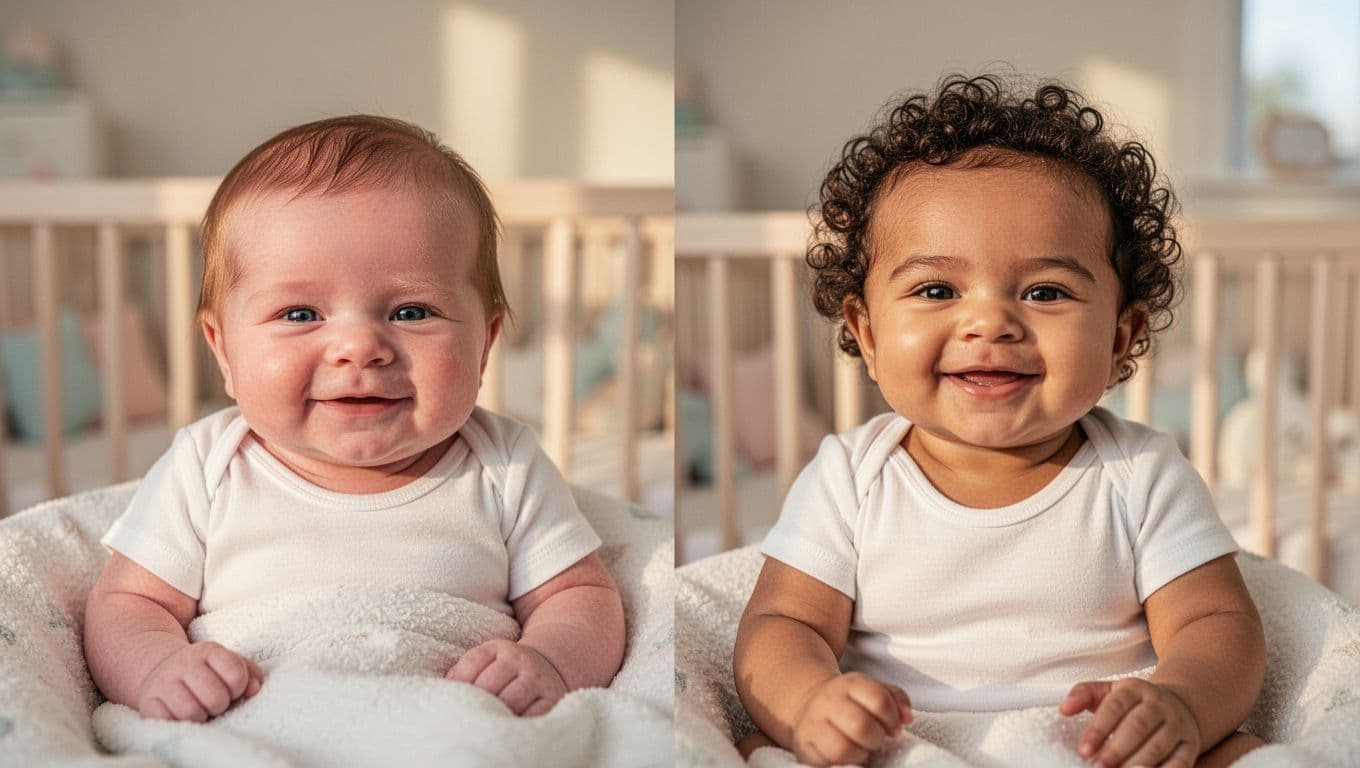
This change happens because newborn hair goes through a transition. The first soft strands often fall out, then new growth takes over with a different look. A baby born with fine, straight hair may later grow thicker curls, while a dark-haired newborn may come back with lighter strands.
Hair color can also shift as pigment settles in. A baby’s final shade may not show up right away, and that can keep changing for a while. For a simple medical overview of how newborn hair can change, BabyCenter explains why baby hair often looks different later.
Newborn hair is a starting point, not a final version.
Parents often worry when the change looks dramatic, but that part is common. The better question is whether the scalp looks healthy and whether hair growth keeps moving forward over time.
When newborn hair differences are usually normal
A wide range of newborn hair patterns is normal. Some babies have bald spots, some have thin fuzz, and others are born with thick hair that later sheds and grows back.
A bald patch on the back of the head is often caused by rubbing against a crib sheet, mattress, or car seat. Health information from Cleveland Clinic on hairy babies notes that this kind of friction spot is common and usually fills in once babies move around more.
Temporary shedding is normal too. Many babies lose some hair in the first months, then the new growth comes in later. Hair loss from this early cycle often looks patchy, but the scalp stays smooth and the baby otherwise seems well.
Here’s a simple guide to what usually falls in the normal range:
- Thin hair at birth: Some babies just start with less visible hair.
- Thick hair at birth: Others arrive with a fuller scalp and may still shed later.
- Bald spots on the back of the head: This often comes from regular rubbing.
- Early shedding: Hair loss in the first months is common and usually temporary.
Ask a pediatrician if the hair loss seems severe, if the scalp looks red or scaly, or if your baby still has no hair growth over time. A newborn skin reference from MedlinePlus also notes that newborn hair can vary widely and that some hair changes are simply part of normal development.
If the scalp looks healthy and hair begins to come in, that’s usually a good sign. When hair never starts growing, or shedding keeps going past the usual newborn stage, it’s time to bring it up at a checkup.
Conclusion
Newborn hair varies for normal reasons, and the biggest ones are genetics, ethnic background, hormones, lanugo, and gestational age. Some babies arrive with a full head of hair, while others start with very little, and both are healthy patterns.
That first hair does not predict what your child will look like later. Hair often changes in the months after birth, so a bald patch, soft fuzz, or thick tuft at delivery is just part of the newborn stage.
For most parents, the best approach is simple, enjoy the baby you have now and let the hair sort itself out over time.
Save pin for later

- 10 Things You Shouldn’t Do in Front of Your Baby (and What to Do Instead) - September 22, 2026
- 15 Effective Ways to Deal With Stubborn Children (Without Yelling) - September 22, 2026
- Birth Order Influence: 8 Things Parents Should Know About Each Child - September 22, 2026