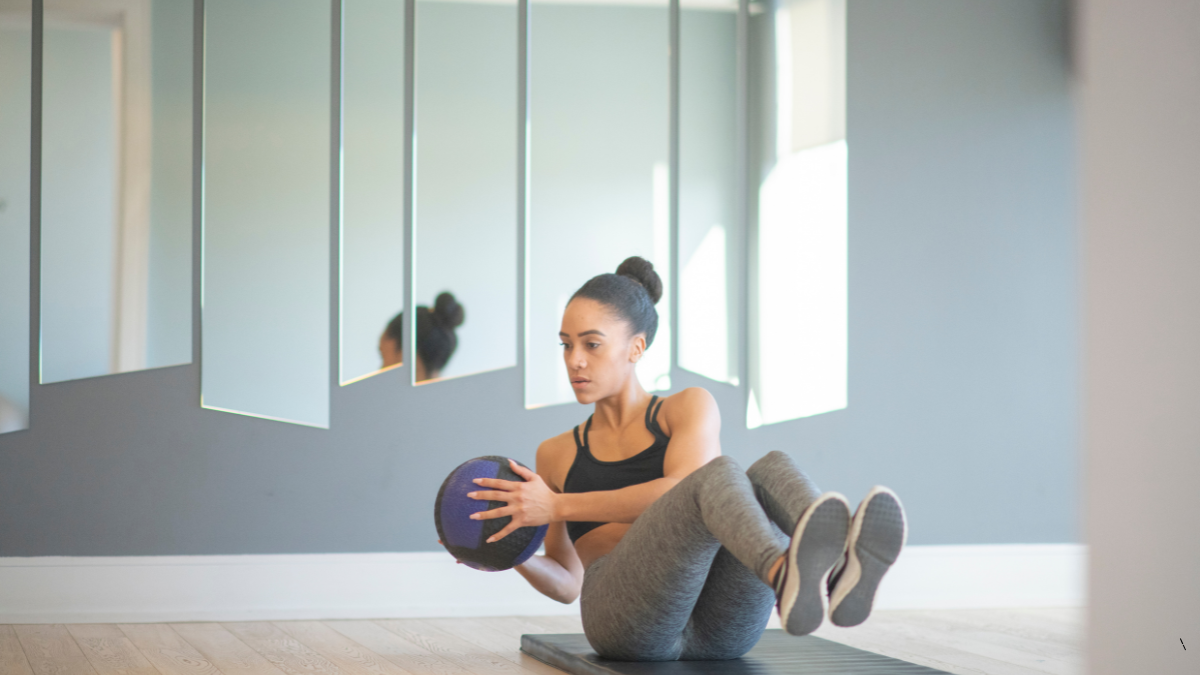
The safest postpartum core work starts small and stays controlled. That means breathing first, then gentle activation, then simple floor moves, and finally light walking as your body allows.
Crunches and long planks ask too much too soon. Early recovery needs moves that teach your core to work with your breath and pelvic floor, not against them. If anything causes pain, pressure, leaking, or doming, stop and scale back.

Breathing and deep core connection
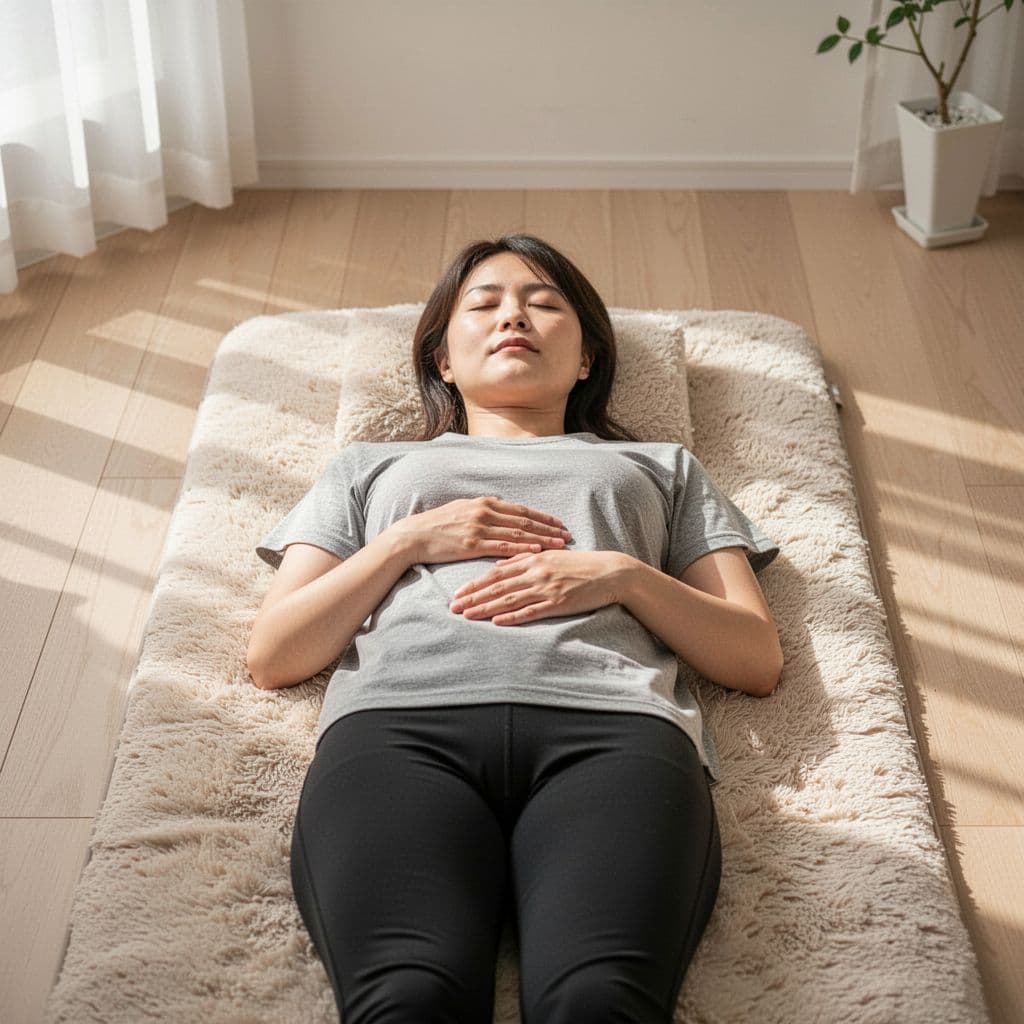
Diaphragmatic breathing is one of the best first steps because it helps your deep core wake up without strain. As you inhale, let your ribs widen and your belly soften. As you exhale, gently draw your lower abdomen inward, like you’re zipping up a snug pair of jeans.
Keep the effort light. You should feel a soft lift through the belly and pelvic floor, not a hard brace. A slow rhythm, in through the nose and out through the mouth, helps your body find coordination again.
This is also where your pelvic floor and diaphragm begin working as a pair. When the breath is smooth, the core usually feels more connected and less tense. For a simple guide to body-friendly recovery habits, morning routines for new mothers can help you build this into your day.
If you hold your breath or grip your stomach, the exercise is too hard right now.
Pelvic floor contractions that support the core
Gentle pelvic floor squeezes, often called Kegels, can help rebuild awareness in the muscles that support your bladder and pelvis. Think of a soft lift and release, not a hard clench. The goal is control.
Squeeze for a moment, then relax fully before the next one. That relaxation matters just as much as the squeeze, because tight muscles need space to recover. These muscles do their best work with the rest of the core, especially the diaphragm and lower abdomen.
A simple pattern is enough to start:
- Gently tighten
- Hold briefly
- Fully relax
- Repeat a few times
Keep the motion light and clean. If you feel pressure, pain, or more tension afterward, back off and try again later.
Heel slides, bridges, and other gentle floor moves
Once breathing and pelvic floor work feel steady, you can add low-pressure floor exercises. Heel slides are a good place to begin because they train control without forcing your abs to brace. Lie on your back with bent knees, then slowly slide one heel away and return it, keeping your belly flat and your ribs calm.
Small bridges can also work if your body stays stable. Lift your hips only a little, then lower with control. If you see doming in your belly or feel strain in your back, skip it for now and stay with heel slides or pelvic tilts.
Walking the feet in and out, marching one foot at a time, or doing tiny pelvic tilts can also help. Short ranges of motion are better than big, sloppy ones. The point is to move well, not to move far.
A few form rules make a big difference:
- Move slowly and keep your breath steady
- Stop the moment your belly domes
- Keep the pressure low in your abdomen
- Choose quality over reps
For more movement ideas that fit early recovery, fun postpartum exercises with baby can give you gentle options that still feel realistic at home.
Walking as a safe way to rebuild strength
Walking is one of the safest first steps back to movement after birth. It supports circulation, helps you ease out stiffness, and gives your core a chance to work during real-life motion. A short walk around the block can do more good than a workout that leaves you sore or pressured.
Start with a distance and time you can handle comfortably. Then build slowly, adding a few minutes or a little more distance as your body responds well. Speed and intensity can wait.
Pay attention to how you feel later in the day, not just during the walk. If your pelvis feels heavy, your belly feels strained, or your bleeding increases, you did too much. A slower pace keeps recovery moving in the right direction.
If you want a simple benchmark, aim for walks that leave you feeling better, not wiped out. That is the kind of steady work that helps postpartum core strength come back without pushing too hard.
What to avoid while your core is still healing
Early postpartum core work should feel controlled, quiet, and low-pressure. Some moves ask your body to brace hard before it has the strength or support to do that well. That can slow recovery, increase doming, and make pelvic floor symptoms worse.
Your goal is to protect healing tissues while they reconnect. If an exercise creates strain, pressure, or a heavy feeling, it belongs on pause for now.
Exercises that can put too much pressure on your belly
Skip high-pressure moves early on, even if they used to feel easy. Crunches, sit-ups, planks, jumping, running, heavy lifting, and twisting moves can all raise abdominal pressure fast. When that pressure builds before your core is ready, it can strain the pelvic floor and pull on a healing midline.
That does not mean these exercises are bad forever. It means timing matters. In the early weeks, they often create more harm than help, especially if you notice leaking, doming, back pain, or pelvic heaviness.
A few moves to hold off on include:
- Crunches and sit-ups, because they push the abdominal wall inward and can increase doming
- Planks, because they demand strong bracing that may be too much too soon
- Jumping and running, because impact can jar the pelvic floor
- Heavy lifting, because it often makes you hold your breath and bear down
- Twisting moves, because they can add stress to already stretched tissues
If you had a C-section, extra caution helps even more. The abdominal wall needs time to heal on the inside, not just at the skin level. Realistic expectations for c-section recovery can help you understand why slow is smart here.
Form mistakes that make gentle exercises less safe
Even gentle exercises can turn into too much when form slips. Holding your breath is a big one. It increases pressure inside the belly and can make the pelvic floor work harder than it should.
Rushing through reps creates the same problem. Your body needs time to stay connected, so slow and steady wins here. Arching your back is another common issue, because it shifts the work away from the deep core and into the lower back.
Pain is a clear stop sign. If you feel pulling, pressure, leaking, or a worsening ache, do not push through it. Your body is giving you useful feedback.
How to modify a move when it does not feel right
If an exercise feels off, make it easier right away. Shorten the range of motion, slow the pace, or cut the number of reps. Sometimes a small change is enough to keep the move safe.
If the symptoms stay, stop the exercise completely and come back later. You do not earn points for forcing progress, and you do not need to prove anything to make recovery count.
A good rule is simple: comfort first, control second, intensity last. When your body feels steady, gentle work can move you forward without adding pressure you do not need.
How to build a simple postpartum core routine at home
A good postpartum core routine does not need much time or equipment. It needs a clear order, a light touch, and enough flexibility for real life. When you keep it simple, you are more likely to repeat it, and repetition is what helps the deep core relearn its job.
Start with a few minutes of breathing, add pelvic floor work, then finish with one or two gentle moves. That small structure gives your body a steady signal without overwhelming it. On tired days, that is often enough.
A short daily routine for the early weeks
Keep the first version of your routine short enough that you won’t talk yourself out of it. Ten minutes is plenty for many parents, and even five minutes can help if you stay consistent.
A simple early-weeks routine can look like this:
- Lie on your back or sit supported.
- Take 5 slow breaths, letting your ribs widen as you inhale.
- On each exhale, gently lift the pelvic floor, then relax fully.
- Do 5 heel slides per side.
- Finish with 5 small pelvic tilts.
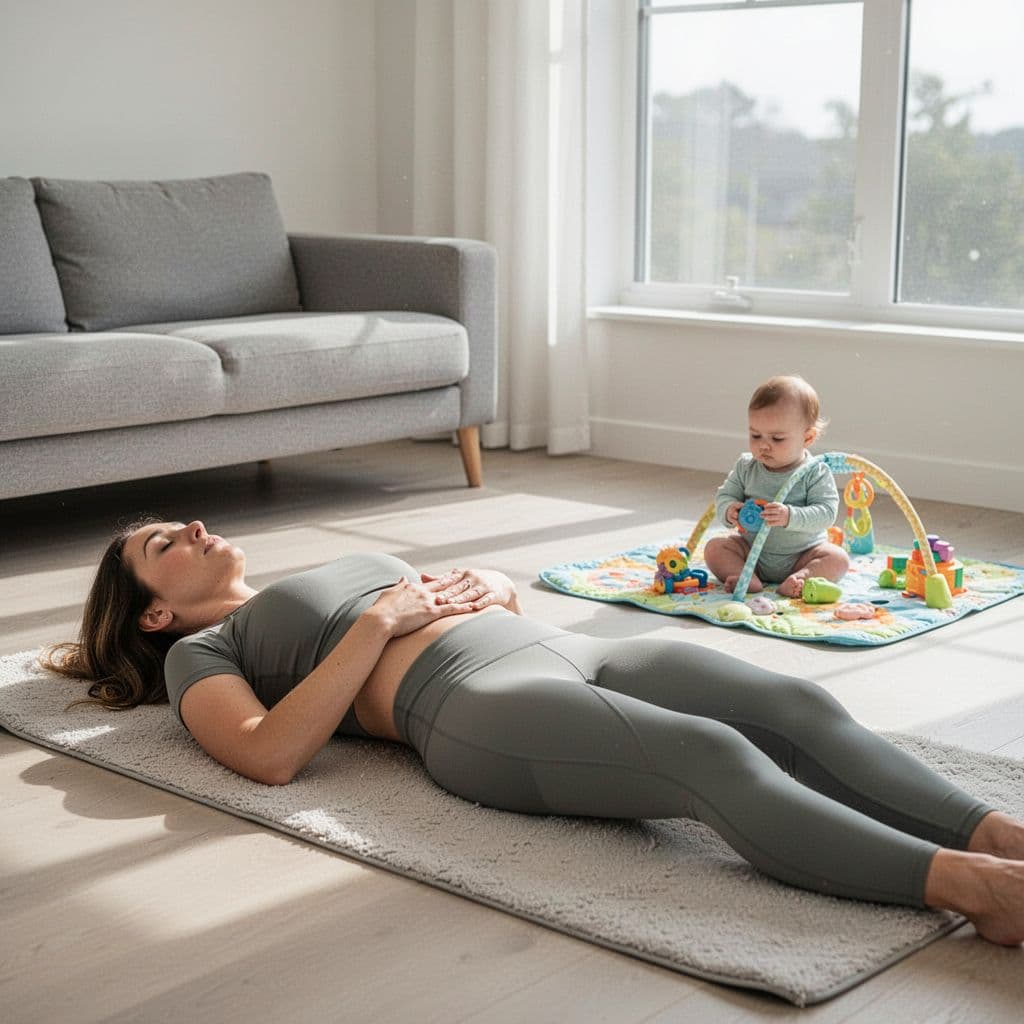
This kind of routine works because it is calm and repeatable. You are not chasing fatigue or a burn. You are teaching your body to connect breath, support, and movement again.
If you feel good, you can do this once a day. If your schedule is messy, split it into tiny pieces, like breathing after a feeding and heel slides later in the day. That still counts.
Small sessions done often usually beat a perfect routine you never finish.
How to progress without overdoing it
Progress only when the current routine feels easy and symptom-free. That means no pain, no leaking, no heaviness, and no doming in your belly. When those signs stay quiet, you can add a little more.
The safest way to progress is gradual. Try one change at a time, such as:
- Adding 2 to 3 reps
- Holding the exhale or pelvic floor lift a little longer
- Slowing the movement down
- Adding one new exercise after the current one feels smooth
Give each change time to settle before you add more. Your body does not need to match anyone else’s pace, because healing is not a race. Some days will feel strong, and some will feel like a reset. Both are normal.
A helpful rule is to wait until the movement feels almost too easy before you level up. That keeps the work gentle and gives your tissues room to adapt. If symptoms return, step back and stay there a bit longer.
How to fit core rehab into baby life
The easiest routine is the one that fits around your baby’s day, not against it. Nap time, after a feeding, or a few minutes on a play mat are all good windows. You don’t need a perfect block of time to make progress.
Try attaching your routine to moments that already happen:
- After the first morning feed
- During one nap
- While baby is on the floor playing
- Before your own shower or stretch break
This makes the habit feel less like another chore. It also lowers the pressure to “get it right” every day. Some days you may complete the full routine, and other days you may only do breathing and one move.
That still helps. Recovery grows through small, steady choices, especially when sleep is short and plans keep changing. If you can pair your exercises with an existing part of the day, the routine becomes easier to keep.
Conclusion
Postpartum core strengthening at home works best when it stays gentle, steady, and tied to healing first. The safest progress comes from breath work, light core activation, and simple moves that help you feel stronger in daily life without adding pressure.
If you notice pain, leaking, doming, or pelvic heaviness, slow down and scale back. Those signs mean your body needs more support, not more effort. Small exercises done well can rebuild control and confidence over time.
Progress is possible, even if it feels slow right now. If symptoms do not improve, a doctor or pelvic floor therapist can help you find the right next step.
Save pin for later

- 12 Things Pregnant Women Do When They’re Alone - June 7, 2026
- 25 Healthy Pregnancy Snacks You Should Try - June 7, 2026
- 100 Funny Baby Jokes That Will Make You Laugh - May 15, 2026