STEM stands for science, technology, engineering, and math, and for kids aged 5 to 7, it works best through play. At this age, children learn by touching, building, testing, counting, and trying again, so the best STEM activities for kids feel more like games than lessons.
You do not need fancy supplies or a long setup to make that happen. A few cups, blocks, tape, paper, or kitchen items can turn into simple experiments that help your child observe, solve problems, and think through what happens next. If you want ideas that fit your child’s stage of growth, choosing age-appropriate STEM projects makes a big difference.
These activities also build confidence, because kids can see results right away. They count, compare, build, and test, then repeat the activity with small changes, which is exactly how early learning sticks.
For a quick visual example, this kid-friendly science project is a good place to start:
Why STEM learning works so well at this age
Ages 5 to 7 are a sweet spot for STEM because children are ready to explore with their hands and their words at the same time. They want to touch, move, sort, build, and test, which makes early STEM feel natural instead of forced.
At this stage, kids are not looking for perfect answers. They are looking for patterns, surprises, and small wins. That is why STEM learning fits so well, it turns everyday curiosity into real thinking.
How hands-on play helps kids remember what they learn
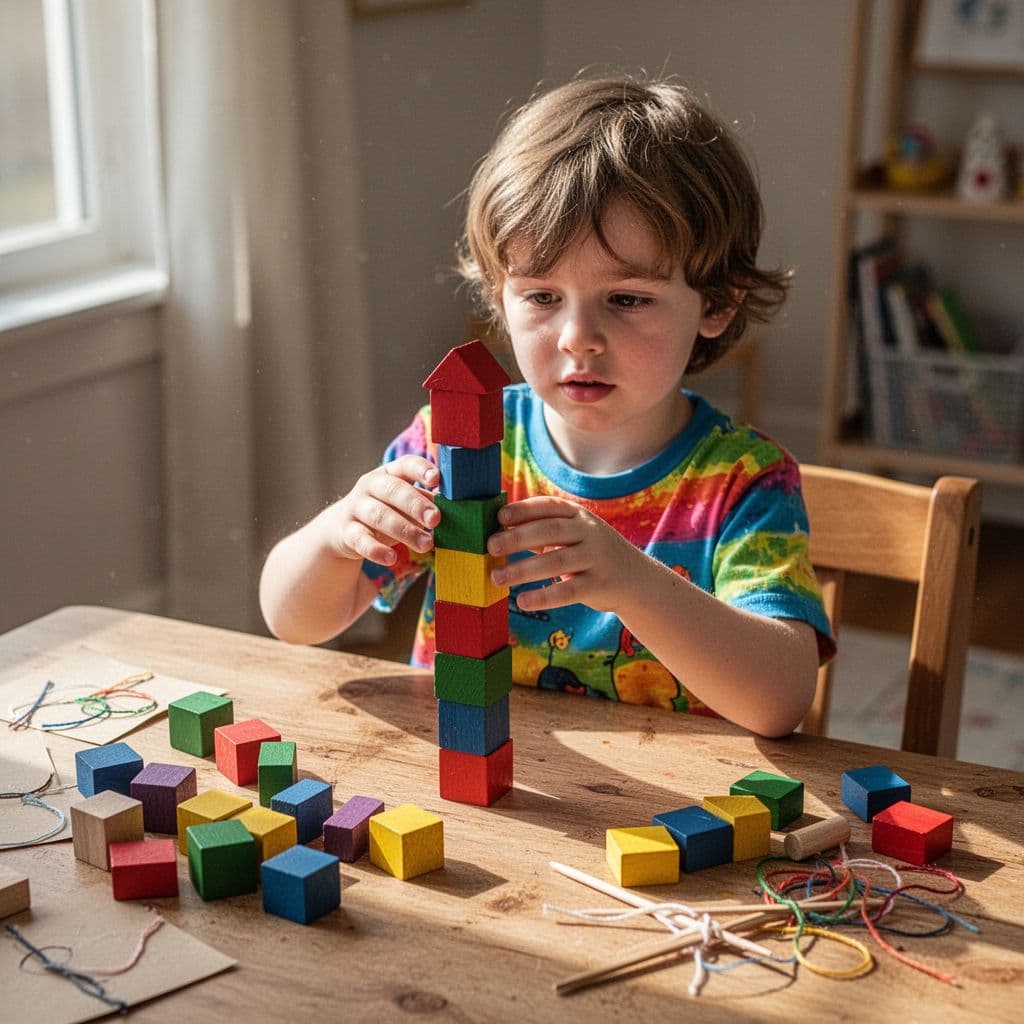
Hands-on learning sticks because children are doing more than listening. They can see what changes, feel the difference, and talk about what happened right away. That mix of movement, sight, and language helps ideas settle in faster.
A child who pours water into different cups understands volume better than a child who only hears the word. The same is true for blocks, magnets, ramps, and sorting games. When kids watch cause and effect happen in front of them, the lesson gets tied to a real experience.
This kind of learning also supports language growth. Children naturally describe what they notice, compare results, and ask questions. In other words, STEM gives them something worth talking about, which helps new ideas stick. Research on informal STEM learning shows that these kinds of active experiences can support school readiness and early science thinking, especially when kids explore outside formal lessons. See this review on informal STEM learning for a deeper look.
Young children remember what they do more easily than what they only hear.
What children aged 5 to 7 are ready for
Kids in this age group can handle simple patterns, basic counting, sorting, and early predictions. They can also build with blocks, compare shapes, and follow a few steps at a time without feeling overwhelmed.
That doesn’t mean STEM should feel like schoolwork. It should feel like exploration. A child is more likely to stay engaged when the task feels like a challenge, not a worksheet.
At this stage, they are also building fine motor skills. Grasping small pieces, stacking objects, and using simple tools all strengthen control and coordination. Just as important, they begin practicing patience, flexibility, and trying again after mistakes.
If you want more ideas that match this hands-on style, Montessori-inspired activities for young children fit this age group well because they invite children to explore at their own pace.
The big advantage of STEM at this age is simple, it meets kids where they are. They learn best when they can test ideas for themselves, then adjust and try again.
The easiest STEM activities are simple, open-ended, and low-prep
The best STEM activities for kids aged 5 to 7 do not need a big kit or a perfect plan. They work because they are easy to start, easy to change, and easy to repeat with a small twist.
That kind of activity gives kids room to test ideas on their own. They can build, sort, pour, stack, or compare, then try again with a different result. Open-ended play keeps them interested longer because they get to make choices, not just follow directions.
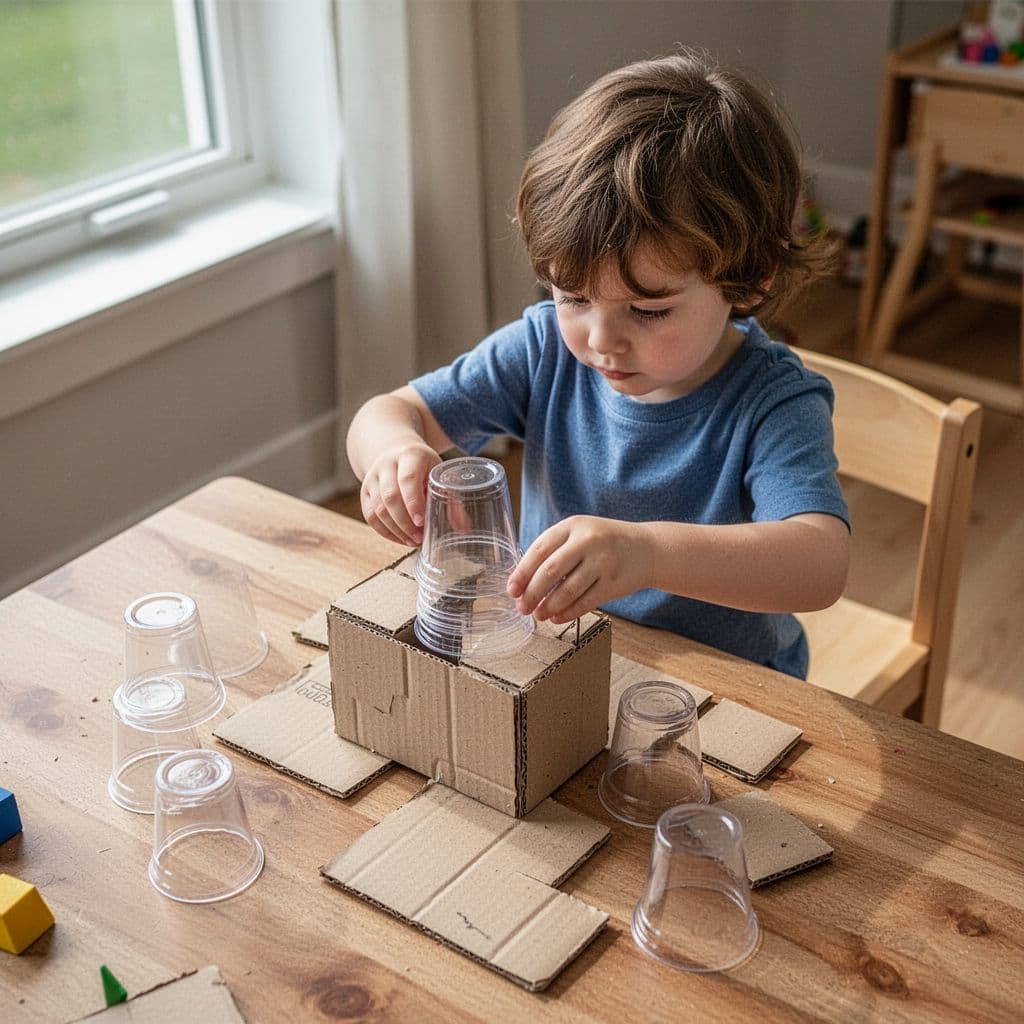
A simple setup also makes life easier for parents and caregivers. If you can grab a few cups, tape, paper, or recycled containers, you already have enough to begin. In fact, children often get more out of loose parts and everyday objects than from expensive toys, because the materials can be used in many ways.
If an activity takes too long to set up, it usually loses a 5-year-old before the fun starts.
What to look for in a great activity
A strong STEM activity has clear steps, a simple goal, and room for experimenting. The child should know what to do next, but still have space to make choices and see what happens.
Look for something that ends in a fun result, like a tower that stands, a bridge that holds weight, or a cup that floats or sinks. It should also be safe, quick to set up, and easy to repeat with small changes, such as more tape, a different shape, or a new material.
The best part is that kids do not need advanced instructions to stay engaged. A basic challenge often works better than a long explanation, especially when the activity leaves room for surprise. For more on why loose, hands-on play works so well, this overview of everyday-object STEM play explains the value of open exploration.
Everyday supplies that work really well
You probably already have most of what you need at home. These materials are useful because they can turn into science tests, building challenges, or math games in minutes.
A good starter box can include:
- Paper and cardboard for folding, tearing, building, and testing balance
- Tape for fastening, bridging, and simple structure work
- Cups and straws for stacking, pouring, and designing tall builds
- Spoons for scooping, moving, and measuring small amounts
- Magnets for sorting what sticks and what does not
- Water for pouring, floating, sinking, and comparing containers
- Pennies for counting, weighing, and balancing
- Blocks for towers, patterns, and shape play
- Recycled containers for ramps, storage, pouring stations, and pretend tools
These supplies are simple, but they open the door to a lot of play. With the right setup, a cardboard box can become a bridge test, a paper cup can become a launcher, and a spoon can become a measuring tool.
Science activities that turn everyday curiosity into discovery
Science feels exciting for kids ages 5 to 7 when it looks like play. A spoon, a magnet, a cup of water, or a leaf can turn into a tiny experiment with a clear result.
The best activities at this age focus on observation, prediction, and cause and effect. Keep the questions simple, keep the materials familiar, and let the child notice what changes. If you want the bigger picture on how playful learning supports growth, these ideas for boosting child intelligence fit well with this kind of hands-on exploration.
Messy but meaningful science experiments
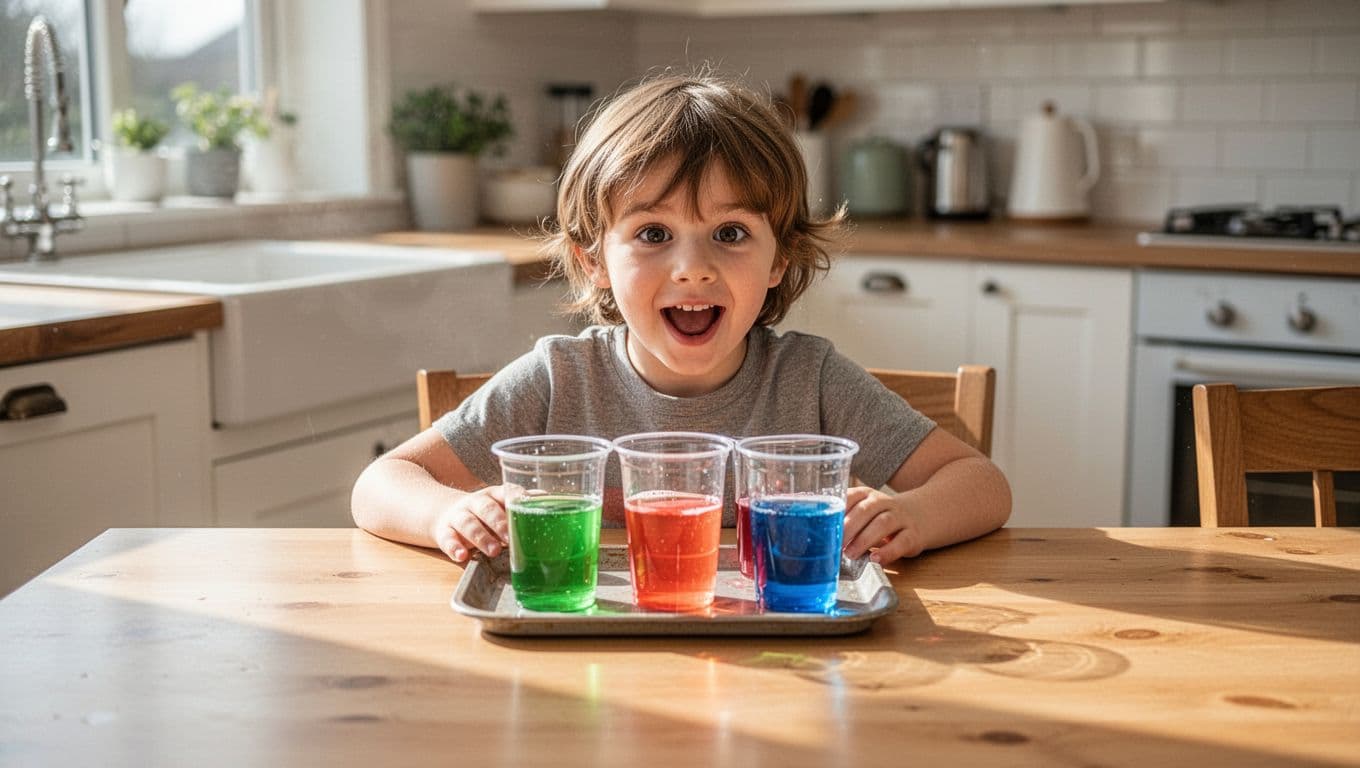
Quick experiments get attention fast because kids can see something happen right away. Baking soda and vinegar makes bubbles and foam. Color-changing water can turn a plain cup into a small surprise. Ice melting tests let children compare what changes faster in warm air, cool water, or on a sunny windowsill.
These activities work best when you keep the setup simple:
- Baking soda and vinegar: Let children guess what will happen before the fizz starts.
- Color mixing: Use food coloring in water and ask what new color appears when two are mixed.
- Ice melting: Put ice cubes on a plate, in salt, or in different bowls, then watch which one changes first.
Short experiments are easier to remember when the result is dramatic.
A child does not need a long explanation here. They need a clear moment to notice the reaction and say what they saw. For a classic sink-or-float test, this simple water science experiment is a good model for prediction and testing.
Nature-based STEM activities that build observation skills
Outside, science feels even more alive. Leaf sorting, bug hunts, cloud watching, and backyard scavenger hunts help kids slow down and look closely.
A child might sort leaves by shape, color, or size. During a bug hunt, they can notice where insects hide and what they move toward. Cloud watching opens the door to questions like, “Do those clouds look the same as yesterday?” A scavenger hunt adds a fun goal while training the eye to spot patterns.
These activities build better questions because children begin to compare what they see. They notice that some leaves are smooth and some are jagged, or that one cloud moves faster than another. That habit of comparing is the start of real scientific thinking.
How to talk about results without turning it into a lesson
Keep your language short and warm. Try prompts like, “What do you think will happen?” or “What changed?” Then follow with, “What stayed the same?” and “Why do you think that happened?”
You can also ask what the child wants to try next. Maybe they want to add more water, use a different leaf, or test a different object in the sink-or-float bowl. That last question keeps the curiosity going, which matters more than getting the “right” answer.
When kids talk through what they notice, they start connecting the steps on their own. That is where discovery begins.
Engineering projects that let kids build, test, and improve
Engineering activities are a great fit for kids ages 5 to 7 because they get to make something real. A tower, bridge, ramp, or paper airplane gives them a clear goal and a clear result. If it stands, rolls, floats, or flies, they can see it right away.
These projects work best when kids can try, test, and change one part at a time. That keeps the focus on the process, not perfection. It also makes the activity feel exciting, because each new version might work better than the last.
Building challenges with blocks, cardboard, and tape
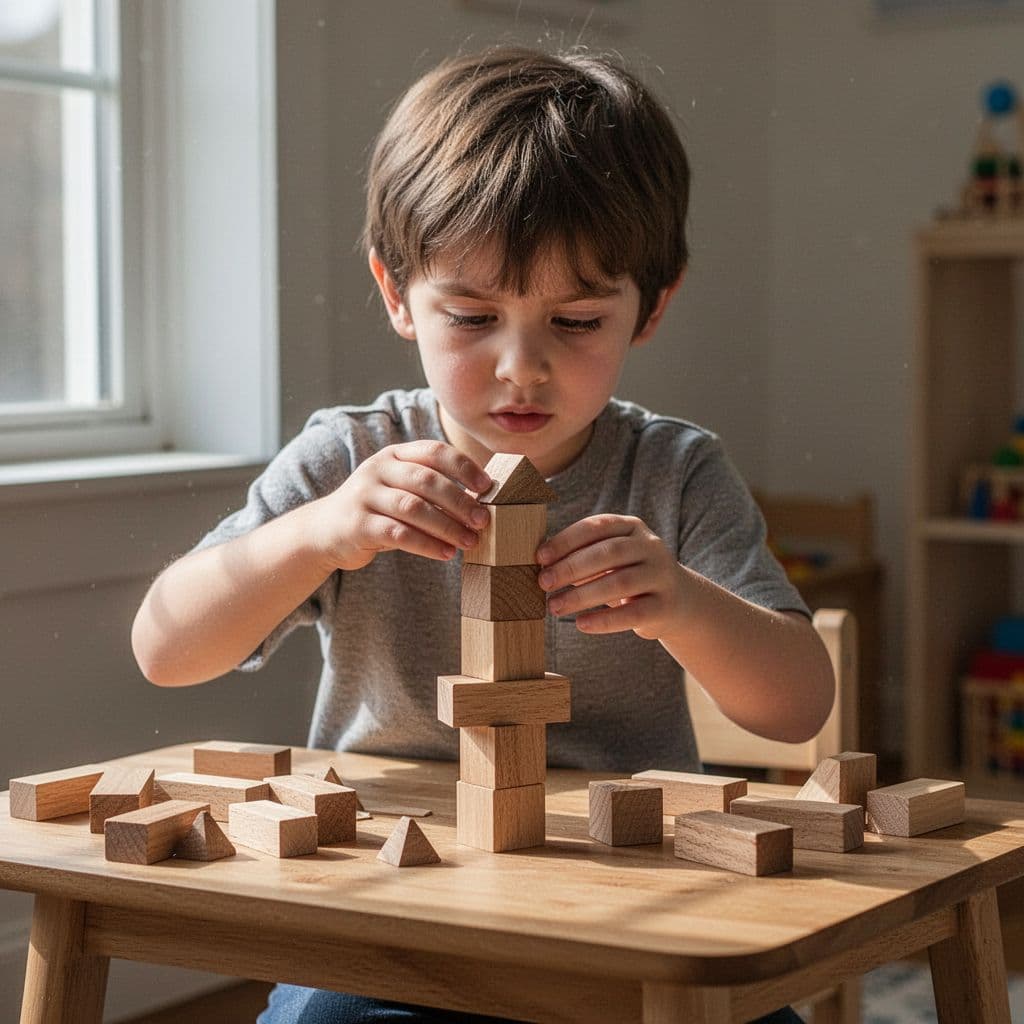
Simple building challenges are perfect for this age. Give your child blocks, cardboard, cups, or tape, then ask them to build something that stands on its own, holds weight, or moves a short distance.
A few easy ideas work especially well:
- Tallest tower: Build the highest tower that does not fall over.
- Strongest bridge: Span a gap with cardboard and tape, then test it with toy cars or books.
- Toy car ramp: Make a ramp from a cereal box, a binder, or folded cardboard and see how far a car travels.
You can also ask your child to improve the design after each test. Maybe the tower needs a wider base. Maybe the bridge needs more tape on the bottom. Maybe the ramp works better when it is higher or smoother.
For a simple bridge challenge, this paper bridge STEM activity shows how kids can test strength and make changes in a very hands-on way.
Why trial and error matters in engineering play
Trial and error helps kids understand that mistakes are useful. If a bridge bends, that gives a clue. If a paper airplane dives, that tells them what to change next.
That mindset matters because engineering is full of small fixes. Kids learn to notice what happened, compare it with what they wanted, and try again. In other words, a mistake becomes part of the job.
A wobble, collapse, or crash is not a failure. It is feedback.
This kind of play also builds patience. Children start to see that better results often come after a few attempts, not the first try. That lesson sticks because they can watch it happen with their own hands.
Easy ways to make each challenge feel new
You do not need a whole new activity every time. Change one small thing, and the challenge feels fresh again.
Try switching:
- The material, like blocks, cardboard, paper, or cups
- The height, such as a taller tower or steeper ramp
- The shape, like curved paper, a triangle bridge, or a box base
- The size, such as a wider bridge or a shorter runway
A recycled materials challenge works well here too. Empty cartons, tubes, and boxes can become boats, tunnels, or car ramps. If you want more simple ways to keep kids busy with hands-on play, these fun things to do with kids include plenty of easy at-home ideas that fit into the same playful style.
Small changes help kids compare results without losing interest. They start asking better questions, like why one design held more weight or why one airplane flew farther. That is where real problem-solving starts.
Math games that feel playful instead of like worksheets
Math feels much easier for young kids when they can touch it, move it, and see the answer change. That is why playful math games work so well for ages 5 to 7. They turn counting, comparing, and adding into something active, not something printed on a page.
A good math activity at this age should feel a little like a puzzle and a little like play. Use objects your child already knows, then let them sort, line up, stack, or count as they go.
Counting, sorting, and patterns kids can do with their hands
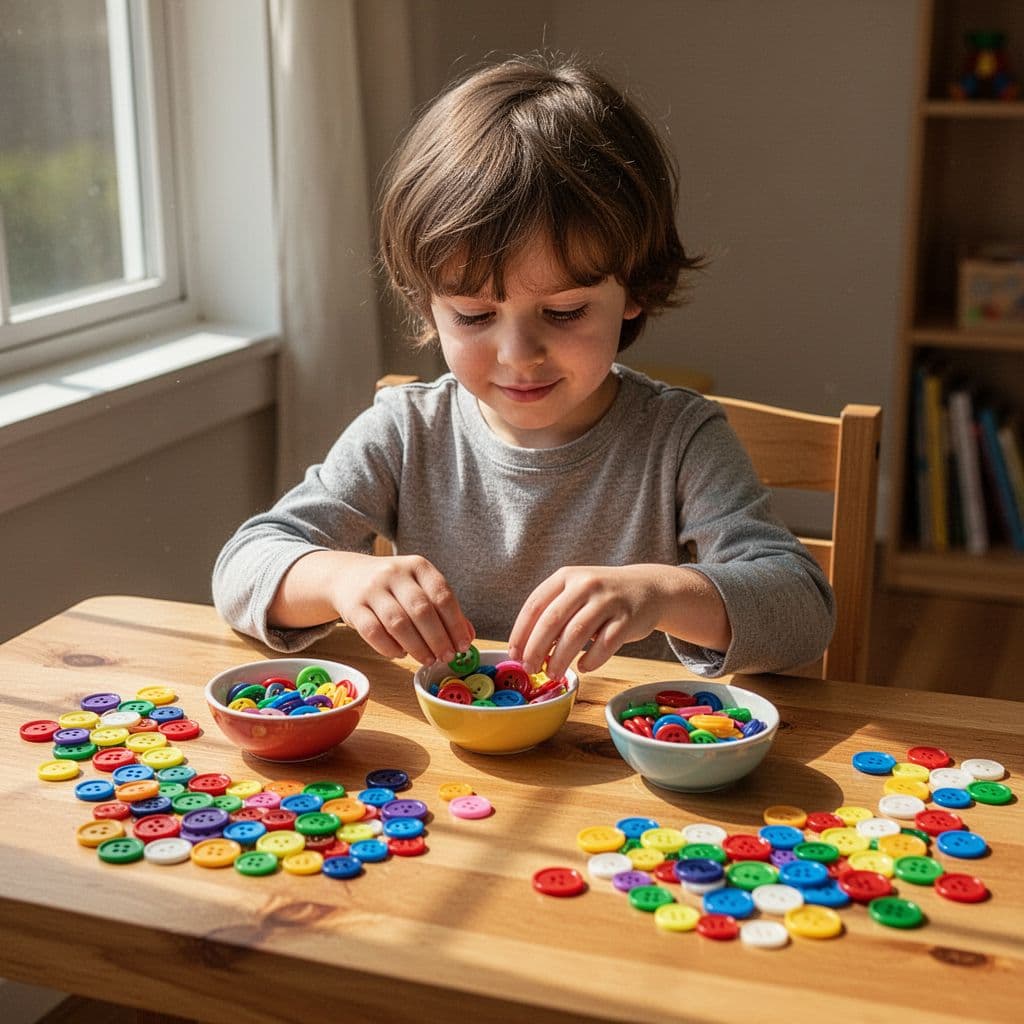
Counting gets easier when kids can move items one by one. Try sorting buttons by color, lining up toy cars, or making bead patterns like red-blue-red-blue. These small actions help children see that numbers match real objects, which builds number sense fast.
You can also count steps on a walk, scoops of sand at the park, or blocks stacked on the floor. A child who counts while moving is often more focused than one sitting with a worksheet. For a simple nature-based twist, counting with objects outside can make the game feel fresh.
Pattern play works the same way. A child can copy a clap-clap-stomp rhythm, place crayons in an ABAB line, or sort toys into “big” and “small” groups. Those actions teach order, comparison, and early logic without pressure.
Measurement activities that use real objects
Young kids do not need a ruler for every measurement game. In fact, nonstandard tools often make more sense. Use blocks to measure a book, paper clips to compare crayons, or feet to see which hallway is longer.
That kind of play helps kids understand length, height, and amount in a way they can picture. A tower that is “10 blocks tall” means more to a 6-year-old than a number on a page. They can also compare two objects by lining them up side by side and asking which is taller, shorter, heavier, or holds more.
A few easy prompts keep the activity moving:
- “How many blocks long is the sofa?”
- “Which crayon is longer?”
- “How many paper clips fit across the table?”
Simple measuring games like these build early math language, and they give kids a clear answer they can check with their own hands. This preschool counting activity also shows how small objects can make math feel concrete and calm.
Simple number play that fits into daily routines
Math does not need its own special time block. It can happen during snacks, cleanup, errands, and dinner prep. Count crackers into a bowl, then ask your child to add two more. During cleanup, count how many cars go back in the bin or how many blocks are left on the rug.
Setting the table is another easy chance to practice one-to-one counting. A child can place one fork per plate or count napkins for each person. On errands, you can add up apples, compare prices by looking at numbers, or count how many items fit in the cart.
You can also sneak in quick subtraction. If your child has five grapes and eats two, ask what is left. They will learn faster when they can move the grapes and see the change. That hands-on moment matters more than getting it perfect on the first try.
Children this age learn math best when they can move things around and see the answer.
When math feels like part of real life, kids stop seeing it as schoolwork. They see it as a game they can play all day long.
How to keep STEM time fun, calm, and age appropriate
The best STEM time for 5- to 7-year-olds feels simple, lively, and low pressure. Kids in this age group do better when the activity is short, the goal is clear, and they can move a little while they work.
A small setup helps a lot. Limit the materials, choose one challenge, and keep the space easy to manage. If you need a rainy-day backup, screen-free indoor learning games can also give you a few calm, hands-on options that fit this age well.
Short sessions work better than long ones
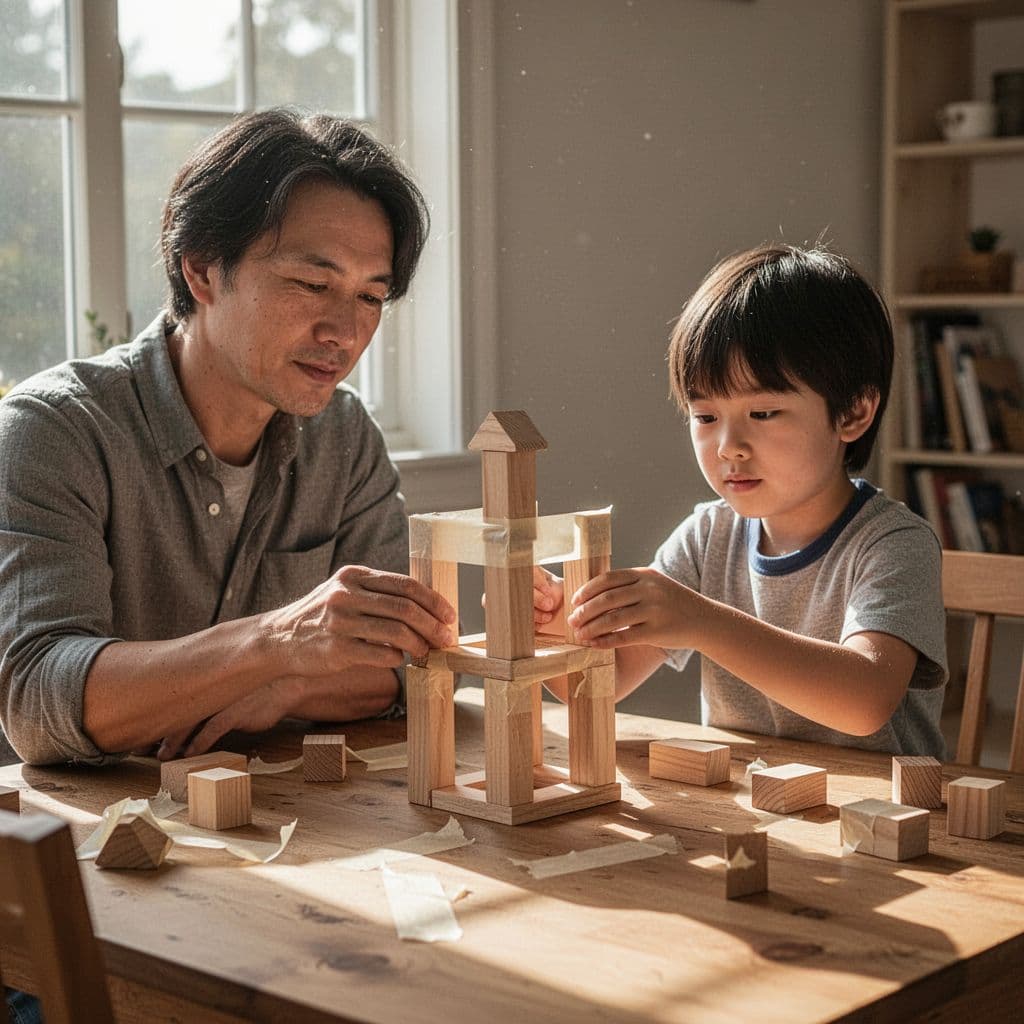
For most kids this age, 10 to 30 minutes is enough. That window keeps energy up without turning the activity into a chore. If your child is still interested, stop there and save the rest for another day.
Short sessions also leave room for success. A quick build, test, or sort gives kids a win before frustration sets in. That matters more than finishing every step.
Try ending on a high note:
- when the tower stands
- when the water test gets a reaction
- when your child says, “Can we do this again?”
How to encourage kids without taking over
Support works best when it sounds light and calm. Ask, “What do you think will happen?” or “What should we try next?” Those questions keep your child in charge.
Praise the effort, too. Say, “You kept trying,” or “I like how you changed your plan.” That kind of feedback helps children stay with the task when it gets tricky.
Give small choices whenever you can. Let them pick the color, the tool, or which object to test first. For shy or easily frustrated kids, start with something very simple and stay close. Clear rules help, but a little flexibility keeps the fun alive.
Safety matters as much as the activity itself. Stay close with small parts, water, scissors, and magnets, and keep the workspace tidy. The NSTA safety guidance for early STEM activities is a useful reminder that young children need close adult supervision during hands-on play.
Conclusion
STEM activities for kids aged 5 to 7 work best when they feel like play. When children build, sort, pour, test, and try again, they learn to notice patterns and solve small problems with confidence.
The strongest activities are simple, hands-on, and open to change. A tower that falls, a ramp that rolls too fast, or a sink-or-float test that surprises them all gives kids a chance to think, adjust, and keep going. That is where early STEM learning really sticks.
Families do not need fancy supplies or a big budget to make this happen. Start with what you already have at home, like cups, blocks, tape, paper, or kitchen tools, then build from there. The best STEM moments often begin with everyday objects and a little curiosity.
Save pin for llater


- 12 Things Pregnant Women Do When They’re Alone - June 7, 2026
- 25 Healthy Pregnancy Snacks You Should Try - June 7, 2026
- 100 Funny Baby Jokes That Will Make You Laugh - May 15, 2026