You tidy the room in the morning, and by dinnertime it looks like a toy store exploded. That’s normal kid chaos. But hidden in that mess, some items aren’t just clutter. They’re genuine safety hazards, from cords near the crib to toys with tiny magnets.
What you keep in your child’s room matters more than how often you clean it. Certain everyday things can pose risks to sleep, air quality, and little hands that grab everything.
Below, you’ll find the 10 things to never keep in a child’s room, why each one is a problem, and what to do instead. The good news: clearing them out takes one weekend, not a full makeover.
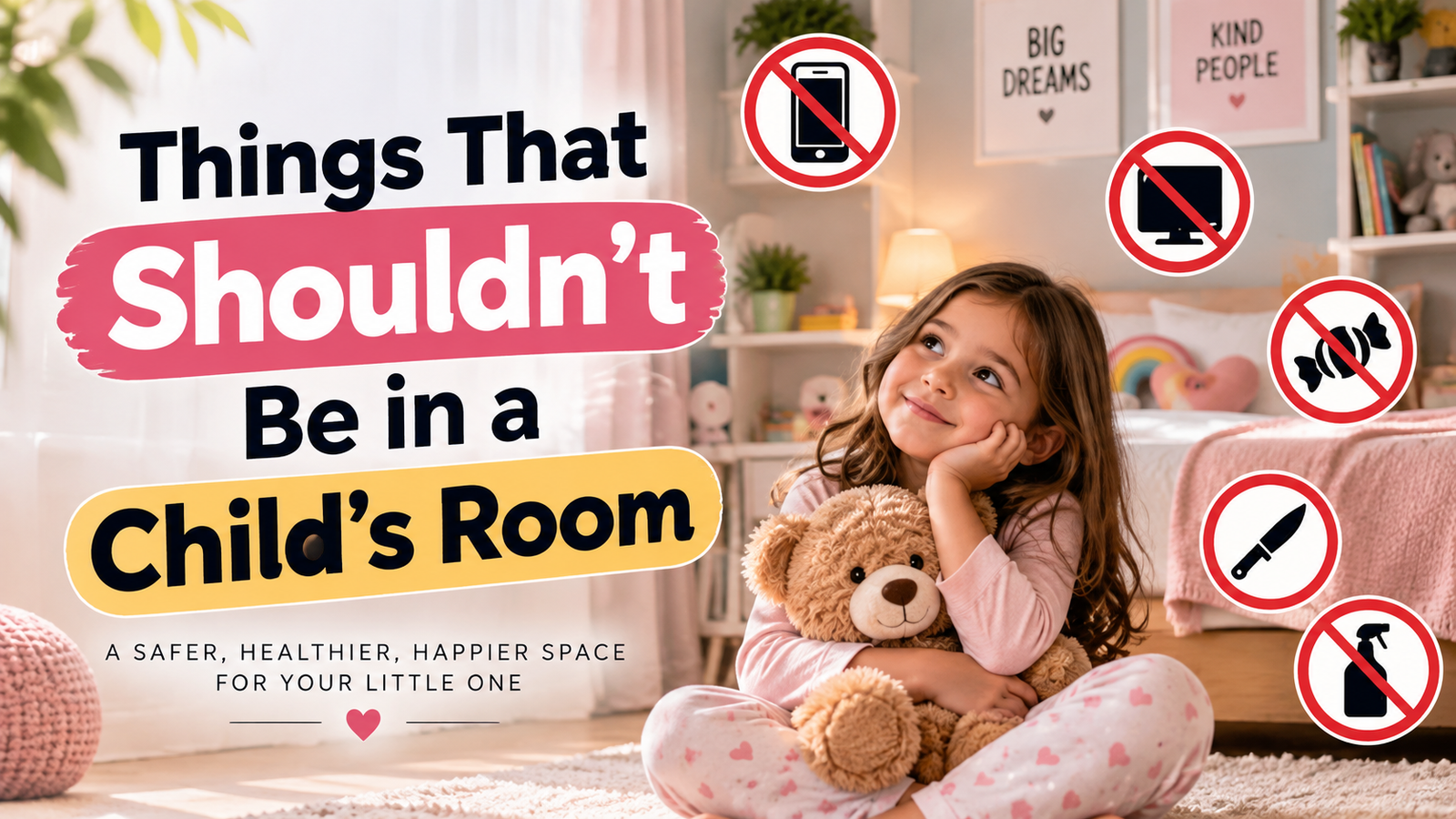
10 Things to Never Keep in a Child’s Room
Some of the risks hiding in a child’s room are obvious, but many are things parents keep around every day without a second thought. Before we get to the list, one mindset shift helps: look at the room the way a curious toddler would. Anything within reach will eventually get grabbed, chewed, climbed, or yanked. Here’s what to clear out and why.
Recalled Cribs, Broken Furniture, and Unanchored Dressers
Furniture tip-over is one of the most serious hazards in a child’s room. The Consumer Product Safety Commission reports that a child is treated in an emergency room every hour in the US because of furniture or TVs tipping over. Dressers are especially tempting climbing towers.
A few steps protect your child:
- Check any secondhand crib or furniture against the CPSC recall list before it enters the room.
- Anchor every dresser, bookcase, and changing table to a wall stud with an anti-tip kit.
- Retire cribs made before 2011, when stricter federal crib standards took effect.
If a piece wobbles, has missing hardware, or needed “repairs” years ago, it doesn’t belong in a kid’s room.
Blind Cords, Extension Cords, and Loose Wires
Window blind cords are a silent strangulation risk. The CPSC has linked corded blinds to hundreds of deaths in young children, and it takes seconds for a child to become tangled while playing near a window.
You don’t need to rip out every window treatment. Instead:
- Replace corded blinds with cordless versions, or cut loops and install cord wind-ups or tension devices.
- Keep cords tied high, well above a child’s reach, with no loops dangling near the crib or bed.
- Run extension cords along baseboards and cover outlets with sliding outlet covers.
- Keep power strips behind furniture or in a tamper-resistant cover box.
Never place a crib or bed near a window with accessible cords. If a child can touch it, treat it as a hazard.
Medications, Vitamins, and Anything Edible Looking
A nightstand drawer is where many families stash melatonin, cough syrup, and gummy vitamins. That’s a problem, because to a four-year-old, gummy vitamins are candy. Kids accidentally overdose on melatonin and iron supplements far more often than parents realize, and iron supplements are a leading cause of poisoning deaths in young children.
The rule is simple: meds go high and locked, not low and handy. Keep everything out of the bedroom entirely if you can. Use a lockbox for anything you must store in the room, including vitamins and numbing teething gels.
Also watch for look-alikes. Cough drops resemble candy, inhalers look like toys, and tubes of cream get squeezed into mouths. When in doubt, move it.
Space Heaters, Humidifiers, and Hot Appliances
Any device that produces heat is a fire or burn risk in a child’s room. Space heaters cause a large share of home heating fires each year, and a toddler’s reaching hand or a toppled blanket can turn a heater into a disaster fast.
Better options:
- Dress your child in warm fleece pajamas and use a sleep sack instead of heating the room with a heater.
- Control temperature with the thermostat rather than a bedside device.
- If you run a humidifier, choose a cool-mist model, place it high, and empty it daily to prevent mold and mineral buildup.
Keep hot tools like curling irons and hair dryers in the bathroom, unplugged and out of reach.
Small Toys, Coins, and Button Batteries
For children under three, anything that fits through a toilet-paper tube is a choking hazard. That includes building-brick pieces, marbles, coins, and older siblings’ toys that drift across the room.
The most dangerous offender is the button battery. Found in key fobs, singing cards, and light-up toys, a swallowed button battery causes a chemical burn in the esophagus within hours, sometimes with no obvious symptoms at first. Keep devices with coin-cell batteries out of a child’s room, and check that toy battery compartments screw shut.
Do a monthly “floor sweep” on hands and knees. You’ll spot the exact hazards your toddler sees.
Heavy Mirrors, Glass Decor, and Tall Shelving
Kids climb. It’s development, not misbehavior, so the room needs to be built for it. A freestanding mirror, glass frame, or tall bookshelf can tip or shatter under a little climber.
Practical fixes:
- Mount mirrors and artwork to the wall instead of leaning them.
- Swap glass picture frames for shatterproof acrylic or fabric-covered frames.
- Choose a bookcase no taller than about three feet, anchored to the wall, with heavy items on bottom shelves.
- Keep rolling toy bins low so climbing offers no reward.
If something is fragile or can fall, assume it eventually will.
Extra Pillows, Blankets, and Stuffed Animals in a Baby’s Crib
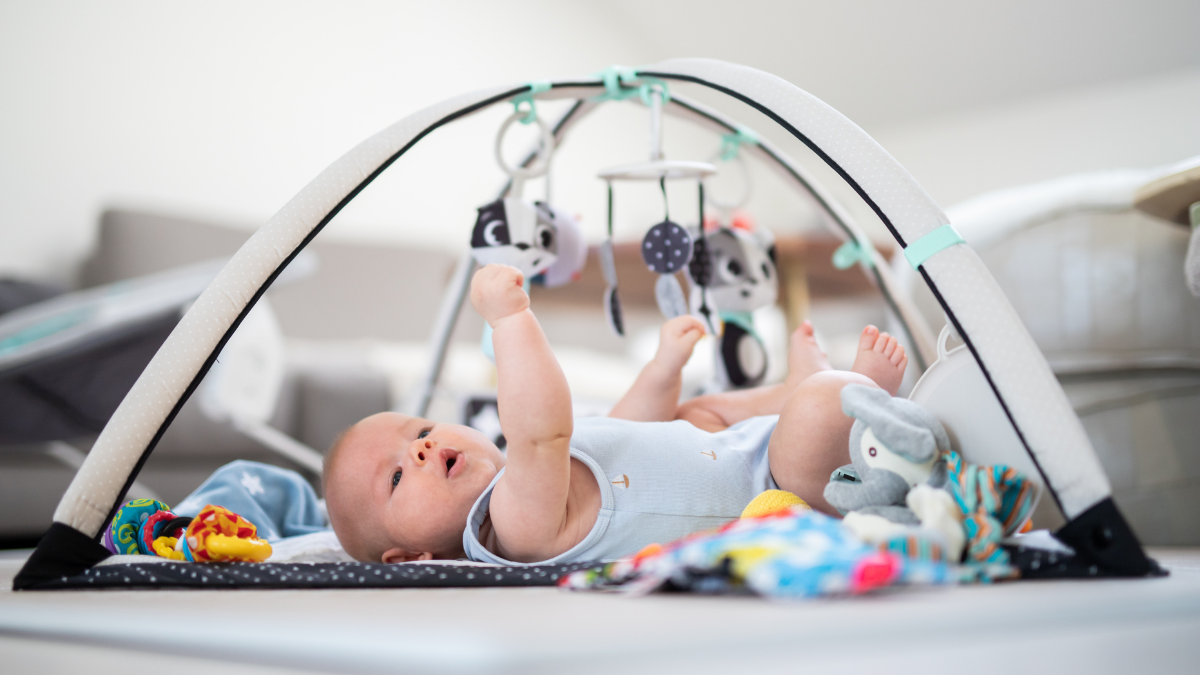
For babies under 12 months, safe sleep is strict: bare crib, firm mattress, fitted sheet, nothing else. The American Academy of Pediatrics warns that pillows, blankets, bumpers, and plush toys raise the risk of suffocation and are linked to sudden infant death syndrome, even the adorable “lovey” your baby seems to adore.
Save the plush menagerie for a reading corner outside the crib, or display it on a high shelf. Once your child turns one and can move freely, a small blanket or stuffed animal is generally fine. Until then, resist the urge to decorate the crib.
Toxic Houseplants and Strong-Scented Diffusers
Plants add life to a room, but some are risky for curious kids and pets. Pothos and philodendron cause mouth irritation and stomach upset when chewed, oleander is dangerously toxic, and even the beloved fiddle-leaf fig can irritate skin.
Safer swaps include spider plants, Boston ferns, and rubber plants, all nontoxic and hard to kill.
Scent matters too. Strong essential oil diffusers can irritate a child’s airways, and concentrated oils are harmful if swallowed or applied directly to skin. Skip the diffuser in the bedroom, or run it briefly in a common area with the door closed to kids. Fresh air beats fragrance.
Old Electronics, Spare Chargers, and Lithium Batteries
That drawer of dead phones and tangled chargers is a genuine fire risk. Damaged lithium-ion batteries can overheat and ignite, and children love fiddling with anything that has buttons or lights. A device charging under a pillow or blanket traps heat and can start a fire while a child sleeps.
Set better charging habits:
- Charge all devices in a common area, never on bedding.
- Discard swollen or frayed chargers right away, taped in a battery-safe disposal point.
- Keep old electronics out of bedrooms entirely.
Fire departments across the country have flagged e-bike and scooter battery fires specifically; a child’s room is the worst place to store them.
Cash, Jewelry, and Important Documents
Kids lose things. They also trade things, “borrow” things, and tell everyone at school about the money in their nightstand. Birth certificates, passports, and Social Security cards can end up crayoned, torn, or soaked, and replacing them is a bureaucratic headache.
Keep these out of the room entirely. Important documents belong in a fireproof safe or a lockbox, ideally in a parent’s room or a home office. Cash and jewelry should live somewhere a visiting friend can’t stumble on it either. If your child has spending money, give them a small piggy bank and let the real valuables stay with you.## 10 Things to Never Keep in a Child’s Room
Some of the risks hiding in a child’s room are obvious, but many are things parents keep around every day without a second thought. Before we get to the list, one mindset shift helps: look at the room the way a curious toddler would. Anything within reach will eventually get grabbed, chewed, climbed, or yanked. Here’s what to clear out and why.
Recalled Cribs, Broken Furniture, and Unanchored Dressers
Furniture tip-over is one of the most serious hazards in a child’s room. The Consumer Product Safety Commission reports that a child is treated in an emergency room every hour in the US because of furniture or TVs tipping over. Dressers are especially tempting climbing towers.
A few steps protect your child:
- Check any secondhand crib or furniture against the CPSC recall list before it enters the room.
- Anchor every dresser, bookcase, and changing table to a wall stud with an anti-tip kit.
- Retire cribs made before 2011, when stricter federal crib standards took effect.
If a piece wobbles, has missing hardware, or needed “repairs” years ago, it doesn’t belong in a kid’s room.
Blind Cords, Extension Cords, and Loose Wires
Window blind cords are a silent strangulation risk. The CPSC has linked corded blinds to hundreds of deaths in young children, and it takes seconds for a child to become tangled while playing near a window.
You don’t need to rip out every window treatment. Instead:
- Replace corded blinds with cordless versions, or cut loops and install cord wind-ups or tension devices.
- Keep cords tied high, well above a child’s reach, with no loops dangling near the crib or bed.
- Run extension cords along baseboards and cover outlets with sliding outlet covers.
- Keep power strips behind furniture or in a tamper-resistant cover box.
Never place a crib or bed near a window with accessible cords. If a child can touch it, treat it as a hazard.
Medications, Vitamins, and Anything Edible Looking
A nightstand drawer is where many families stash melatonin, cough syrup, and gummy vitamins. That’s a problem, because to a four-year-old, gummy vitamins are candy. Kids accidentally overdose on melatonin and iron supplements far more often than parents realize, and iron supplements are a leading cause of poisoning deaths in young children.
The rule is simple: meds go high and locked, not low and handy. Keep everything out of the bedroom entirely if you can. Use a lockbox for anything you must store in the room, including vitamins and numbing teething gels.
Also watch for look-alikes. Cough drops resemble candy, inhalers look like toys, and tubes of cream get squeezed into mouths. When in doubt, move it.
Space Heaters, Humidifiers, and Hot Appliances
Any device that produces heat is a fire or burn risk in a child’s room. Space heaters cause a large share of home heating fires each year, and a toddler’s reaching hand or a toppled blanket can turn a heater into a disaster fast.
Better options:
- Dress your child in warm fleece pajamas and use a sleep sack instead of heating the room with a heater.
- Control temperature with the thermostat rather than a bedside device.
- If you run a humidifier, choose a cool-mist model, place it high, and empty it daily to prevent mold and mineral buildup.
Keep hot tools like curling irons and hair dryers in the bathroom, unplugged and out of reach.
Small Toys, Coins, and Button Batteries
For children under three, anything that fits through a toilet-paper tube is a choking hazard. That includes building-brick pieces, marbles, coins, and older siblings’ toys that drift across the room.
The most dangerous offender is the button battery. Found in key fobs, singing cards, and light-up toys, a swallowed button battery causes a chemical burn in the esophagus within hours, sometimes with no obvious symptoms at first. Keep devices with coin-cell batteries out of a child’s room, and check that toy battery compartments screw shut.
Do a monthly “floor sweep” on hands and knees. You’ll spot the exact hazards your toddler sees.
Heavy Mirrors, Glass Decor, and Tall Shelving
Kids climb. It’s development, not misbehavior, so the room needs to be built for it. A freestanding mirror, glass frame, or tall bookshelf can tip or shatter under a little climber.
Practical fixes:
- Mount mirrors and artwork to the wall instead of leaning them.
- Swap glass picture frames for shatterproof acrylic or fabric-covered frames.
- Choose a bookcase no taller than about three feet, anchored to the wall, with heavy items on bottom shelves.
- Keep rolling toy bins low so climbing offers no reward.
If something is fragile or can fall, assume it eventually will.
Extra Pillows, Blankets, and Stuffed Animals in a Baby’s Crib
For babies under 12 months, safe sleep is strict: bare crib, firm mattress, fitted sheet, nothing else. The American Academy of Pediatrics warns that pillows, blankets, bumpers, and plush toys raise the risk of suffocation and are linked to sudden infant death syndrome, even the adorable “lovey” your baby seems to adore.
Save the plush menagerie for a reading corner outside the crib, or display it on a high shelf. Once your child turns one and can move freely, a small blanket or stuffed animal is generally fine. Until then, resist the urge to decorate the crib.
Toxic Houseplants and Strong-Scented Diffusers
Plants add life to a room, but some are risky for curious kids and pets. Pothos and philodendron cause mouth irritation and stomach upset when chewed, oleander is dangerously toxic, and even the beloved fiddle-leaf fig can irritate skin.
Safer swaps include spider plants, Boston ferns, and rubber plants, all nontoxic and hard to kill.
Scent matters too. Strong essential oil diffusers can irritate a child’s airways, and concentrated oils are harmful if swallowed or applied directly to skin. Skip the diffuser in the bedroom, or run it briefly in a common area with the door closed to kids. Fresh air beats fragrance.
Old Electronics, Spare Chargers, and Lithium Batteries
That drawer of dead phones and tangled chargers is a genuine fire risk. Damaged lithium-ion batteries can overheat and ignite, and children love fiddling with anything that has buttons or lights. A device charging under a pillow or blanket traps heat and can start a fire while a child sleeps.
Set better charging habits:
- Charge all devices in a common area, never on bedding.
- Discard swollen or frayed chargers right away, taped in a battery-safe disposal point.
- Keep old electronics out of bedrooms entirely.
Fire departments across the country have flagged e-bike and scooter battery fires specifically; a child’s room is the worst place to store them.
Cash, Jewelry, and Important Documents
Kids lose things. They also trade things, “borrow” things, and tell everyone at school about the money in their nightstand. Birth certificates, passports, and Social Security cards can end up crayoned, torn, or soaked, and replacing them is a bureaucratic headache.
Keep these out of the room entirely. Important documents belong in a fireproof safe or a lockbox, ideally in a parent’s room or a home office. Cash and jewelry should live somewhere a visiting friend can’t stumble on it either. If your child has spending money, give them a small piggy bank and let the real valuables stay with you.
Why a Safer Kids’ Room Starts With What You Remove
Step back from the individual items on this list and a pattern appears. Almost every hazard falls into one of three buckets: curiosity, climbing, or nighttime wandering. Kids chew cords, grab pills, and poke at batteries because that’s how they explore. They scale dressers and shelves because gravity is fun until it isn’t. And they move around in the dark, half asleep, bumping into whatever you’ve left in the path.
This is also why the bedroom needs a different childproofing strategy than the rest of the house. In the kitchen or living room, you can usually see and redirect your child. In their room, they’re alone, often unsupervised, sometimes for hours at a time while you’re asleep one floor away. The cabinet lock you rely on downstairs has no equivalent here, which means prevention has to be physical and permanent rather than watchful.
That’s why removal beats vigilance. You can’t supervise your way around a dangling blind cord at 2 a.m. Clearing the hazard once protects them every night after, whether you’re in the room or not.
Easy Swaps That Make a Child’s Room Safer Tonight
You don’t need a weekend or a budget to make real progress here. Most of the fixes on this list take minutes, and a single evening is enough to knock out the big ones. Grab a screwdriver, a trash bag, and a box for “relocate,” then work through this checklist.
One-evening safety checklist:
- Anchor everything tall. Strap dressers, bookcases, and the changing table into a wall stud. An anti-tip kit costs under ten dollars and installs in minutes.
- Move the meds. Sweep nightstands and dresser tops for pills, vitamins, and creams, then lock them somewhere else entirely.
- Cut the cord risk. Snip any loops on blind cords, wind them up high, and slide the crib or bed away from the window.
- Clear the crib. If you have a baby under one, take out blankets, pillows, and plush toys tonight. Bare is safest.
- Relocate the chargers. Move every device and power bank to a common-area charging spot, away from bedding.
- Sweep at crawl level. Get on your hands and knees with a flashlight and look for coins, battery compartments, and small toy pieces a toddler would spot first.
- Plug in a nightlight. A dim, cordless one prevents late-night stumbles without keeping anyone awake.
Do these seven things and you’ve handled the highest-risk items in the room before bedtime. The deeper organizing can wait until Saturday. Tonight’s version of the room is already a safer place to sleep.
Conclusion
The biggest safety upgrade in your child’s room isn’t a gadget or a monitor. It’s the removal of the things that don’t belong there in the first place. An anchored dresser and a bare crib protect a child all night, every night, with no effort after the first fix.
So here’s your next step: set a timer for 15 minutes this week and scan the room at your child’s eye level. Look for cords, small objects, meds, and anything that can tip or heat up. Most families find at least one surprise.
Keep in mind that a simpler room is a calmer room. Fewer items mean fewer hazards, easier cleanup, and better sleep for everyone. Your child doesn’t need more stuff. They need a space where the most interesting thing within reach is a safe toy on a low shelf.
Save pin for later


- 10 Things You Shouldn’t Do in Front of Your Baby (and What to Do Instead) - September 22, 2026
- 15 Effective Ways to Deal With Stubborn Children (Without Yelling) - September 22, 2026
- Birth Order Influence: 8 Things Parents Should Know About Each Child - September 22, 2026