 Ngozi Kalu
The sound of your baby’s heartbeat is an indescribable feeling for expectant parents, especially for mothers.
When you hear your baby’s heartbeat for the first time, your excitement knows no bounds. It’s an experience like no other and often evokes many emotions. But when does that happen? Let’s find out.

Heartbeat of the Fetus
The heartbeat in the fetus can be the first sign that you are pregnant. Fetal heart development begins very early in pregnancy. By six weeks, the heart has started to beat. The fetal heart starts beating even before it has fully formed, which is one of the reasons why doctors use the first heartbeat as one of the early signs of pregnancy.
The first heartbeat can be used as an important indicator of the health of the baby. Early detection of the fetal heartbeat helps parents know that their baby is okay and developing as it should.
It can also help doctors and other healthcare professionals monitor the baby’s development in order to detect problems as early as possible.
That is why the first time a mother or father hears the heartbeat is often so emotional: it is an important milestone in the development of the baby, and it’s comforting to know that everything is progressing as it should.
The baby’s heartbeat rate also increases over the course of the pregnancy. The normal rate of the fetal heartbeat at different stages of pregnancy is as follows:
-
6 weeks: 100–160 bpm
-
8–10 weeks: 120–160 bpm
-
12 weeks: 120–160 bpm
-
20 weeks: 120–160 bpm
-
32 weeks: 120–160 bpm
-
40 weeks: 120–160 bpm
By 8 to 10 weeks, the fetal heartbeat rate is usually between 120 and 160 beats per minute. It’s important to keep in mind that these figures are approximate, and there can be individual differences.
Related: 15 Fun Ways to Exercise with Baby, Post-Pregnancy
When Can You Hear a Baby’s Heartbeat?
In this section, we’ll discuss the factors that affect when the heartbeat can first be heard and how this is done. There are a few different ways to listen to your baby’s heartbeat. In some cases, an ultrasound can be used, while in others, a Doppler may be more appropriate. You might also be able to use a stethoscope.
1. 6 Weeks: First Fetal Heartbeat
The fetus’ heart first starts to beat at about six weeks of pregnancy. At this stage, it will be too early to hear the heartbeat with a stethoscope, but an early ultrasound scan can help you hear the first heartbeat.
An ultrasound scan is a test in which the healthcare professional uses sound waves to create images of the developing baby inside your womb and checks out the baby’s heartbeat.
If it is possible to detect the heartbeat at six weeks, the heartbeat may be visible as a small flicker or flutter on the screen, but it may not always be seen, as it depends on the ultrasound machine used and the stage of pregnancy that the mother is at.
The heart rate at this stage is usually quite fast, at about 100 to 160 beats per minute. It will be difficult to hear the fetal heartbeat at six weeks, but the ultrasound scan is often a good way to show the parents that the fetus’ heart is beating and is a great way to reassure them that everything is okay.
Related: 15 Things I Wish Somebody Had Told Me About C-Sections
2. 8–10 Weeks: Doppler Heartbeat
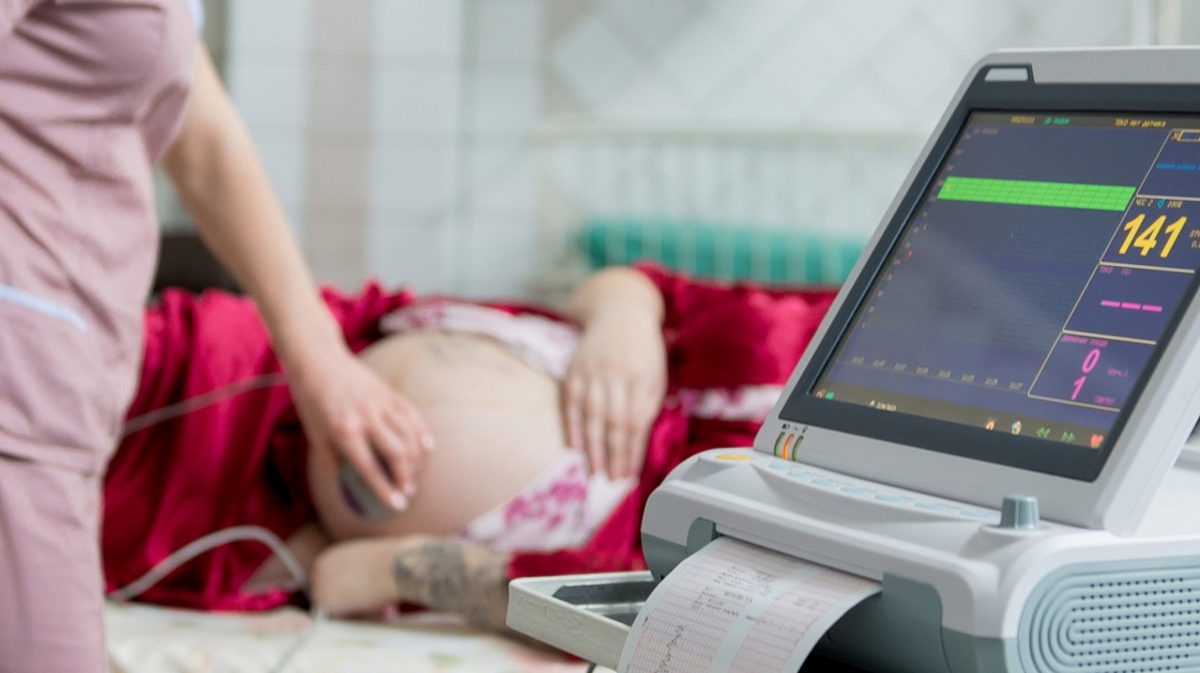
It is at about 8 to 10 weeks that the fetal heartbeat can start to be heard with a Doppler. The Doppler is a special handheld machine that uses sound waves to amplify the sound of the baby’s heartbeat, so you can hear it, as well as your doctor.
It is not always possible to detect the fetal heartbeat at 8 to 10 weeks of pregnancy, but it is around this time that many doctors and midwives check the fetal heartbeat to ensure it is still there.
The Doppler fetal monitor is a special instrument that works a bit like a stethoscope but uses ultrasound to pick up the sound of the heartbeat.
The sound that is amplified by the Doppler is usually a rhythmic swooshing sound and is distinct from the mother’s heartbeat. This can be one of the first signs that the baby is alive and kicking. The first time that you can hear your baby’s heartbeat is an emotional time for any parent.
3. 12 Weeks: Stethoscope
By the time the baby has reached 12 weeks, the heartbeat should be strong enough to be heard with a stethoscope, although it is more likely to be heard with the Doppler at this stage, as the heartbeat may not yet be loud enough to be picked up by the stethoscope.
If the baby’s heartbeat is strong enough, then it can be possible to hear it for the first time at the 12-week check-up. If the doctor or midwife is able to hear the heartbeat, it can be a very moving experience for both parents.
Related: 8 Weird Things About Babies in the First Four Hours After They Are Born
4. 18–20 Weeks: Stethoscope
By 18 to 20 weeks, the baby has grown enough that it is much easier to hear its heartbeat with a stethoscope. By this time, the baby is much bigger, and the baby’s heartbeat can be picked up by using a stethoscope on the mother’s abdomen. It is at this time that parents generally start hearing their baby’s heartbeat.
Doctors and midwives will usually use a stethoscope or a Doppler during check-ups at this stage of pregnancy, and it is not uncommon for mothers-to-be to listen to their baby’s heartbeat with excitement.
The sound of the heartbeat is also clearer by this stage, and hearing the heartbeat is a sign that the pregnancy is progressing well. Parents may be able to distinguish between their own heartbeat and that of the baby by this stage of pregnancy as well.
5. Over 20 Weeks: Regular Checks
After the 20-week mark, hearing the fetal heartbeat is a standard part of regular prenatal visits. The baby’s heartbeat is strong, and it is clear to hear it with a stethoscope or Doppler. The heartbeat sound is familiar and comforting for many parents as they continue their pregnancy.
Factors That Can Affect Hearing the Fetal Heartbeat
Although most pregnancies will progress according to the timeline above, there are some factors that can affect when you will be able to hear your baby’s heartbeat for the first time. Here are some of the most common:
Position of Baby
The position of your baby in the womb can make it difficult for the sound of the heartbeat to be detected. If the baby is in a position that makes it difficult for the sound waves to reach the heart, then the heartbeat may not be detected at the first attempt.
In other words, if the baby is lying in a way that makes it difficult to hear its heartbeat, it can be more difficult for you and your doctor to hear the heartbeat.
Body Type
The thickness of the mother’s abdominal wall and the amount of amniotic fluid in the mother’s abdomen can also have an effect on the ability to hear the heartbeat. If the mother has a lot of body fat or if the baby is high up in the womb, then it may be more difficult to hear the heartbeat using a stethoscope. This is due to the way that the sound waves are absorbed by the mother’s body.
Related: What Your Baby’s Birth Weight Tells You
Ultrasound Machines
The quality of the ultrasound machine or Doppler that is being used can also have an effect on whether or not the heartbeat can be heard.
If the ultrasound machine is of poor quality, it may not be able to detect the heartbeat, even if the baby is healthy. Similarly, older or less advanced ultrasound machines may not be able to detect the heartbeat.
Twins or Multiples
If you are pregnant with twins or multiples, it can be more difficult to hear each baby’s heartbeat, especially early on in the pregnancy. This is because there may be more than one baby in the womb, and it can be difficult to distinguish between their heartbeats.
Related: 7 Things You Need to Know About Your Baby’s Weight
Expectations When Hearing the Fetal Heartbeat
The first time that you hear your baby’s heartbeat can be an overwhelming experience. For many parents, this is the moment when the reality of the pregnancy sets in.
The sound of the heartbeat can be faint at first, but it will get louder as the baby grows. The sound is often described as a rhythmic swooshing sound, and sometimes the sound can be so loud that it almost sounds like a galloping horse.
The heart rate of the baby is also an important factor to consider. A healthy fetal heart rate is usually between 120 and 160 beats per minute. A slower or faster heart rate could indicate a problem with the pregnancy, and your healthcare provider will monitor the heart rate closely.
Emotions and Feelings
Hearing your baby’s heartbeat is an emotional experience for most parents. It’s often the first tangible evidence that the pregnancy is progressing well. For some mothers who have had concerns or anxiety about the pregnancy, this can be a comforting moment.
Dads and partners can also feel an emotional connection to the baby when they first hear the heartbeat. The sound of the heartbeat may be the first time they really feel connected to the pregnancy, and it can be a bonding experience for both parents.
Final Words
In conclusion, the sound of your baby’s heartbeat is one of the most exciting and reassuring things in pregnancy. Whether you can hear it at six weeks using an ultrasound, or at 12 weeks with a Doppler, there’s nothing quite like the sound of that little heart beating away.
Every pregnancy is different, and every moment that you hear your baby’s heartbeat is a cherished milestone in the journey to parenthood. It’s a moment to celebrate, a sound to remember, and a sign that your baby is one step closer to being in your arms.
Save the pin for later


- 8 Noticeable Symptoms of a Baby Boy During Pregnancy - November 8, 2025
- 10 Little Things You Should Not Do To Your Breasts - November 6, 2025
- 20 Things A C-Section Mom Should Avoid - November 5, 2025