
 Mom with Vibe Team
No parent likes to see their baby uncomfortable, but diaper rash is an all-too-common issue for babies and toddlers.
Sometimes a mild rash can develop into a yeast infection, which can be hard to treat and make your baby very uncomfortable.
Yeast diaper rash can be frustrating and challenging to treat. But the good news is that you can heal your baby’s skin with the right care, treatment, and prevention.
Today, we will help you understand what yeast diaper rash is, what causes it, how to tell if your baby has it, what treatment options are available, and how to prevent it in the future.
What Is Yeast Diaper Rash?
Yeast diaper rash occurs when there’s an overgrowth of yeast (fungus) on your baby’s skin. A healthy body has yeast present on the skin, in the mouth, and in the gut, but sometimes it can multiply out of control.
Candida albicans is the species of yeast responsible for diaper rash. Yeast thrives in the perfect combination of a warm, moist environment with mild irritation.
The diaper area is a very warm and moist place, especially if your baby’s skin is already irritated from wetness or friction.
Related: 5 Signs Your Baby Is Ready To Stop Napping
Signs and Symptoms of Yeast Diaper Rash
Diaper rash can come from different sources, including bacteria, yeast, chemicals, and simple irritation. It’s important to know the difference because a rash caused by yeast won’t respond to regular diaper rash treatments.
The symptoms of yeast diaper rash include:
-
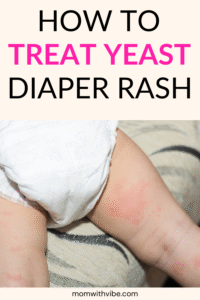
Bright red patches with sharp edges
-
Raised bumps or pimples around the red rash
-
Spread into skin folds (groin, thighs, or buttocks), where moisture collects
-
Doesn’t improve with diaper rash cream
-
Baby seems fussy or cries during diaper changes (as the rash is painful or uncomfortable)
If your baby’s rash looks like this, you can be almost certain it’s yeast.
Related: Infant Strabismus: Symptoms, Causes, and Remedies
What Causes Yeast Diaper Rash?
Yeast diaper rash can occur for several different reasons, including:
-
Staying in a wet diaper for a long time – Urine and moisture are yeast’s best friends.
-
Use of antibiotics – If your baby (or breastfeeding parent) recently used antibiotics, some of the healthy bacteria may have died off, giving yeast more room to grow.
-
Weakened skin barrier – When the skin is irritated by urine, stool, or friction, it is more likely to allow in yeast.
-
Warm weather or tight-fitting diapers – Heat and lack of airflow promote yeast growth.
-
Existing diaper rash – Simple irritation from diapers can develop into a yeast infection if left untreated.
How to Treat Yeast Diaper Rash
Here’s what you can do to get the yeast diaper rash under control:
-
Keep the Area Clean and Dry
It’s important to change diapers frequently, even if they’re only a little wet. Use lukewarm water with a soft cloth or fragrance-free wipes to gently clean the area. Pat the skin dry, but don’t rub, as that can cause further irritation. -
Give Skin Time to Breathe
Allow your baby some time each day without a diaper so that the area can breathe. Lay a towel or waterproof pad down on the floor and let fresh air do its work. -
Use an Antifungal Cream
Yeast is a fungus and requires antifungal cream to treat the rash. Over-the-counter antifungal creams like clotrimazole or miconazole are often recommended for babies with yeast diaper rash. Apply a thin layer of the cream directly on the rash, usually twice a day (check your pediatrician’s advice). Continue to use the treatment for several days after the rash looks better to avoid recurrence. -
Add a Barrier Cream on Top
After the antifungal cream, apply a thick layer of a zinc oxide or petroleum jelly cream to the area. This will protect the skin from moisture while the antifungal cream works on healing. -
Use Gentle, Unscented Products
Switch to fragrance-free diapers and wipes, if possible. You may also want to avoid powders and perfumed lotions or creams that may irritate the skin. -
Wash Cloth Diapers Correctly (if using them)
Wash diapers in hot water with a mild, fragrance-free detergent. Run an extra rinse cycle to remove any residue in the diapers. You may also want to switch to disposable diapers until the rash clears.
Related: 10 Signs of Soy Allergy in Babies Every Parent Should Know
Home Remedies That May Help
Some gentle home remedies may also help support healing from a yeast diaper rash:
-
Coconut oil – Coconut oil has antifungal properties and can soothe the skin. Apply a thin layer of coconut oil after cleaning and drying the skin.
-
Apple cider vinegar bath – Adding a small amount of apple cider vinegar (1–2 tablespoons) to bathwater can help restore the balance of the skin.
-
Probiotics – For older babies who are eating solids, probiotic-rich foods like plain yogurt may help restore the healthy bacteria in the gut. Breastfeeding parents can also eat probiotic-rich foods to pass them on through breast milk.
(As with any home remedy for babies, it’s always best to check with your pediatrician first.)
When to Call the Doctor
Yeast diaper rash should improve in a few days with the right diaper rash care. But if you’re unsure or the rash is not healing, you can always call your pediatrician to ensure you’re using the right treatment. You may need to call your doctor if:
-
The rash does not improve after 3–4 days of antifungal treatment.
-
The rash spreads to areas outside the diaper area.
-
Baby develops a fever or blisters.
-
You are unsure if it is yeast or another condition (bacterial infection, eczema, etc.).
If necessary, your doctor may prescribe a stronger antifungal cream or an oral medication.
How to Prevent Yeast Diaper Rash
Once the rash has been treated, you’ll want to keep it from coming back with proper prevention:
-
Change diapers frequently: Don’t wait until they are drenched.
-
Keep the skin dry: Pat the area dry after cleaning, instead of rubbing.
-
Give diaper-free time: Allow your baby to go without a diaper each day for at least 15 minutes.
-
Choose breathable diapers: Some diaper brands are better at wicking away moisture and allowing the skin to breathe.
-
Use antibiotics cautiously: If your baby needs to take antibiotics, be sure to take extra precautions with diaper changes.
-
Maintain gut balance: Probiotics for older babies may help prevent yeast overgrowth.
Final Thoughts
Yeast diaper rash is frustrating but not the end of the world. With early recognition, the right medical treatment, and keeping your baby’s skin as clean and dry as possible, you can heal your baby’s skin in no time.
A little extra care and a few prevention habits can help your baby get back to being their happy, healthy self.
You are not alone—diaper rash is something almost every parent goes through at some point, and yeast-related diaper rash is a very common condition.
Save the pin for later

- 10 DIY Sensory Play Activities for Toddlers - March 12, 2026
- 12 Family Organization Systems for Busy Moms - March 12, 2026
- How to Change a Diaper: A Step by Step Guide - March 11, 2026