 Mom with Vibe Team
The final months of pregnancy can be a whirlwind of emotions, from excitement and anticipation to fatigue and confusion. As you count down the days until your baby’s arrival, you may find yourself thinking about everything from nursery decorations to what to pack in your hospital bag.
But one question that doesn’t always get the attention it deserves is: What is the position of my baby in the womb, and how will it affect my labor? From head-down to breech, your little one’s orientation in the uterus can make a big difference in how delivery goes.
In this post, we’ll discuss what all of the different positions mean and what they mean for you as a mother-to-be.
What is fetal position?
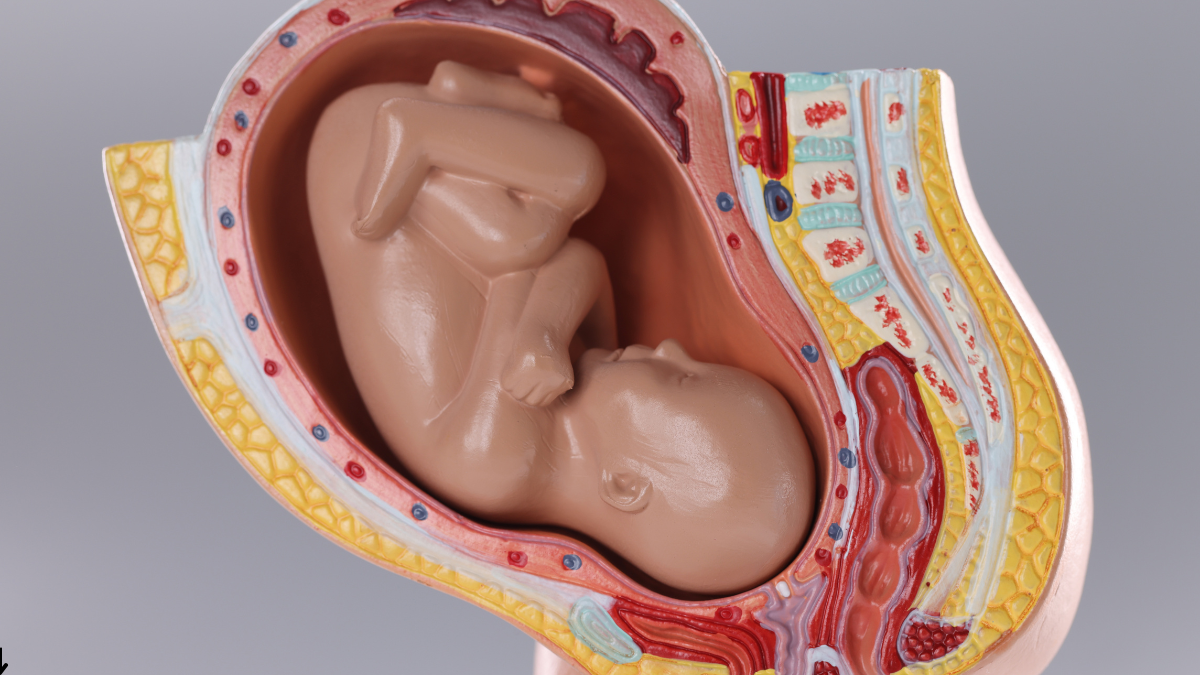
When people refer to fetal position, they are usually referring to fetal presentation or fetal lie. Fetal position describes how your baby is situated in your uterus. It refers to which part of your baby is closest to the cervix and how your baby is positioned within your uterus. A vertex or cephalic presentation, where the baby is head-down with its back against the front of your abdomen, is ideal for birth.
Why Is Fetal Positioning Important?
The position of the fetus is not something that many new moms take time to consider during pregnancy.
In most cases, it’s completely normal for the baby to move around and change positions throughout the months leading up to labor. In the weeks before your due date, your baby should have turned into the head-down position, also known as the vertex position.
This position is ideal for a number of reasons, as it allows the smallest part of the baby’s head to fit through the pelvis and birth canal, making labor and delivery much easier and less complicated.
But what happens if the baby doesn’t turn or ends up in an abnormal position? From breech to transverse, there are several different fetal positions that can make labor more difficult, more painful, or require medical intervention.
The good news is that there are exercises and techniques you can try in the weeks and days before labor begins to encourage your baby to turn.
Now, let’s go through all of the different positions your little one can be in before and during labor and how they might affect you.
How A Baby’s Position In The Womb Can Affect Your Delivery
1. The Ideal Position: The Head-Down Position (Vertex)
In the head-down position, also called the vertex position, your baby’s head is at the bottom of the uterus, facing your spine, with its chin tucked toward its chest.
The head-down position is the most common and favorable position for vaginal birth, as it allows for the smallest part of the baby’s skull to enter the pelvis and pass through the birth canal first, making for a smoother and often less painful delivery.
When your baby is head-down, you can also push more effectively during labor, as gravity will be working with you to help your little one move down and out.
Fetal position describes the orientation of your baby in your uterus immediately before birth. It also affects how labor unfolds. Ideally, your baby should be head-down (cephalic, or vertex position) between 32 weeks and 36 weeks.
If your baby is head-down before labor begins, vaginal birth should be safe for both you and your baby. When the baby is positioned differently — for instance, feet-first (breech) or sideways (transverse) — vaginal birth might be more challenging.
Related: Placentas Role in Pregnancy: 7 Key Functions
2. Breech Position: Baby’s Bottom or Feet First
A breech position is when the baby is bottom-first or feet-first instead of head-down. A breech position can make labor more challenging and increase the risk of complications, so doctors may try to manually turn the baby to the head-down position before labor or recommend a C-section.
The breech presentation (feet-first or bottom-first) is, according to doctors, present only 3 – 4 % of the time in full-term pregnancies. Vaginal delivery may be riskier due to the presentation of the baby, so obstetricians will often either schedule a cesarean section or attempt an external cephalic version (ECV) before labor begins to turn the baby head-down.
There are a few different types of breech positions, including:
-
Frank Breech: The baby’s legs are straight up in front of its body with feet near the head.
-
Complete Breech: The baby’s legs are bent and crossed at the knees, with the feet near the buttocks.
-
Footling Breech: One or both of the baby’s feet are poised to come out first.
In a breech position, the baby’s body may not be in the best position to pass through the pelvis and birth canal. The pelvis is shaped in a way that’s most conducive to the baby’s head and shoulders moving through it first, so if the feet or bottom come first, labor can be more difficult and take longer.
You can also run a higher risk of umbilical cord prolapse, when the cord comes out of the uterus before the baby, which can compress the cord and reduce blood flow and oxygen to the baby.
Related: Safe Sleeping Positions During the Second Trimester of Pregnancy
3. Posterior Position: Baby’s Back Against Your Back
The posterior position, or sunny-side-up position, is when your baby is face-up in the uterus, with their back against your back. This is one of the more common variations of the head-down position.
Your baby is posterior (occasionally referred to as “sunny-side up”) if his back is against your back. You may experience longer labor and more intense back pain with a posterior baby because his head may not fit as well into your pelvis. Posterior position is one of the most common malposition associated with challenging labor and can contribute to assisted deliveries.
A baby in the posterior position can cause a longer and more painful labor, as they may not be optimally aligned to move through the pelvis and birth canal. Women with a posterior baby often describe a sensation of pressure in the lower back, as the baby’s skull presses against the spine during contractions.
This position can also make it more difficult for the baby to rotate into a more optimal position for delivery, increasing the need for interventions such as forceps or vacuum extraction, or even a cesarean section.
In some cases, the baby may rotate on its own during labor, but manual turning (external cephalic version) may be required. External cephalic version (ECV) is a procedure that is typically performed in the hospital or clinic before labor begins. Your doctor will try to manually rotate the baby into the optimal position for delivery, using hands-on manipulation of the abdomen.
The baby in this position may also make pushing less effective during labor, as the baby is not positioned optimally to descend through the pelvis and birth canal.
Related:15 Fun Ways to Exercise with Baby, Post-Pregnancy
4. Transverse Lie: Baby Lies Sideways
In a transverse lie position, the baby is lying horizontally across the uterus, with the head on one side and the feet on the other. This is the least common fetal position, as it’s difficult for the baby to maintain in this position until late in pregnancy.
If the baby does not move into a head-down or breech position before labor begins, you will need a cesarean section, as a transverse position does not allow for safe vaginal birth.
The main reason is that the baby cannot align with the birth canal in a way that will allow them to descend through the pelvis and be born vaginally. A transverse lie can also increase the risk of umbilical cord prolapse, as the cord may become compressed or kinked when the baby’s body moves.
Related: What Is The Difference Between True and False Labor?
5. Occiput Posterior (Baby’s Back on Mom’s Back) vs. Occiput Anterior
The occiput posterior position (or OP position) is when the baby’s head is down, but its back is facing the mother’s back. This is a variation of the ideal head-down position that can make labor more difficult and increase the risk of complications.
In an occiput posterior position, the baby is not as well-aligned to pass through the pelvis and birth canal, which can lead to a longer and more painful labor. The baby’s head may also have more trouble rotating and aligning with the birth canal as it descends, increasing the need for interventions like forceps or vacuum extraction.
You can encourage the baby to rotate into a more optimal position (such as occiput anterior, where the baby’s back is facing the mother’s abdomen) by trying certain labor positions and movements.
Occiput anterior is the most common and favorable position for vaginal birth, as the baby’s head is optimally aligned to pass through the pelvis and birth canal.
Related:What Your Baby’s Birth Weight Tells You
6. Fetal Positions Explained: Exercises and Positions for Easy Delivery
Though your baby’s position in the uterus is partly outside of your control, there are a few exercises and positions you can try in the weeks and days before labor begins to encourage your baby to move into the best position for delivery. From pelvic tilts to squatting to prenatal yoga, these exercises and positions help to open up the pelvis, relax the uterus, and gently encourage the baby to rotate.
-
Pelvic Tilt: This exercise involves contracting and relaxing the abdominal muscles while keeping the pelvis in a tilted position. This can help to create more space in the pelvis for the baby to move around.
-
Pelvic Rocks: This exercise is similar to a pelvic tilt but involves rocking the pelvis back and forth while keeping the abdominal muscles engaged. This can help to encourage the baby to move into a better position.
-
Squatting: Squatting helps to open up the pelvis, and the increased blood flow to the uterus and pelvic region can also help to relax the uterus and encourage the baby to turn.
-
Walking: Walking is a great way to keep active during pregnancy, and it can also help to encourage the baby to move into a head-down position.
-
Hip Circles: This exercise involves rotating the hips in large circles, which can help to loosen up the pelvis and encourage the baby to move around.
-
Rebozo Sifting: This is a traditional Mexican practice that involves using a long piece of fabric (rebozo) to gently rock and shift the mother’s body. This can help to encourage the baby to rotate and move into a better position.
-
Hands and Knees Position: This position can help a posterior baby rotate to an optimal position.
-
Prenatal Yoga: Prenatal yoga can help to open up the pelvis, relax the uterus, and gently encourage the baby to move into a better position.
Conclusion
As you approach your due date, the question of what position your baby is in before labor can start to feel overwhelming and even nerve-wracking. Will your baby be head-down and ready for an easy delivery, or will you be facing a breech presentation and the possibility of a C-section?
Though it’s impossible to know for sure what position your little one will be in until labor starts, being informed about the options can help ease your anxiety and make you feel more prepared. From the head-down position to breech and everything in between, we’ve covered all the positions your baby can be in before birth and what they mean for your labor.
So, take a deep breath and trust that your body (and your little one) know what they’re doing. Remember that every pregnancy and delivery are unique, and the most important thing is that you and your baby are safe and healthy at the end of the day.
Save the pin for later

- 10 DIY Sensory Play Activities for Toddlers - March 12, 2026
- 12 Family Organization Systems for Busy Moms - March 12, 2026
- How to Change a Diaper: A Step by Step Guide - March 11, 2026