
When you find out that you’re pregnant, it’s one of the happiest moments of your life. You’re growing a little human being inside your body. That’s a truly magical feeling—knowing that you have the power to create a new life.
But it also comes with some extra responsibility. One of those responsibilities is to take care of the health of your unborn baby through the food you eat. Your unborn baby will get all of its nutrition from you.
As you eat, you will filter out all of the toxins that might be in your food and provide all of the nutrition your little one needs to grow. That’s why it is so important to avoid foods that can be toxic for the little one.
Below are the foods you should avoid when you’re pregnant. They affect your unborn baby.
5 Foods That Can Be Toxic for Your Unborn Baby
1. Raw or Undercooked Seafood, Meat, and Eggs
Raw or undercooked foods are some of the most common causes of foodborne illnesses in pregnancy.
Why Should You Avoid This?
Listeria: This bacterium causes an infection called listeriosis. If a pregnant woman contracts listeriosis, it can cause miscarriage, preterm labor, or infections in the newborn.
Toxoplasmosis: This is a parasitic infection that can cause birth defects and other problems in unborn babies. It is found in raw or undercooked meat, as well as in soil or water that has been contaminated by cat feces.
Salmonella and E. coli: These are two types of bacteria that can cause food poisoning. If a pregnant woman gets food poisoning, it can lead to vomiting, diarrhea, and dehydration, which can be dangerous for both the mother and the unborn baby.
What to Eat Instead?
When cooking meat, seafood, and eggs, make sure they are cooked thoroughly until steaming hot in the middle. Also, make sure to consume only pasteurized dairy products and wash all fruits and vegetables before eating them to remove any harmful bacteria.
Related: 25 food That Will Increase Your Baby’s Brain Power
2. Unpasteurized Dairy Products
Pasteurization is a process where milk is heated to a specific temperature to kill off any harmful bacteria that may be present. This includes bacteria like Listeria, which is especially dangerous during pregnancy.
Unpasteurized dairy products include soft cheeses such as brie and feta, milk that has not been pasteurized, and certain yogurts.
Why Should You Avoid This?
As mentioned earlier, unpasteurized dairy products can contain harmful bacteria like Listeria. Listeriosis, the infection caused by Listeria, can lead to miscarriage, stillbirth, or early labor.
Other bacteria such as Salmonella and E. coli can also be present in unpasteurized dairy products and can cause food poisoning.
What to Eat Instead?
Pasteurized dairy products are safe to eat during pregnancy. Look for cheese, yogurt, and milk that are labeled as “pasteurized” on the packaging. If you’re unsure, opt for well-known brands that have undergone strict health inspections.
Related:15 Foods to Avoid During Pregnancy
3. Caffeine and Energy Drinks
Caffeine is a stimulant found in coffee, tea, soda, energy drinks, and some chocolate. While small amounts of caffeine are generally considered safe during pregnancy, it’s important to be cautious, as too much caffeine can be harmful to the unborn baby’s development.
Why Should You Avoid This?
Miscarriage: There is some evidence that drinking too much caffeine during pregnancy may increase the risk of miscarriage.
Low Birth Weight: Caffeine can cross the placenta and potentially restrict the flow of blood to the uterus, which can result in low birth weight.
Developmental Delays: According to Research, drinking high amounts of caffeine during pregnancy has been linked to an increased risk of developmental delays, including attention problems and learning disabilities.
What to Eat Instead?
If you’re looking for a way to get your caffeine fix during pregnancy, herbal teas such as ginger or peppermint are usually safe to consume. If you can’t live without your coffee or tea, try to limit yourself to small amounts.
Related:How Much Water Should A Pregnant Woman Drink?
4. Raw Sprouts
Raw sprouts are those still in the germination stage, such as alfalfa sprouts, clover sprouts, and mung bean sprouts. These sprouts are often used in salads and sandwiches.
Why Should You Avoid This?
Raw sprouts can contain harmful bacteria, including Salmonella, E. coli, and Listeria. The warm and humid environment in which sprouts are grown is ideal for the growth of bacteria. In pregnant women, whose immune systems are already suppressed, these bacteria can cause serious illness and infection.
What to Eat Instead?
Cook sprouts until they are steaming hot in the middle to kill off any bacteria. If you’re not a fan of cooked sprouts, you can also find pre-packaged sprouts that have been pasteurized and are safe to eat raw.
Related:What Is Food Cravings During Pregnancy?
5. Deli Meats and Processed Meats
Processed meats include deli meats, hot dogs, salami, pepperoni, sausages, bacon, and smoked meats.
Why Should You Avoid This?
Listeria: Processed meats and deli meats are known to be common carriers of Listeria bacteria. Listeriosis, the infection caused by Listeria, can lead to miscarriage, stillbirth, or early labor.
High in Sodium: Processed meats are also high in sodium, which can lead to high blood pressure and swelling, which can be dangerous for both the mother and the unborn baby.
Nitrates and Nitrites: Processed meats are often preserved with nitrates and nitrites, which can be harmful when consumed in large amounts. Nitrates and nitrites have been linked to an increased risk of certain types of cancer and may also interfere with fetal development.
What to Eat Instead?
Grilled chicken, turkey, or plant-based options are healthier and safer alternatives to processed meats. Look for fresh, unprocessed meats, and always cook them thoroughly until steaming hot in the middle. If you do choose to eat processed meats, make sure that they are heated to a safe temperature to kill any harmful bacteria.
Final Thoughts:
It’s understandable that during your pregnancy, you may want to indulge in comfort foods. Pregnancy is hard on the body, and it’s tempting to try to ease the stress in any way you can.
But, while these foods may be comforting and satisfying for you, they can also be really harmful for your unborn baby. The risk of foodborne illness is increased during pregnancy because your immune system is suppressed, which means that you’re more susceptible to bacteria, viruses, and parasites that may be in food.
If you’re eating something that may be contaminated, you’re more likely to get sick from it. Not only that, but if you’re sick, your unborn baby is also at risk. Pregnant women are at a higher risk of getting food poisoning than non-pregnant women, so it’s important to be extra careful when choosing what you eat.
Avoiding raw or undercooked seafood, meat, and eggs, unpasteurized dairy products, caffeine and energy drinks, raw sprouts, and processed meats is the best way to ensure the safety of your unborn baby during pregnancy.
The best diet during pregnancy includes a variety of fresh fruits, vegetables, whole grains, lean proteins, and plenty of water. By eating clean and healthy, you can provide the best environment for your baby to grow and thrive.
Save the pin for later
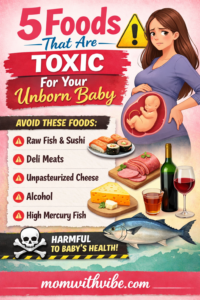

- 5 Foods That Are Toxic For Your Unborn Baby - February 25, 2026
- 15 Signs Your Child Is Getting Spoiled And What To Do - February 25, 2026
- 8th Month Pregnancy Care: What To Expect, Dos And Don’ts - January 17, 2026