
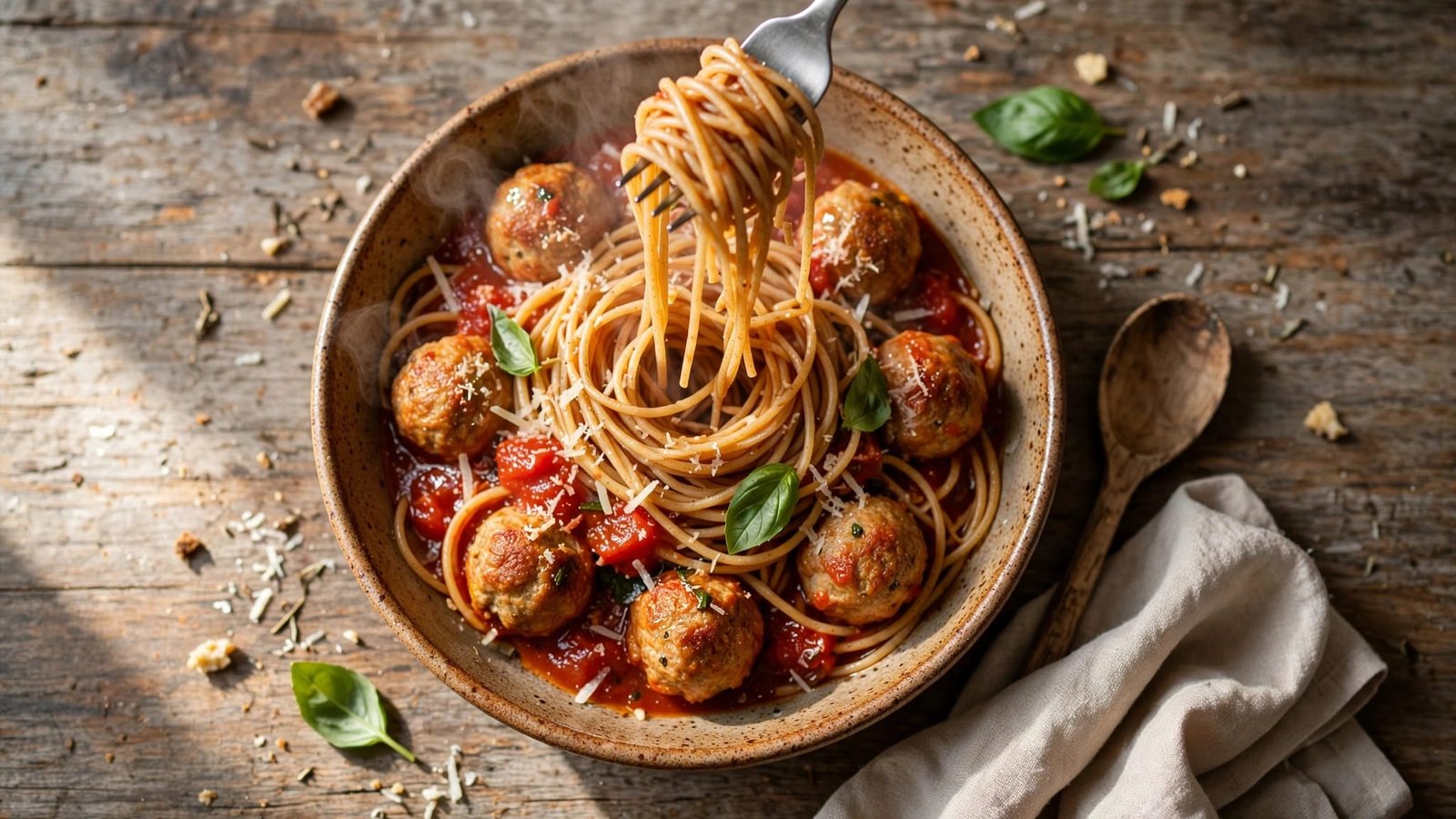
A pan of turkey meatballs sits on the stove, deep brown and still sizzling, while a pot of whole-wheat pasta rolls at a low boil beside it. Dinner looks like it took an hour of work, though the clock says otherwise.
This is the meal you make when you want something that tastes rich and slow-simmered but still lands on the table on a Tuesday. Ground turkey needs coaxing to stay juicy, and whole-wheat pasta needs a watchful eye so it doesn’t go mushy, so both get a handful of small moves that pay off.
You’ll get a meatball recipe built for moisture, a pasta step that keeps every strand separate and coated in sauce, and straightforward ways to handle leftovers so nothing dries out in the fridge. These homemade turkey meatballs are forgiving once you know where the pitfalls sit.
Everything starts with what goes into the mixing bowl.
Gather These Ingredients for Homemade Turkey Meatballs and Whole-Wheat Pasta
Ground turkey runs lean, and lean meat turns dry fast under high heat. The right binders hold moisture in, while seasonings build flavor from the inside out. Set everything on the counter before you start mixing so the meatball step moves without a scramble.
Related; Healthy Chicken Caesar Wraps (20-Minute Weekday Lunch)
For the Turkey Meatballs
You need one bowl and a short list. Each item earns its place.
- 1 pound ground turkey, 93 percent lean
- 1/2 cup plain breadcrumbs
- 1 large egg
- 1/4 cup grated Parmesan
- 2 cloves garlic, minced
- 1/4 cup yellow onion, minced fine
- 1 teaspoon Italian seasoning
- 3/4 teaspoon kosher salt
- 1/4 teaspoon black pepper
- 2 tablespoons whole milk
The 93 percent lean grind is the middle ground you want. It carries enough fat to stay juicy without turning greasy, and it browns well in a skillet.
Breadcrumbs and milk form a panade, a soft paste that traps moisture inside the meat. The egg holds the mixture together so the meatballs don’t crumble in the sauce. Parmesan adds salt and a little fat, which keeps the texture tender. Garlic, onion, and Italian seasoning season the meat all the way through.
Related; Christmas Cheesecake Recipes
For the Whole-Wheat Pasta and Sauce
Whole-wheat pasta brings a nutty, slightly chewy character that stands up to the turkey without getting lost. Pair it with a simple sauce so the meatballs stay the star.
- 8 ounces whole-wheat spaghetti or penne
- 24 ounces marinara sauce
- 1 tablespoon olive oil
- 2 cloves garlic, thinly sliced
- 1 pinch red pepper flakes
- 1 handful fresh basil, torn
- 1/2 cup reserved pasta water
Reserve that pasta water before you drain the pot. The starchy liquid loosens the sauce and helps it cling to every strand instead of pooling at the bottom of the bowl.

Photo by Hexuye Ye
How to Cook Homemade Turkey Meatballs With Whole-Wheat Pasta, Step by Step
Timing separates a tender meatball from a dry one. Mix the meat gently, bake it at moderate heat, and keep the pasta water close by.
This sequence takes you from a bowl of seasoned turkey to a finished skillet of sauce and pasta.
Related; Non Alcoholic Christmas Cocktails: 4 Easy Party Recipes
Mix the Meatball Mixture Without Overworking It
Add the ground turkey, breadcrumbs, egg, Parmesan, garlic, onion, Italian seasoning, salt, pepper, and milk to one large bowl. Use a fork or your fingertips to fold everything together.
Stop as soon as the ingredients look evenly distributed. Overmixing compacts the protein and turns the meatballs dense.
You want a loose, tacky mixture that still holds a shape. If the mixture feels wet or slides apart, chill it for 10 minutes before shaping.
The breadcrumbs will absorb the milk, and the cold meat firms up. That short rest also makes rolling easier.
For homemade turkey meatballs with even seasoning, scrape the bottom of the bowl once during mixing. A gentle hand here protects the texture before the meatballs ever hit the oven.
Shape, Bake, and Brown for Better Texture
Scoop the mixture into 1.5-inch portions with a cookie scoop or tablespoon. Roll each one lightly between your palms.
Don’t pack or press the meat. Set the meatballs on a parchment-lined sheet pan with a little space between them.
Bake at 400 degrees Fahrenheit for 18 to 20 minutes. The meat should reach 165 degrees Fahrenheit on an instant-read thermometer.
Check a meatball near the center of the pan, since that area can cook slower. For deeper color, heat a tablespoon of olive oil in a skillet.
Sear the baked meatballs for 1 to 2 minutes per side. The oven cooks them through; the skillet adds a browned crust.
Another route is a quick sear before baking, though the baked-then-seared method keeps the interior juicier. Either way, let them rest for 5 minutes before saucing.
Related; Ground Turkey Stuffed Peppers With Brown Rice
Boil the Pasta and Bring the Sauce Together
Bring a large pot of well-salted water to a boil. Add 8 ounces of whole-wheat pasta and cook until al dente.
Whole-wheat pasta can turn grainy and soft if it sits past that point. Scoop out 1/2 cup of pasta water before you drain it.
That cloudy liquid carries starch, which helps the sauce coat each strand. Meanwhile, warm 1 tablespoon olive oil in a wide skillet over medium heat.
Add 2 sliced garlic cloves and a pinch of red pepper flakes, then stir for 30 seconds. Pour in 24 ounces of marinara and bring it to a gentle simmer.
Slide the meatballs into the sauce and let them warm for 3 to 4 minutes. Toss the drained pasta with a splash of pasta water, then add it to the skillet.
Fold everything together over low heat for 1 minute. Finish with torn basil and serve right away.

Photo by Gary Barnes
Why Whole-Wheat Pasta Works With Turkey Meatballs
Pairing turkey meatballs with whole-wheat pasta is not a compromise you talk yourself into. It’s the better match for a lean meatball and a sauce that needs something sturdy underneath it. White pasta can feel limp next to a browned, savory meatball; whole-wheat brings bite, a toasted wheat flavor, and enough structure to hold up in the skillet. The two belong together on the plate.
A Heartier Texture and Flavor Match
Whole-wheat pasta has a rougher surface and a slightly chewy bite. That texture gives the marinara something to grip, so sauce clings to each strand instead of sliding off into a puddle. Meanwhile, the mild nuttiness mirrors the browned edges of the turkey meatballs.
Lean turkey also needs a partner that isn’t mild. Delicate white pasta fades next to garlic, Parmesan, and a long-simmered tomato sauce. Whole-wheat keeps its own character and balances the savory meat.

Photo by Carolina Cossío on Unsplash
Cooking Whole-Wheat Pasta Just Right
Timing is where whole-wheat pasta goes wrong most often. Start checking two minutes before the package time, then taste a strand every 30 seconds after that. Whole-wheat moves from firm to soft faster than the label suggests.
Reserve a full cup of the cooking water before you drain, not half. The pasta keeps absorbing liquid after it leaves the pot, so extra water gives you room to correct the sauce later.
Then finish the pasta in the skillet with the sauce and meatballs for the last minute. This final toss lets the starch thicken the marinara and coat every strand; in other words, the sauce becomes part of the pasta rather than something spooned on top.
Dry, chalky whole-wheat usually means one thing: it was drained too long and never finished in the sauce. Drain it while it still has a little snap, and serve the meatballs immediately.
Related; Christmas Party Food Ideas for Easy, Festive Hosting
Easy Swaps, Sauces, and Serving Ideas for Turkey Meatballs
A tray of homemade turkey meatballs gives you room to move. Change the sauce, switch the side, or pack the leftovers for lunch, and the same batch feels new.
This recipe bends to what’s in your fridge and what your family reaches for first. None of these changes require a second trip to the store.
Sauce Swaps That Change the Whole Plate
Marinara remains the default for good reason. Its tomato acidity cuts through Parmesan and the browned edges of the turkey.
Spicy arrabbiata turns up the heat with dried chiles, and that gentle burn makes lean meat taste richer. Pesto brings basil, pine nuts, and olive oil; loosen it with a splash of pasta water so it coats the meatballs instead of sitting in a clump.
A light cream sauce works when you want comfort without weight. Warm a little broth with a spoonful of cream and Parmesan, then let the meatballs simmer in it for a few minutes.
Baked meatballs do best in a thinner sauce. A loose sauce slips around them and keeps the exterior moist, while a thick paste can dry out in the oven.
Whole-wheat pasta pairs nicely with earthy tomato and herb sauces for the same reason. Its nutty flavor meets the sauce instead of disappearing under it.
Simple Sides and Make-Ahead Serving Ideas
A crisp green salad with lemon vinaigrette gives the plate a fresh counterpoint to the sauce. Garlic bread handles the scooping job, though toasted whole-wheat pita keeps the meal lighter.
Roasted vegetables earn their spot because they cook on the same oven rack as the meatballs. Toss broccoli, peppers, or zucchini with olive oil and salt, then spread them on a sheet pan.
A lemony bean salad with white beans, parsley, and lemon zest adds protein and a bright finish. It also holds up well if dinner runs late.
Leftovers hold up better when you pack components separately. Cool the pasta and meatballs, store them in shallow containers, and spoon a little extra sauce over the pasta so it doesn’t dry out. At lunch, reheat with a splash of water or sauce and the texture comes back.
Freeze baked meatballs on a sheet pan first, then move them to a freezer bag. Reheat them straight from frozen in simmering sauce, and freeze the sauce separately so you can portion both later.
Keep the Meatballs Juicy: Troubleshooting and Storage
Turkey meatballs can turn on you in small ways. A few extra minutes in the oven pulls the moisture out, and a sauce left unsalted tastes flat next to the meat. The good news is that each problem has a fix you can apply without starting over.
Fixing Dry, Crumbly, or Bland Meatballs
Lean turkey dries out faster than beef or pork, so it needs help from fat and liquid. If your meatballs came out dry, fold 2 tablespoons of whole milk, a spoonful of ricotta, or a drizzle of olive oil into the next batch. Each one adds moisture without making the mix greasy.
Crumbly meatballs usually mean the binder fell short. Add another tablespoon of breadcrumbs and a splash of milk, then let the mixture rest for 10 minutes before shaping.
Salt the mixture before you shape it, not after. Turkey absorbs seasoning poorly once it’s cooked, so taste a small piece first: pinch off a spoonful, cook it in a hot pan, and adjust the salt from there. A pinch of salt in the water for the pasta helps too, since whole-wheat pasta needs well-seasoned water to taste like anything.
Bland sauce is a separate problem with its own fix. Simmer it with a Parmesan rind for 20 minutes, or stir in an extra clove of minced garlic and a pinch of red pepper flakes. A teaspoon of tomato paste browned in olive oil deepens the flavor fast.
Mushy pasta comes from overcooking or from sitting in the water too long. Pull whole-wheat pasta two minutes before the package time says to, and finish it in the sauce so it absorbs flavor instead of water.
Storing and Reheating Without Losing Flavor
Cool leftovers within two hours of cooking, then refrigerate them. Keep meatballs and pasta in separate containers so the pasta doesn’t soak up every drop of sauce and turn soft. Both keep for three to four days.
Cooked meatballs freeze well for two to three months. Freeze them on a sheet pan first so they hold their shape, then move them to a freezer bag. Label the bag with the date so you know what you’re working with later.
Reheat gently, since high heat dries turkey out a second time. Warm the meatballs in a covered skillet with sauce and a splash of water over low heat until they’re hot all the way through. Toss the pasta in the same pan for the last minute, and dinner tastes close to fresh.
Conclusion
A pan of homemade turkey meatballs and a pot of whole-wheat pasta proves that a comforting dinner doesn’t need hours of simmering. The meal tastes slow-cooked while the clock stays honest about how fast it came together.
Juicy turkey meatballs come down to three things: gentle mixing, good browning, and a splash of starchy pasta water to pull the sauce together. Keep those habits in place and the recipe holds up whether you make it on a Tuesday or for a table of guests.
Try the recipe this week, then make it yours. Add more garlic, swap in a spicier sauce, or simmer the marinara with a Parmesan rind until it tastes the way your family likes it.
That’s the quiet win of a homemade meal: comfort on the plate and ease in the making, with enough left over for tomorrow’s lunch.
Save the pin for later


- Juicy Homemade Turkey Meatballs With Whole-Wheat Pasta - November 23, 2026
- Ground Turkey Stuffed Peppers With Brown Rice - November 23, 2026
- Lemon Garlic Baked Cod With Vegetables: 30-Minute Dinner - November 23, 2026