


Fun baking activities for children Gingerbread stars stacked into a little tree bring a sweet, festive touch to the holiday table. Gingerbread Christmas tree ideas can be simple enough for kids to decorate or ambitious enough to become a tall centerpiece that needs careful assembly.
Choose a design that fits your time and baking plans, whether that’s a few decorated cookies, a small cluster, hanging ornaments, or a layered star tree. With evenly baked pieces and the right icing for decorating and joining, your holiday creation can look lovely and hold together. Start with these tree styles to find the right fit for your table.
Gingerbread Christmas Tree Ideas for Every Kind of Holiday Table
The right gingerbread tree depends on the time you have, your comfort with cookie assembly, and whether little helpers are joining in. Choose a flat design for an easy afternoon project, or build a stacked centerpiece when you want something that catches the eye.
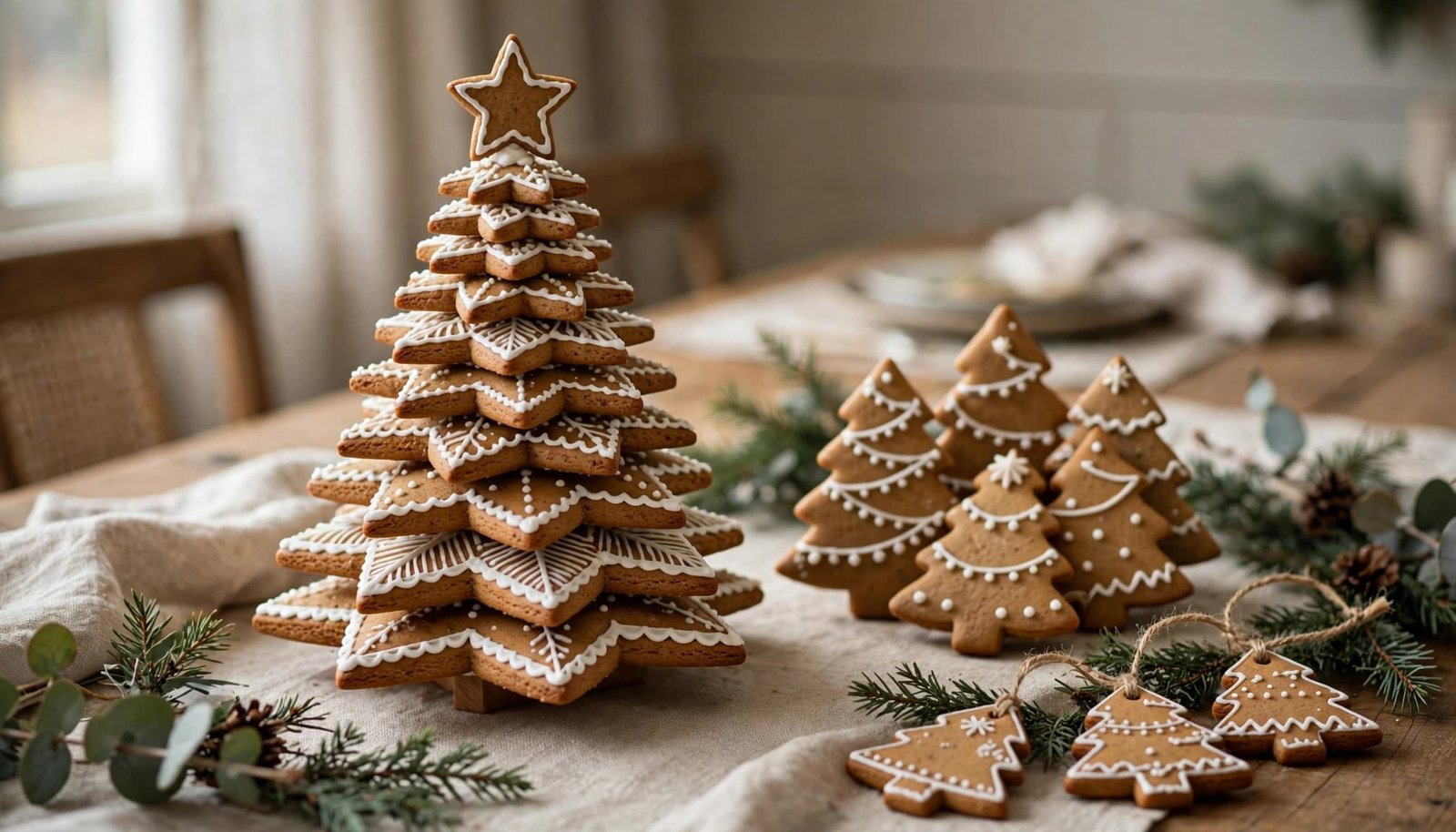
Stacked star tree for a festive centerpiece
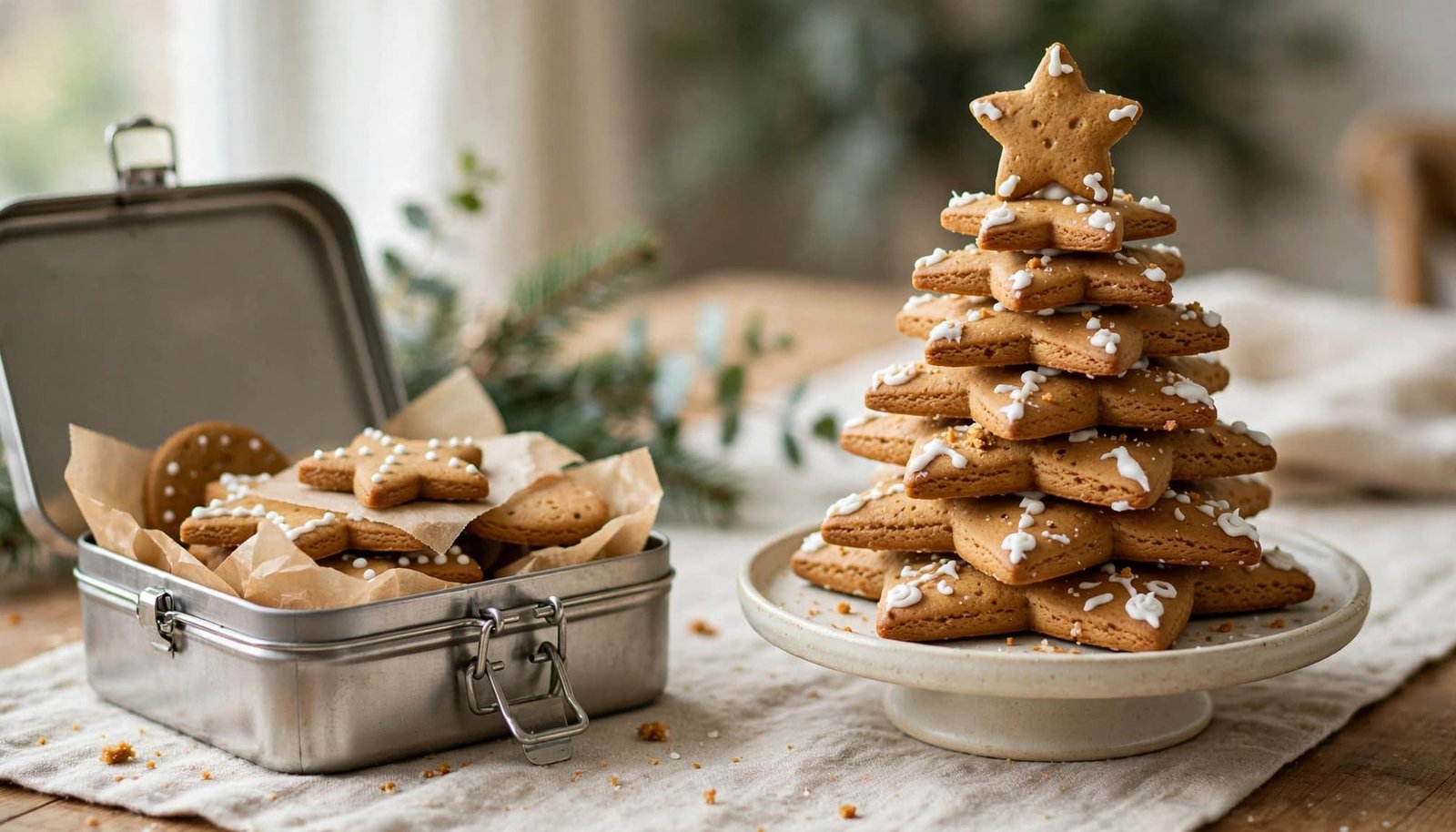
Cut stars in several sizes, bake matching pairs, then stack them largest to smallest with a dab of firm royal icing between layers. Turn each star slightly as you build so the points form leafy branches. Finish with an upright cookie star and a few sugar pearls or piped icing dots.
This design takes more time than decorating single cookies because the pieces need to cool fully and the icing needs time to set. For a steadier tree, test the dry stack before adding icing, and keep the largest stars at the base. Adults should handle any skewer or support used during assembly.
Simple tree cookies for a kid-friendly baking day
Use a tree-shaped cutter to make flat cookies, then let children decorate each one with icing lines, sprinkles, or small candies. They can also arrange the cooled cookies in a little forest on a platter, which creates a centerpiece without precise stacking.
This is a good choice when baking time is short or decorating skills are still developing. Set out a few colors of thick icing and toppings in small bowls, and let each child make a different pattern. For more ways to turn kitchen time into a family activity, try these fun things to do with kids.
Hanging gingerbread ornaments for a small table
Cut small stars or trees, then make a hole near the top before baking. Once the cookies cool, thread ribbon through the opening and tie a simple loop. These ornaments work well beside place settings or on a tabletop branch, and guests can take one home after the meal.
The design is beginner-friendly, although the opening can close as the dough bakes. Check each hole while the cookies are still warm and gently reopen it if needed. Keep the ribbon off the cookie if you plan to serve it.
Mini tree cluster for a relaxed centerpiece
Bake several small tree cookies and stand them in a group around a platter or cake board. A little royal icing can help each cookie stay upright; for more support, attach a small triangular gingerbread prop behind each tree. Add a light icing drizzle for snow, then leave the cluster to set before moving it.
This option feels more decorative than a plate of cookies but avoids building one tall structure. It also lets children decorate individual trees while an adult manages the supports. For another festive cookie style, browse BBC Good Food’s Christmas cookie recipe.
Bake gingerbread pieces that keep their shape
A gingerbread tree looks polished when its cookies have crisp edges, even surfaces, and consistent thickness. Careful rolling and cooling also make decorating easier, while firm, flat pieces create a steadier base for stacking.
Start with a reliable dough and even thickness
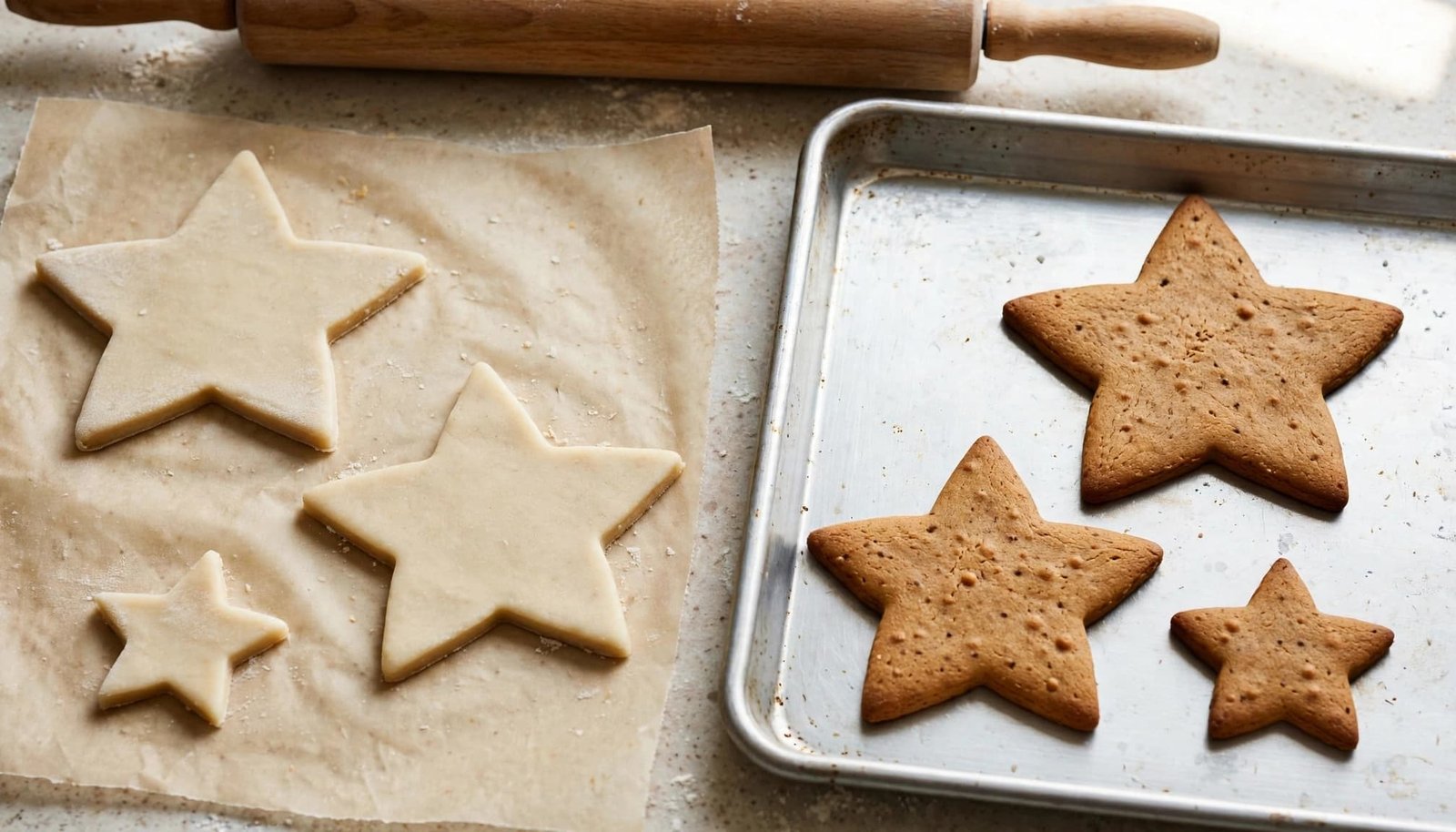
Choose a tested gingerbread recipe designed for cutout cookies. Dough made for soft, spread-out cookies may lose its shape in the oven, which can leave stacked stars uneven or make tree pieces hard to assemble.
Follow the recipe’s instructions for mixing and chilling. For example, BBC Good Food’s easy gingerbread recipe calls for rolling the dough to 1/2 centimeter thick and chilling it for an hour. Use the thickness and chilling time specified in your chosen recipe rather than changing them by guesswork.
Roll the dough evenly across the whole sheet. A rolling pin with thickness guides can help, or place guides of equal height on either side of the dough. If one area is thicker than another, those cookies may need different baking times and can sit unevenly in a finished tree.
For family baking, divide the dough into manageable portions so children can help roll and cut shapes without warming the entire batch. Try baking cookies together as a bonding activity while an adult handles oven tasks.
Cut clean shapes and watch the bake
Dip cutters in a little flour if the dough sticks, then press straight down without twisting. Twisting can distort the edges, so lift the cutter cleanly and transfer the pieces carefully to the baking sheet. For stacked trees, make matching cookies in each size, and keep them similar in thickness.
Bake according to your recipe, but treat its time as a guide. Bake time changes with cookie size and thickness: small, thin stars may finish sooner than large, thick ones. Check early, and look for the doneness cues the recipe gives rather than relying only on the timer.
Once baked, let the cookies cool completely before decorating or stacking. Warm gingerbread can bend or break under pressure, and icing applied too soon may soften or slide. Move each cookie gently, then leave it undisturbed until fully cool. For a sturdy tree, use the flattest, most even pieces near the base and save any misshapen cookies for snacking.
Decorate gingerbread trees with icing, snow, and simple sparkle
A small set of decorations can give gingerbread trees several distinct looks. Keep white icing, a few sprinkles or sugar pearls, and edible sanding sugar on hand; then change the pattern or placement to suit each cookie.
Use firm icing for joins and thinner icing for details
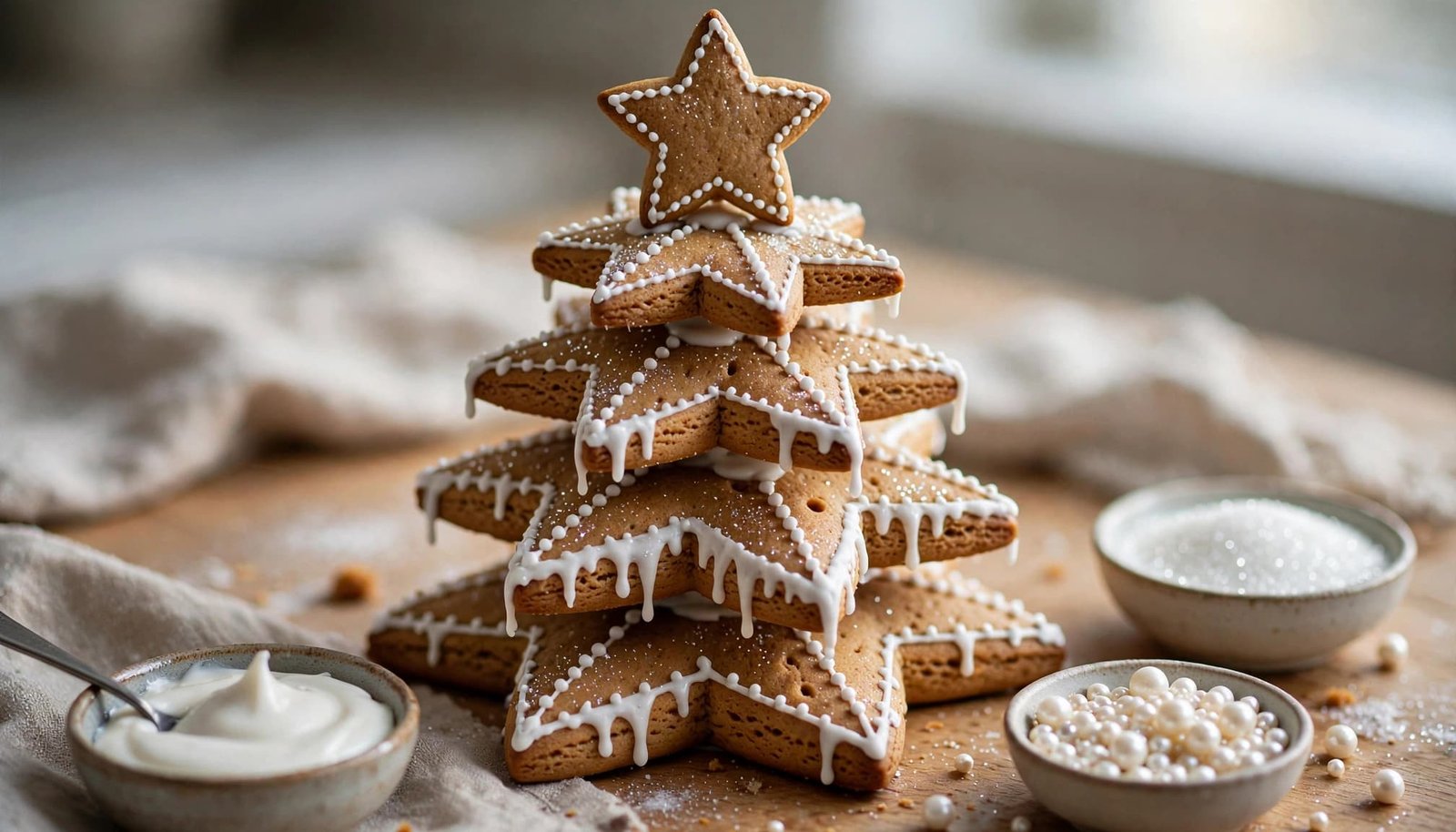
For a stacked tree, use stiff royal icing as edible glue between the cookie layers. It should hold its shape rather than run out at the edges. Pipe a small amount between each layer, and let the tree set before moving it. For a recipe and guidance on adjusting consistency, see King Arthur Baking’s royal icing recipe.
Set aside some icing for surface decoration, then thin it slightly with water according to your recipe. This smoother icing works well for fine lines, dots, and snow that drips over a cookie’s edges. Add liquid a little at a time; icing that becomes too runny can slide off the gingerbread. Keep unused royal icing covered between batches so the surface doesn’t dry out.
Create different finishes with a few toppings
Use the same white icing in different ways to make each tree feel personal. For a clean, snowy look, pipe short lines along the cookie points and add a light dusting of sanding sugar while the icing is still wet. For a more playful finish, place a few sugar pearls or colorful sprinkles along the branches like ornaments.
A thin drizzle gives a softer, frosted look, while small, evenly spaced dots create a simple garland pattern. You can also leave some cookies plain and decorate others, which keeps a group of trees from looking too busy. Stick to a few toppings so the gingerbread and its warm spice remain the focus.
For a family decorating session, give children cooled cookies and let them add dots, sprinkles, or sugar pearls. An adult can handle the icing used to join stacked pieces, especially for a taller centerpiece. If you want more kid-friendly ideas for decorating cookies, try these easy cookie decorating ideas for Father’s Day.
Build a gingerbread centerpiece that stays upright
A gingerbread centerpiece needs a steady foundation before it needs decoration. Flat, fully cooled cookies, a broad base, and firm icing with enough time to set help prevent a tree from leaning or sliding apart. The finished size depends on your cookie shapes and how many layers you stack, so build to suit your table rather than aiming for a set height.
Start with a level foundation
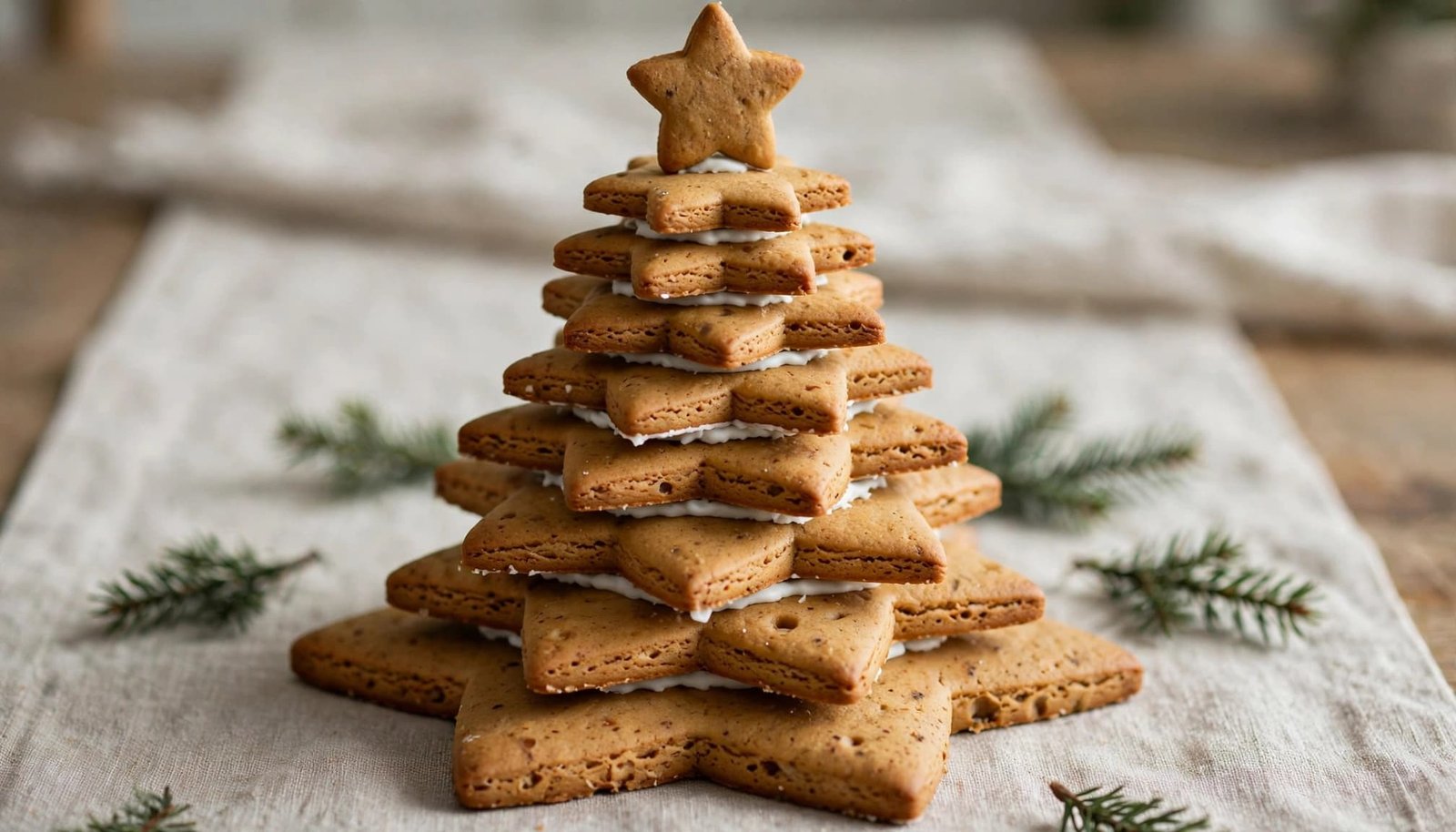
Choose the flattest, largest cookies for the bottom. Before adding icing, test the stack on a flat plate or cake board. Turn each star until its points sit evenly, and set aside any cookie that rocks or has a noticeably uneven edge.
Once the base sits steady, pipe a small amount of stiff royal icing in the center and place the next cookie on top. Keep the icing away from the points so it doesn’t squeeze out and make the layers slide. Continue with smaller stars, turning each one slightly to create a tree shape. Use less icing near the top, where lighter cookies need less support.
Add support when the stack needs it
If the tree wobbles during a dry test, don’t try to correct it with more decorations or runny icing. Recheck the base and replace uneven cookies first. For a taller or heavier arrangement, an adult can add a food-safe central support, such as a skewer, through aligned holes in the cookies. Make the holes before baking, and handle the pointed support away from children.
A shorter cluster can be steadier than one tall stack. You can also prop individual gingerbread trees with small triangular cookies and attach them to a cake board with icing, a method used in Mary Berry’s gingerbread house recipe.
Let every join set before moving the tree
After stacking, leave the centerpiece on its serving board while the icing firms. Avoid carrying it by the top or decorating it with heavy candies before the joins hold. Royal icing dries quickly in open air, so keep the rest covered while you work.
If a layer slips, gently lift it off, scrape away excess icing, and reset it with a smaller amount. Should a cookie crack, use it higher in the stack where it carries less weight, or replace it with a sound piece. Finally, let the completed tree stand undisturbed for several hours, or overnight, before moving it to the holiday table.
Display and store your gingerbread creations with care
A gingerbread tree can dress up the holiday table, but heat and moisture can soften the cookies and loosen icing. Choose a dry spot away from sunny windows, steam, and candles, and keep extra cookies sealed until you’re ready to serve them.
Keep cookies crisp between decorating and serving
Let icing dry fully before storing decorated cookies. Then place them in an airtight container, separating layers with parchment so the decorations don’t stick or smear. A snug seal helps protect gingerbread’s crisp texture; BBC Good Food’s gingerbread storage guidance also recommends an airtight container.
For a centerpiece, leave the tree on its serving board in a cool, dry place. Avoid wrapping it while the icing is still damp, since trapped moisture can soften the cookies. If you bake extra stars for guests, store those separately and bring them out when it’s time to eat.
Decide what to serve after display
A centerpiece that has sat uncovered on the table is best treated as decoration, especially if guests have handled it or it includes ribbon, a skewer, or other non-edible supports. Those pieces can make a beautiful display, but they don’t belong on a serving plate.
For an easy way to keep serving cookies separate, set aside a batch in a covered container before arranging the centerpiece. You can also use a small covered cake stand for cookies intended to be eaten, while leaving the decorative tree on display. This keeps the crisp cookies protected and avoids guessing how long an exposed creation should remain edible.
Conclusion
Gingerbread Christmas tree ideas can suit a quiet afternoon or a full holiday baking day. A small ornament, a cheerful cluster, or a tall stacked tree can each bring charm to your table.
Choose a design that fits your time, then enjoy decorating together. With a little icing and plenty of holiday spirit, even a simple gingerbread tree can make the season feel special.
Save the pin for later


- Gingerbread Christmas Tree Ideas - November 18, 2026
- Christmas Candy Recipes for Easy Treats and Gift Boxes - November 13, 2026
- 5 Holiday Baking Recipes for a Cozy Family Baking Day - November 12, 2026

