
A Muslim name can reflect faith, family history, an admired person, or a quality parents hope their child will carry. Choosing one can take care, especially when spellings and meanings vary across languages and sources.
This list brings together 15 names for girls and 15 for boys, with brief meanings and context to help you compare options. As you read, keep in mind that a name’s meaning may differ by language, spelling, and source; exploring meaningful baby names and their origins can offer more ideas. Start with the girls’ names below.
30 Muslim Names for Girls and Boys, With Meanings
Muslim names come from many languages and naming traditions. Some are Quranic words or prophetic names; others are valued for their meanings or ties to important figures in Islamic history.

15 Muslim names for girls
- Maryam is the Quranic name of Mary, mother of Prophet Isa. Its etymology is uncertain, so proposed translations should be treated cautiously. Mary in Islam
- Fatima is best known as the name of Prophet Muhammad’s daughter. Its commonly reported meaning relates to weaning, though explanations vary.
- Aisha means “living” or “alive.” Aisha bint Abi Bakr, the Prophet’s wife, is a prominent figure in Islamic history.
- Hafsa is associated with Hafsa bint Umar, a wife of Prophet Muhammad. The name is often said to mean “young lioness.”
- Amina means “safe” or “secure” and was the name of Prophet Muhammad’s mother, Amina bint Wahb. It also appears in Swahili Muslim naming traditions, as seen in these Tanzanian baby names and meanings.
- Asiya is the name traditionally given to Pharaoh’s believing wife in Islamic accounts. The Quran tells her story without naming her.
- Zainab is a long-established name in Muslim history, including among women in Prophet Muhammad’s family. Its precise meaning is reported in different ways.
- Ayat means “signs” or “verses” in Arabic, including verses of the Quran. It is a Quranic-word name, not a named figure.
- Iqra means “read” or “recite.” It is linked to the opening command of the first Quranic revelation.
- Dua means “supplication” or “prayer,” a direct expression of asking God for help or guidance.
- Bushra means “good news” or “glad tidings.” It is Quranic vocabulary used as a name.
- Fadilah is an Arabic virtue name commonly understood as “virtuous” or “excellent.”
- Bilqis is the traditional name of the Queen of Sheba in Islamic storytelling. The Quran recounts her story but does not name her.
- Abeer is an Arabic name commonly translated as “fragrance” or “scent,” with a gentle, poetic quality.
- Ahlam commonly means “dreams.” Depending on usage and etymology, it can also relate to forbearance or sound judgment.
15 Muslim names for boys
- Abdullah means “servant of Allah.” It is a devotional name formed from abd (servant) and Allah.
- Abdul Rahman means “servant of the Most Merciful,” referring to Allah. Spellings include Abd al-Rahman and Abdourahman.
- Muhammad means “praised” or “commendable.” It is the name of Islam’s prophet and appears in the Quran.
- Ahmad means “more praised” or “most commendable.” Islamic tradition also recognizes Ahmad as a name of Prophet Muhammad.
- Ali means “high,” “exalted,” or “noble.” Ali ibn Abi Talib was the Prophet’s cousin and son-in-law.
- Hasan means “good,” “handsome,” or “beautiful.” Hasan ibn Ali was Prophet Muhammad’s grandson.
- Ibrahim is the Arabic form of Abraham and the name of a prophet honored in the Quran.
- Yusuf is the Arabic form of Joseph, a prophet whose story appears in the Quran’s Surah Yusuf.
- Dawud is the Arabic form of David, a prophet named in the Quran.
- Ayyub is the Arabic form of Job, a prophet remembered in Islamic tradition for patience through hardship.
- Bilal recalls Bilal ibn Rabah, an early Muslim companion and the first muezzin. The name is also linked to water.
- Anas is associated with Anas ibn Malik, a companion of Prophet Muhammad. The name commonly suggests friendliness or companionship.
- Hamza is often understood as “lion” or “strong.” Hamza ibn Abd al-Muttalib was the Prophet’s uncle and a notable early Muslim.
- Amin means “trustworthy” or “faithful.” It is a virtue name and differs from the feminine name Amina.
- Amir means “leader,” “commander,” or “prince.” It is an Arabic title used as a given name.
How Muslim names reflect faith, history, and good qualities
Muslim names can carry religious meaning, honor a person admired in Islamic tradition, or express a quality a family hopes to celebrate. These categories often overlap, but they are not interchangeable. A name can matter to Muslim families even if it does not appear in the Quran.

Quranic names and words
A Quranic name or name element appears in the Quran, either as a person’s name or as a meaningful word. Maryam, for example, is named in the Quran, and Surah Maryam tells part of her story. Families may also choose words such as Ayat or Dua for their religious associations. Still, a name’s presence in scripture is only one reason it may be chosen.
Names tied to prophets and respected figures
Some names honor prophets, companions, or members of the Prophet Muhammad’s family. Their appeal comes from the person’s place in Islamic belief or history, rather than only from the name’s literal meaning. A respected figure may be part of Islamic tradition even when popular accounts, rather than the Quran itself, preserve a particular detail about them.
Names chosen for positive meanings
Families also choose names for qualities such as trustworthiness, patience, or generosity. These virtue names need not appear in the Quran to feel meaningful or suitable. Their significance comes from the good meaning parents associate with them.
There is no single Quran-only list that Muslim families must follow. Instead, parents can weigh a name’s meaning, pronunciation, family connections, and religious associations. For a broader process, see these tips for choosing a meaningful baby name.
Why Muslim names can have different spellings and meanings
Arabic names are often written in English through transliteration, the process of representing sounds from one writing system with another. Since Arabic sounds and vowels don’t always map neatly to English letters, families and communities may spell the same name differently.
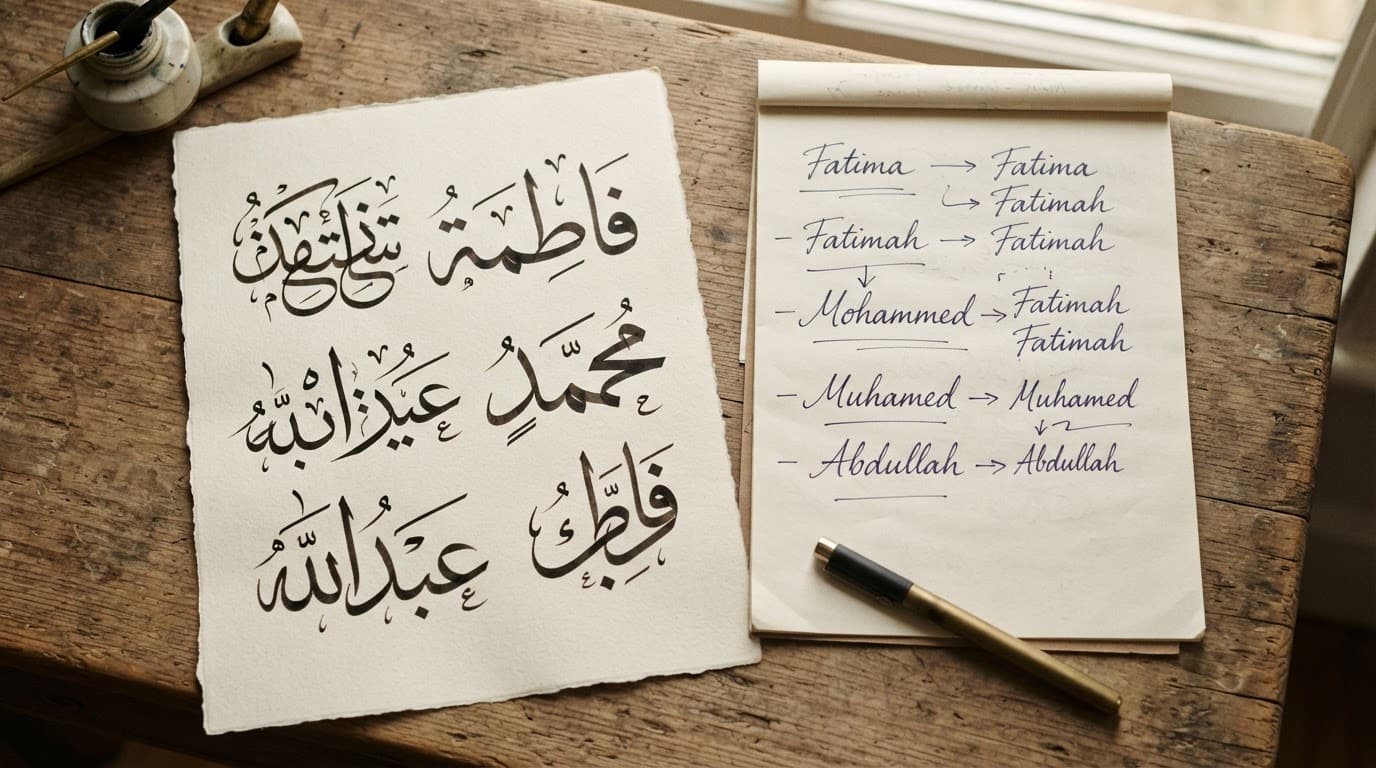
Spelling depends on pronunciation and tradition
For example, Aisha and Ayesha are common English spellings of the same Arabic name. Maryam and Mariam are also variants, as are Yusuf, Yousef, and Youssef. These differences often come from how speakers pronounce the name, which transliteration style they follow, or the spelling familiar in their family or region. South Asian communities may favor spellings shaped by Urdu usage, while other families may choose a form that reflects local Arabic pronunciation.
The Library of Congress Arabic romanization table shows how formal systems represent Arabic sounds, sometimes with marks that everyday English spellings omit. In ordinary use, families usually choose the spelling that feels natural to them.
A spelling variant doesn’t always mean a different name
When two spellings represent the same Arabic name, the meaning generally stays the same. However, sources may give different meaning explanations because a name’s origin is uncertain, or because guides simplify its history. A difference in spelling alone doesn’t prove a difference in meaning, so check the name’s Arabic form and a reliable explanation when accuracy matters.
Also, related names aren’t always transliteration variants. Yusuf and Joseph are connected as forms of the same traditional figure’s name, but Joseph is an English equivalent, not another way to spell Yusuf in English. Families exploring names shaped by Arabic and North African traditions can also browse Moorish names with Arabic origins.
How to choose a Muslim name that feels right for your family
A name can connect your child to faith, family history, or a quality you hope they will carry. To choose one with confidence, look beyond a name’s sound and check its meaning, context, and everyday fit.

Check the meaning and religious context
Name websites can offer a useful starting point, but translations sometimes vary by spelling, language, or source. Check the name’s original form and compare more than one reliable explanation, especially when its meaning is disputed or unclear. For Islamic naming principles, Zakat Foundation of America’s guidance on choosing a Muslim baby name offers a helpful overview.
Islamic guidance favors good meanings and discourages names with offensive or degrading meanings. It also prohibits names that imply worship of anyone other than Allah. If a name includes abd, meaning “servant,” check what follows it, since the full name carries the meaning. When a name’s translation or religious status is uncertain, ask a knowledgeable religious adviser rather than relying on a brief online definition.
A name’s religious and cultural context can matter as much as its literal translation. Consider whether it honors a figure your family respects, belongs to a tradition you want to preserve, or has associations that feel right to you. Families balancing Islamic associations with cultural heritage may also explore Ugandan baby names and meanings for examples of names tied to language and heritage.
Test the name in everyday use
Say the full name aloud with your family surname. Try it in different situations, such as introducing your child, calling them across a room, or imagining it on a school roster. This can reveal awkward sound combinations or initials you hadn’t considered.
Then decide which spelling your family prefers. A familiar spelling may be easier for others to recognize, while a spelling closer to your family’s pronunciation may feel more authentic. Either way, consider how simple it will be for your child to write, pronounce, and explain in the places they’ll live.
Finally, invite close relatives to share their thoughts, while keeping the decision with the parents. A short list can help: write down each name’s meaning, pronunciation, spelling, and personal connection. When one option feels right in both your family’s language and daily life, you’ll have more than a pleasing sound to guide your choice.
Conclusion
Choosing among Muslim names for girls and boys takes more than finding a pleasing sound. A positive meaning, a personal connection, and ease of use can help you identify a name that feels right for your family.
Take time to compare your favorites, say each name with your child’s surname, and confirm the spelling and meaning you intend. A thoughtful choice can honor your family’s values while feeling natural in everyday life.
Save pin for later

- 12 Beautiful Baby Names That Mean Forest, Plus Woodland Picks - September 27, 2026
- 15 Fantastic Baby Nicknames for Boys, From Sweet to Playful - September 27, 2026
- 50 Popular Indian Girl Names and Their Meanings: A Curated List - September 27, 2026