

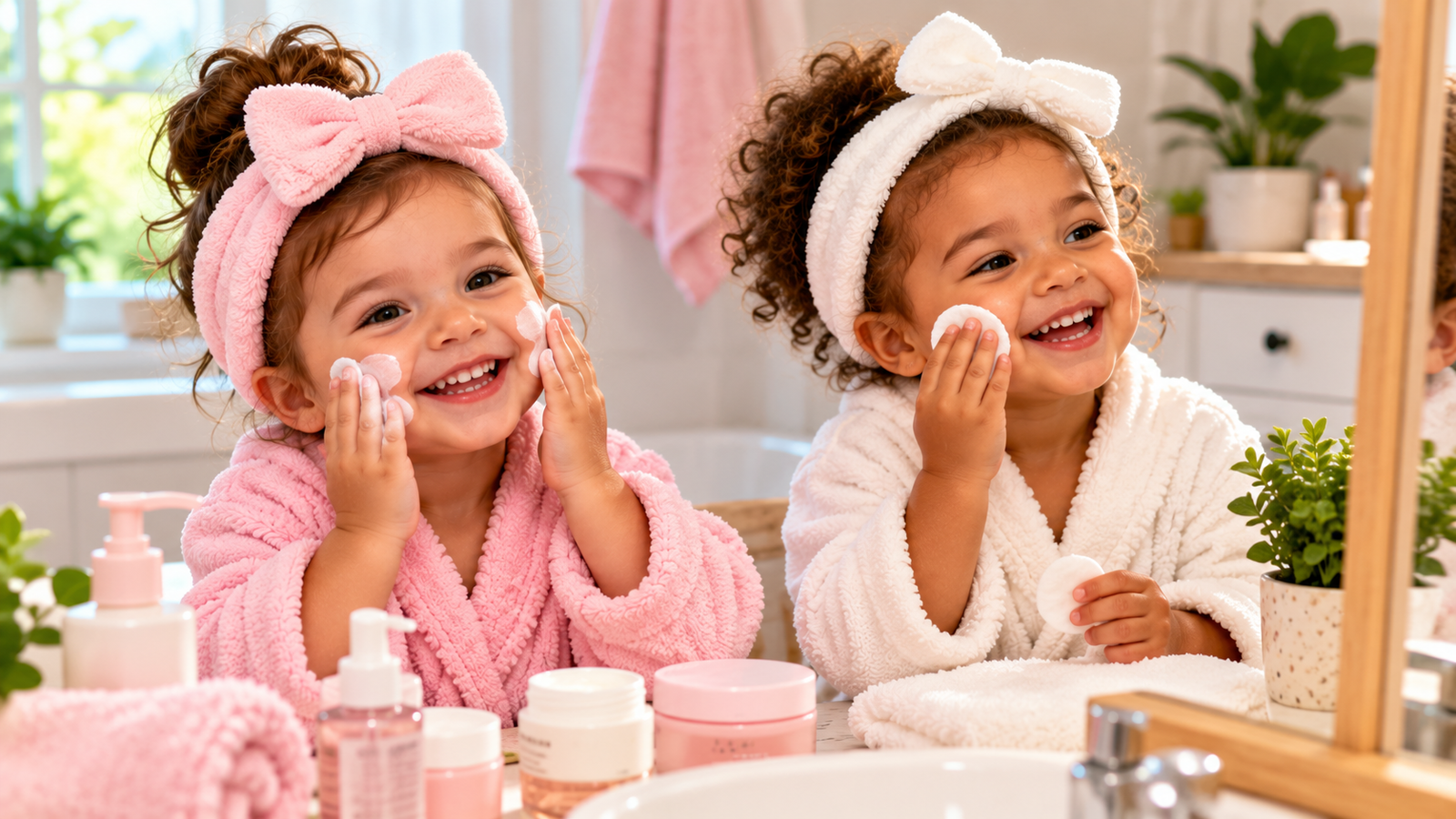
Your eight-year-old points at the dry patches on her cheeks and asks why her face feels “scratchy.” Or maybe your tween just started asking about the skincare routines she’s seen online, and you’re wondering how much of it is actually safe for young skin.
Here’s the good news: kids don’t need a shelf full of products. Their skin is thinner and more sensitive than adult skin, so a simple, gentle routine works better than anything complicated or expensive.
In this post, you’ll find practical skin care routine ideas for kids, broken down by age. We’ll cover why children’s skin needs different care, the ingredients worth looking for (and the ones to skip), and the most common mistakes parents make without realizing it.
First, let’s look at what makes kids’ skin different in the first place.
Why Kids’ Skin Needs Special Care
Children’s skin isn’t just a smaller version of adult skin. It’s structurally different, and those differences matter when you’re choosing products and building habits.
Thinner, More Sensitive, Faster to Dry Out
A child’s stratum corneum, the outermost layer of skin, is noticeably thinner than an adult’s. That outer layer is the body’s first line of defense, and in kids it hasn’t fully matured yet. Because it’s thinner, children lose moisture through the skin faster, which is why dry patches and “scratchy” cheeks show up so quickly in winter or after extra bath time.
Their skin also reacts more strongly to whatever touches it. Fragrances, dyes, and strong actives that an adult might tolerate can trigger redness, stinging, or irritation in a child. The sebaceous glands are less active too, so kids’ skin produces less protective oil. Think of a young child’s skin like a brand-new sweater: soft and fine, but the weave is looser and things get through more easily.
The skin barrier develops gradually. Studies of infant and childhood skin show that barrier function and hydration keep maturing through the early years, and even at age four or five, a child’s skin is still more permeable than yours. The American Academy of Dermatology recommends gentle, fragrance-free products and short baths for exactly this reason.
Why Adult Products Backfire on Kids
That flashy cleanser with salicylic acid or the anti-aging serum on your bathroom shelf can do real harm on young skin. Harsh surfactants strip away what little natural oil kids have, weakening a barrier that’s already delicate. Exfoliating acids designed for adult acne or wrinkles can cause burning and peeling on a child’s face.
The rule is simple: if it’s made to fight aging or acne, it’s not for kids. Children need mild cleansers, plain moisturizers, and sunscreen. Nothing else earns a spot.
Kids vs. Tweens: When Skin Starts to Change
Between roughly ages 4 and 10, the goal is mostly protection and moisture. Skin stays relatively stable, and a two-product routine covers it.
Puberty changes everything. Rising hormones wake up oil glands, so tweens often deal with shine, clogged pores, and their first breakouts. At that point, a gentle cleanser twice a day becomes worth adding. The basics still apply, though: mild formulas, consistent sunscreen, and no borrowing from your shelf.
Why Early Habits Pay Off
Good skin care is a habit, and habits stick when they start young. A child who learns to wash gently and moisturize daily carries those skills into adolescence, when skin problems get more demanding. Sun protection matters most of all, since much of lifetime UV damage happens in childhood. The AAD notes that protecting kids from sun exposure now lowers skin cancer risk later.
Small, consistent routines today are an investment in healthier skin for decades.
The Perfect Skin Care Routine for Kids: A Simple Step-by-Step Plan
Now that you know what kids’ skin needs, here’s the routine itself. It takes five minutes in the morning and even less at night. If it feels too basic, that’s the point. Simple routines actually get done, and consistency beats complexity every time.
Morning Routine: Cleansing and Sunscreen in Five Minutes
Mornings call for speed. Most kids are racing the school bus, so the routine needs three steps or fewer.
- Rinse or gently cleanse. Lukewarm water alone works for most children. If skin is oily or dirty, a mild, fragrance-free cleanser is enough.
- Pat dry. A soft towel with light pats, never scrubbing.
- Moisturize and protect. Apply a gentle moisturizer if skin is dry, then finish with sunscreen, SPF 30 or higher. For sensitive skin, choose a mineral formula with zinc oxide, which sits on top of skin instead of absorbing into it.
That last step is the one that really matters. Even on cloudy days, UV rays reach the skin, so make sunscreen as automatic as brushing teeth. If your child fights you on it, a mineral sunscreen for kids often feels less stingy on the face than chemical versions.
Evening Routine: Washing Off the Day the Right Way
Nighttime is about resetting. Dirt, sweat, and playground grime build up through the day, and leaving it there overnight dries skin out and can clog pores.
- Wash after outdoor play or before bed. A bath or a quick face wash with lukewarm water clears the day away. Hot water strips moisture, so keep the temperature moderate.
- Pat, don’t rub. Rubbing irritates young skin and undoes the gentle work you just did.
- Moisturize on damp skin. Apply cream or lotion while the face is still slightly damp. Water trapped against the barrier keeps skin hydrated for hours.
- Swap the pillowcase. Pillowcases collect oil and bacteria, so change them every few days, especially once your child hits the tween years.
Making the Routine Fun So Kids Actually Stick With It
Even the best routine fails if your child treats it like a chore. The fix is simple: make it theirs.
Let younger kids pick their own washcloth or a bottle with a character they love. Small ownership goes a long way. A colorful two-minute timer turns face washing into a game instead of a lecture, and singing the same silly song each night builds the habit on autopilot.
For older kids, a simple reward chart works. Seven checkmarks earns a small treat or extra screen time. Most importantly, do your own routine beside them. Kids copy what they see, and watching you apply sunscreen every morning teaches more than any reminder ever will. If you want more ideas for building healthy habits, our guide to morning routines for busy families covers the same gentle-consistency approach.
Adjusting Skin Care for Different Ages, from Toddlers to Tweens
A three-step routine is the backbone, but the details shift as your child grows. What works for a four-year-old won’t match what a twelve-year-old needs, and forcing the same products on both ends of that range leads to problems on both sides. Here’s how to adapt as they age.
Gentle Products and Ingredients That Are Safe for Children
Toddlers and preschoolers need very little: a gentle wash, a good moisturizer, and sunscreen. Look for fragrance-free formulas built around barrier-supporting ingredients rather than actives.
When you flip a bottle around, these are the names worth knowing:
- Glycerin pulls water into the skin and keeps it there
- Ceramides rebuild the lipid barrier that young skin hasn’t fully developed yet
- Colloidal oatmeal calms itch and irritation, which is why it shows up in eczema-friendly products
- Aloe and shea butter soothe and soften without clogging pores
- Zinc oxide protects sensitive skin from the sun without stinging
Brands make this easy. Lines like CeraVe, Cetaphil, Aveeno Baby and Kids, and La Roche-Posay offer fragrance-free, pediatrician-tested options that cost less than most trendy products. You don’t need a specialty “kids’ skincare” brand with cartoon packaging; the ingredient list matters more than the bottle.
Ingredients to Avoid in Kids’ Skin Care Products
The avoid list matters more than the buy list, because young skin punishes mistakes fast. Skip anything containing fragrance, essential oils, alcohol-based toners, strong acids (glycolic, salicylic), retinol, or harsh physical scrubs. Each of these either strips moisture or irritates a barrier that’s still maturing.
The biggest modern trap is the tween copying viral routines. Videos of ten-year-olds with shelves of serums have pushed kids toward products built for adult acne and aging. Dermatologists have warned publicly that these routines can cause burning, peeling, and even allergic reactions in preteens. A gentle foaming cleanser and a light moisturizer handle early oiliness just fine; retinol has no place on a ninth-grade face, let alone a fifth-grade one.
How Needs Change at Every Age
Between two and five, the focus is protection. Bathe briefly with lukewarm water, moisturize daily, and watch for eczema patches on cheeks, elbows, and knees. If dryness keeps flaring, ask your pediatrician before adding anything new.
Elementary-age kids, roughly six to nine, can start handling parts of the routine themselves. Teach them to wash their own face, and make sunscreen non-negotiable at recess, sports, and swim practice. This is the window where sun habits either form or don’t.
Tweens, nine to twelve, hit the hormonal shift. Oil arrives, pores clog, and the first breakouts show up. Respond with a gentle foaming cleanser twice a day and an oil-free moisturizer, not the harsh actives trending online. For persistent acne at this age, a pediatric dermatologist visit beats anything sold at the mall.
Solving Common Kid Skin Problems at Home
Even a solid routine doesn’t prevent every dry patch, sunburn, or stray pimple. The good news is that most everyday kid skin issues respond well to simple home care, as long as you know what to do (and when to stop googling and call the doctor). Here’s how to handle the three problems parents run into most.
Dry Skin, Eczema, and Sensitive Skin Solutions
Dry patches and eczema flare-ups come down to one thing: moisture escaping through a barrier that isn’t fully developed. Your job is to trap water in and keep irritants out.
- Keep baths short and lukewarm. Five to ten minutes, warm but never hot. Long, steamy baths strip the little oil kids’ skin produces.
- Moisturize within two minutes of bathing. This is the single most effective move. Cream applied to damp skin locks hydration in before it evaporates.
- Choose thick, fragrance-free creams. Ointments and creams beat lotions for eczema because they seal better. Petroleum jelly is cheap, safe, and hard to beat.
If a flare keeps coming back despite good moisturizing, ask your pediatrician about a mild topical steroid for short-term use. And when you need help choosing barrier-friendly products, our guide to safe skincare ingredients for kids breaks down what each one actually does.
Sunburn, Bug Bites, and Rashes: Quick Soothing Tips
Summer leaves its mark. For a mild sunburn, get your child out of the sun, apply cool compresses for ten to fifteen minutes, and soothe the skin with pure aloe vera gel from the fridge. Extra water helps too, since sunburn pulls fluid toward the skin’s surface. An over-the-counter hydrocortisone cream (0.5% to 1%) can calm itch from bug bites, but skip it on babies under two without a doctor’s okay.
For rashes, leave them alone at first. Cool compresses and loose cotton clothing resolve many mild irritations on their own.
Call the doctor if you notice any of these:
- A fever alongside the rash, or a rash that looks like small purple dots
- Blisters on a sunburn, or sunburn in a baby under one
- Pus, spreading redness, warmth, or pain around a bite
- A rash that keeps spreading or lasts more than a few days
Tween Breakouts: What Works Without Harsh Chemicals
Early breakouts respond to three products, not ten. The AAD’s guidance on treating early acne starts with the same gentle foundation you’ve already built.
Wash with a gentle foaming cleanser twice a day, then apply a light, oil-free moisturizer. If a pimple needs backup, use a low-strength benzoyl peroxide spot treatment (2.5% works as well as higher doses with less irritation) only on the spot itself, a few nights a week.
Two habits cause more damage than the acne itself: picking and over-washing. Picking pushes bacteria deeper and leaves scars that outlast the pimple by months. Scrubbing harder or washing five times a day strips the barrier and triggers more oil. Remind your tween that clear skin comes from consistency, and give any new routine six to eight weeks before judging the results. If breakouts are painful, deep, or spreading, that’s a pediatric dermatologist conversation, not a stronger drugstore product.
Healthy Habits Beyond the Bathroom: Diet, Sleep, and Daily Protection
The five-minute routine is only half the story. What happens at the dinner table, on the playground, and at bedtime shapes your child’s skin just as much as any cleanser or cream. These habits cost nothing extra, and they work because they support the skin barrier from the inside out.
Food and Water: Feeding Skin From the Inside
Hydrated skin starts with actual hydration. Kids who drink enough water through the day lose less moisture through that thin outer barrier, which means fewer scratchy cheeks in winter. Keep a water bottle within reach and refills become automatic.
Then aim for color on the plate. Fruits and vegetables in different shades supply vitamin C for collagen, vitamin A for skin cell turnover, and antioxidants that help skin handle sun and pollution. Berries, carrots, sweet potatoes, and oranges all pull their weight. You don’t need a perfect diet, just a colorful one most days.
Sleep: Where Skin Does Its Repair Work
Skin repairs itself at night, and children need more of that repair time than adults do. The American Academy of Pediatrics recommends 9 to 12 hours of sleep for school-age kids, and chronic shortfalls show up on the face as dullness, dark circles, and slower healing of every little scrape.
A consistent bedtime matters as much as the total. A clean face before lights out, plus a fresh pillowcase, gives skin a clean surface to work with all night.
Daily Protection: Small Rules That Prevent Big Problems
Skin problems spread through sharing faster than most parents realize. A few house rules cover the common culprits:
- No sharing hats, brushes, or towels. Lice and fungal infections like ringworm travel this way, especially at school and sleepovers.
- Wipe down helmets and pads. Sweat-soaked sports gear breeds bacteria that cause acne flare-ups on the forehead, chin, and shoulders. A quick clean after each use keeps it in check.
- Sunscreen every day, not just beach days. Make reapplication after lunch at outdoor events part of the plan, same as the morning application.
Model It, Don’t Just Teach It
Here’s the part that matters most: kids copy what you do, not what you say. Drink your water at dinner, eat the vegetables on your own plate, wear your hat outside, and put on sunscreen in front of them every morning. When they see these habits as normal adult behavior, the habits stick without a single lecture. Your routine becomes their routine, and their skin carries the benefit for decades.
Conclusion
A perfect skin care routine for kids isn’t expensive or complicated. It’s short, gentle, and consistent: a mild cleanse, a simple moisturizer, and sunscreen every single morning. That’s the whole foundation, and it covers children from toddlerhood right through the tween years.
Start with those three steps this week and let your child build ownership over them. Once the habit sticks, you can adjust for age, dry patches, or the first breakouts as they arrive.
Healthy skin in childhood comes from small routines repeated daily, not from a bathroom shelf full of products. Keep it simple, keep it kind, and your child’s skin will thank you for years.
Have a trick that gets your kids to wash up without a fight? Share your tips in the comments, and try the three-step routine with your family this week.
save pin for later


- 100 Toddler Activities At Home - September 24, 2026
- DIY Fidget Toys - September 24, 2026
- Baby Shower Games Ideas - September 24, 2026