Picture this: your kids spotting their first shooting star, faces lit by a campfire, no screens in sight for miles. Camping with kids can feel magical instead of stressful, and it doesn’t take expert skills to pull off.
Still, most parents worry about the same things. Will the kids get bored? Will someone melt down in the tent at midnight? Will you trade one kind of screen time for another (the portable DVD player kind)? Those fears are normal, and honestly, they’re avoidable with a little planning.
That’s where this list comes in. Below, you’ll find 10 practical activities that keep kids of all ages entertained, engaged, and safe outdoors, from nature scavenger hunts to glow-in-the-dark games after dark. Some take zero supplies; others need just a few things from the dollar store.
Ready to make your first family camping trip a good one? Let’s get into it.
Why Camping With Kids Is Worth the Extra Packing
Yes, packing for a family camping trip takes twice as long. You’ll haul extra blankets, snack stashes, and probably a few things nobody ends up using. But the payoff for all that effort is bigger than the inconvenience, and it shows up faster than you might expect.
Fresh Air Does Real Work on Kids
Children who spend time outdoors tend to sleep better, focus better, and burn off energy in a healthy way. A day of hiking, digging, and exploring tires them out in a way no afternoon of cartoons ever will. Many parents notice their kids fall asleep faster in a tent than in their own beds. The combination of physical activity and natural light makes a real difference, even after just one weekend.
Family Bonding Without Distractions
At home, it’s easy for everyone to drift into separate corners of the house. At the campsite, there’s nowhere to go, and that’s actually the point. You end up talking more, working together on meals and firewood, and laughing over small things like a lopsided marshmallow. Those unstructured hours are where the best conversations happen, often when you least expect them.
Screen-Free Time They’ll Actually Enjoy
Kids don’t need a tablet to have fun outside; they just need a little inspiration. Once they’re building forts or spotting wildlife, most kids forget about screens entirely. If you want ideas that need zero supplies, there are plenty of fun camping activities for kids that work for toddlers through tweens.
Confidence Grows Outdoors
Learning to pitch a tent, filter water, or identify animal tracks gives kids genuine skills. Each small win builds independence, and camping offers these lessons in a low-stakes setting. A child who helps start the campfire feels proud of it for weeks.
The extra packing is temporary. The memories and habits your kids pick up outdoors tend to stick around long after the tent is back in the garage.
10 Fun Things To Do When Camping With Kids
Here’s the heart of the trip: the activities. Each idea below works for a range of ages, needs little or no special gear, and fills the moments when kids start eyeing the car asking if it’s time to go home yet. Pick three or four per day and you’ll never hear “I’m bored” from a tent.
Go on a Nature Scavenger Hunt
Kids love a mission, and the forest is full of them. Before you leave home, print a simple checklist or jot one on paper. Good finds include a pinecone, animal tracks, a red leaf, a Y-shaped stick, something that smells like mint, and a bird’s feather. For leave-no-trace camping, hand kids a camera or your phone and turn it into a photo scavenger hunt instead of collecting items. Little ones can hunt with a grown-up; older kids can race in pairs with a ten-minute timer.
Build a Campfire Together
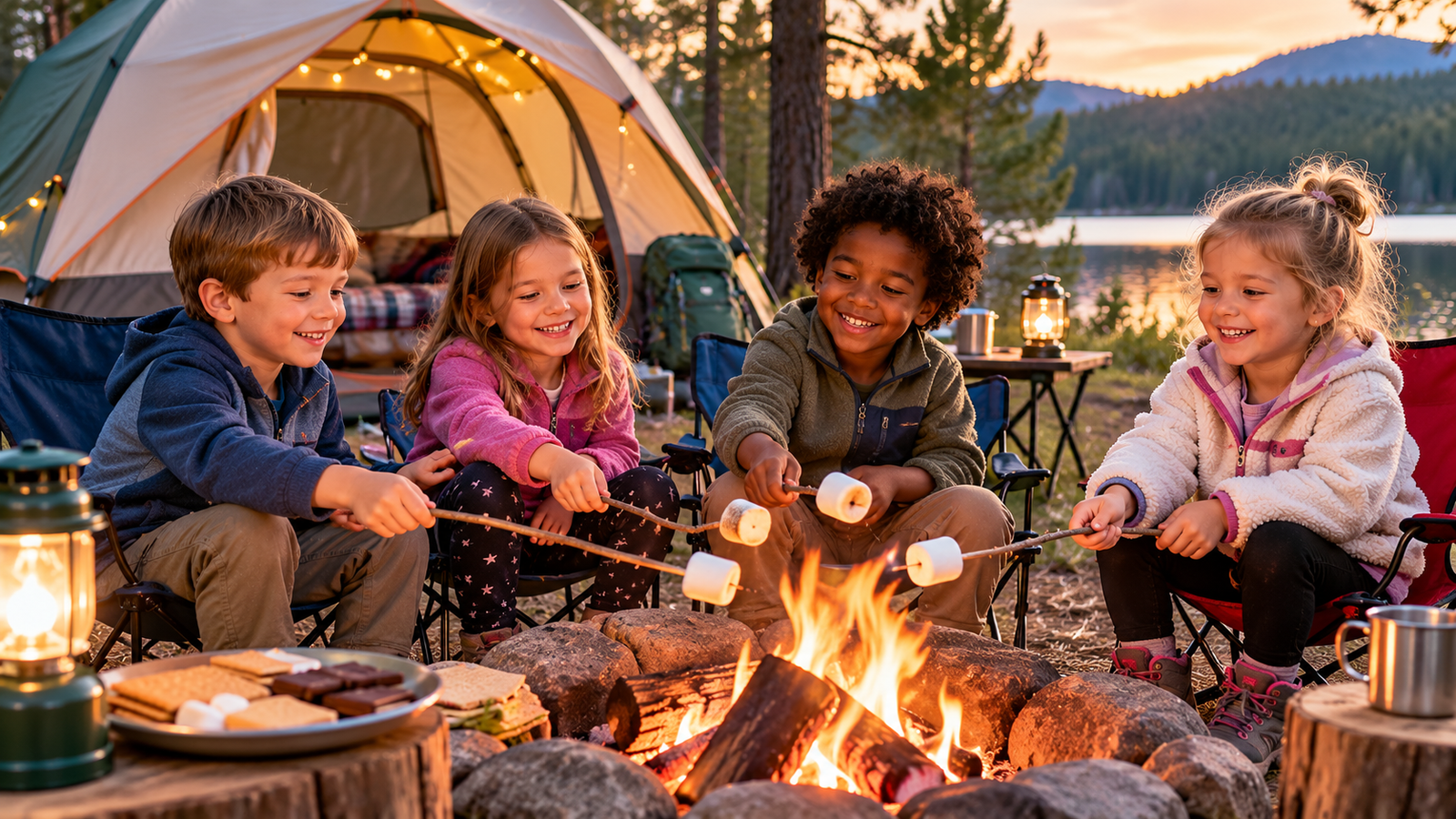
The fire is usually the trip’s best entertainment, so make kids part of it. Teach the rule early: one adult, one fire circle, no running near flames. Even a four-year-old can hand you kindling from a safe pile, while older kids can arrange tinder and learn how a teepee layout catches flame. Once the fire is established (and attended), hand out roasting sticks. Classic s’mores are mandatory, but campfire cones are an easy upgrade: fill a waffle cone with chocolate chips, mini marshmallows, and berries, wrap in foil, and warm near the coals for about five minutes.
Try Stargazing After Dark
Camping is one of the few places kids see a truly dark sky. Download a free stargazing app like SkyView or Stellarium before you lose signal, then hold your phone up to identify what’s overhead. Start easy: the Big Dipper is simple to find, and you can “arc to Arcturus” from its handle as a fun trick. Bring a few red flashlights or glow sticks so everyone can move around safely without ruining their night vision. A blanket on the ground and a thermos of cocoa turn it into an event.
Set Up a Bug Hunt or Critter Search
Send kids out with a clear bug jar and a challenge: find three crawlers, look at them up close, then let every one go. Roll over a log together (then roll it back) to find pill bugs and beetles. Near ponds or slow streams, look for frogs and salamanders at the edges, especially at dusk. Set one ground rule before you start: we look with our eyes, and anything caught goes home safe. It teaches respect for wildlife and doubles the fun when it’s release time.
Cook Easy Campfire Snacks and Meals
Food tastes better outside, and kids who help cook actually eat what they make. Give them real jobs: tearing foil, shaking pancake batter in a jar, or building their own hobo dinner with diced potatoes, ground beef, and carrots in a foil packet. For dessert, banana boats are a winner. Slice a banana lengthwise (in the peel), stuff it with chocolate and marshmallows, wrap it in foil, and nestle it in the coals for about ten minutes. Jiffy-pop popcorn over the fire is another crowd-pleaser.
Play Classic Outdoor Games
You don’t need a toy box to keep kids busy. Flashlight tag and hide-and-seek are perfect once the sun goes down, and capture the flag eats up a whole afternoon at a roomy campground. Glow-in-the-dark ring toss is cheap to pack and worth it. For rainy afternoons inside the tent, a deck of cards and a small travel game save the day. Keep it all in one zippered pouch so nothing wanders off.
Explore Trails on a Family Hike
Pick short trails, a mile or two max for younger kids, and let the pace be theirs. A few tricks keep morale high: turn the hike into scavenger bingo, pack plenty of snacks, and hand over the map so kids take turns being the leader. A small daypack for each child should hold water, a snack, a light layer, and a whistle for emergencies. Stop often to look at things; the goal is fun, not distance.
Tell Stories and Make S’mores Around the Fire
Once it’s dark, the fire becomes a stage. Try “two truths and a tall tale,” where each person shares three claims and everyone guesses the wild one. Or start a round-robin story: one person begins, then each child adds the next part, and things get wonderfully silly fast. For older kids, a paperback of short ghost stories read by flashlight hits the spot. Keep one s’more fixings box reserved for story hour; it becomes a nightly ritual kids beg to repeat.
Get Crafty With Nature Art
Bring a small craft kit: washable paint, paper, and a roll of wide painter’s tape. Wrap the tape sticky-side out around a kid’s wrist to make a nature bracelet, then let them press on small fallen leaves and flower petals. Leaf rubbings with crayons and paper take two minutes to set up. Painting rocks and building fairy houses from sticks and bark are also hits. One rule: use only fallen materials, and put creations back where nature can reclaim them.
Let Kids Help Set Up Camp
The moment you arrive, hand out jobs. Younger kids can unfurl sleeping bags, clip lanterns to tent loops, and sort the food bin. Bigger kids can gather firewood, stake out the tarp, or help push tent poles through. It slows setup a bit, but it pays off: kids who build the camp protect it. They know where things go, they take pride in the site, and they’re far less likely to wander off bored while you finish the work. Ownership turns them from helpers into campers.
Smart Packing Tips for Camping With Kids
A great trip starts with the right bins. Kids feel the cold, the bugs, and the wet ground sooner than adults do, so a few extra items in the car save a lot of whining later. Here’s what deserves space in the pack.
Layers and Spare Clothing
Weather at a campsite can swing 20 degrees between afternoon and midnight. Pack layers for everyone: a t-shirt, a warm fleece, a rain jacket, and a knit hat for cool nights. Kids get wet constantly, so bring at least two extra pairs of shoes (one waterproof) and three or more pairs of socks per day. Wet socks end hikes fast.
Health and Comfort Basics
A small kit handles most campsite troubles. Before you leave, check that it includes these essentials:
- First aid kit with kid-friendly bandages, antiseptic wipes, tweezers, and any medications your child takes
- Bug spray (DEET or picaridin, applied to clothing as well as skin)
- Sunscreen, plus a hat and sunglasses for each child
- Children’s pain reliever and blister patches
Comfort Items From Home
A favorite stuffed animal or small blanket does real work at bedtime. New surroundings can make kids restless, and a familiar smell helps them settle fast. Let each child pick one item to bring; keep a spare in the car just in case.
One Headlamp Per Child
Kids love having their own light, and it keeps them safe during bathroom trips after dark. Pick headlamps with a red-light mode so stargazing stays fun. Pack spare batteries too.
Pack smart, and the whole trip runs smoother.## Smart Packing Tips for Camping With Kids
Great activities depend on having the right stuff packed. Kids feel the cold, the bugs, and the wet ground sooner than adults do, so a few extra items in the car prevent most campsite meltdowns. Here’s a quick checklist worth following.
Layers and Spare Clothing
Weather can swing 20 degrees between afternoon and midnight at most campgrounds. Pack layers for everyone: a t-shirt, a warm fleece, a rain jacket, and a knit hat for cool evenings. Kids also get wet constantly, so bring two extra pairs of shoes (one waterproof) and at least three pairs of socks per day. Wet socks end a hike fast.
Health and Comfort Basics
A small kit handles almost everything kids throw at it. Before you leave, double-check that it covers these essentials:
- First aid kit with kid-friendly bandages, antiseptic wipes, tweezers, and any medications your child takes
- Bug spray (DEET or picaridin), applied to clothing as well as skin
- Sunscreen, plus a hat and sunglasses for each child
- Children’s pain reliever and blister patches for new hiking boots
Comfort Items From Home
A favorite stuffed animal or small blanket does real work at bedtime. New surroundings can make kids restless, and a familiar smell helps them settle quickly. Let each child pick one item to bring, then keep a spare in the car just in case something gets left behind at a rest stop.
One Headlamp Per Child
Kids love having their own light, and it keeps them safe during after-dark bathroom trips. Choose headlamps with a red-light mode so your stargazing session stays fun. Toss spare batteries in the food bin so they’re easy to find.
How to Handle Common Camping Challenges With Kids
Even the best-planned trip hits a snag or two. The good news is that most campsite problems have simple fixes, and knowing them ahead of time keeps a rough moment from becoming a ruined weekend. These three pain points come up on nearly every family camping trip.
Bedtime Battles in the Tent
Kids often struggle to fall asleep in a bright, noisy tent, and one wide-awake child can wake the whole site. The fix is controlling light and sound. Bring blackout solutions like sleep masks or a dark blanket draped over the tent’s window mesh, and use your headlamps on red-light mode after sunset. Keep voices low once you zip the doors, and stick close to home bedtimes. If a sibling’s snoring is the issue, soft earplugs for older kids or white noise from a phone speaker (set to play all night) works wonders. A tired kid from a full day of activities usually crashes fast anyway.
Rainy Day Boredom
Rain doesn’t have to end the fun; it just changes it. Pack a dedicated bad-weather bag before you leave: a deck of cards, a travel board game, pipe cleaners, and paper for drawing. Inside a large tent or under a tarp shelter, kids can play charades, build card houses, or paint rocks collected earlier. If it’s only a light drizzle, puddle stomping in rain boots and raincoats is honestly the highlight of many trips. Let them get wet on purpose, then change into dry layers.
Picky Eaters at the Campsite
Hungry, overtired kids plus unfamiliar food equals dinnertime drama. Solve it by letting kids choose and prepare their own meals. Foil packet dinners work well because each child builds their own with ingredients they already accept. Bring familiar favorites alongside the s’mores: peanut butter and jelly supplies, string cheese, granola bars, and cut fruit. A snack bin kids can access themselves prevents the “I’m starving” emergencies that sour the whole afternoon.
Keep these fixes in your back pocket, and small setbacks stay small.
Conclusion
Camping with kids doesn’t need to be perfect to be worth it. The tent might sag, dinner might burn, and someone will probably cry about a bedtime rule. That’s all fine. What your kids will remember is the unplugged time together: the fire, the stories, the dark sky full of stars.
So start small. A backyard campout counts, and so does a single night at a nearby campground. You’ll learn what works for your family without betting a whole week on it.
What’s your family’s favorite camping activity? Drop it in the comments, because someone else reading this is probably looking for exactly that idea.
Save inn for later


- 100 Toddler Activities At Home - September 24, 2026
- DIY Fidget Toys - September 24, 2026
- Baby Shower Games Ideas - September 24, 2026