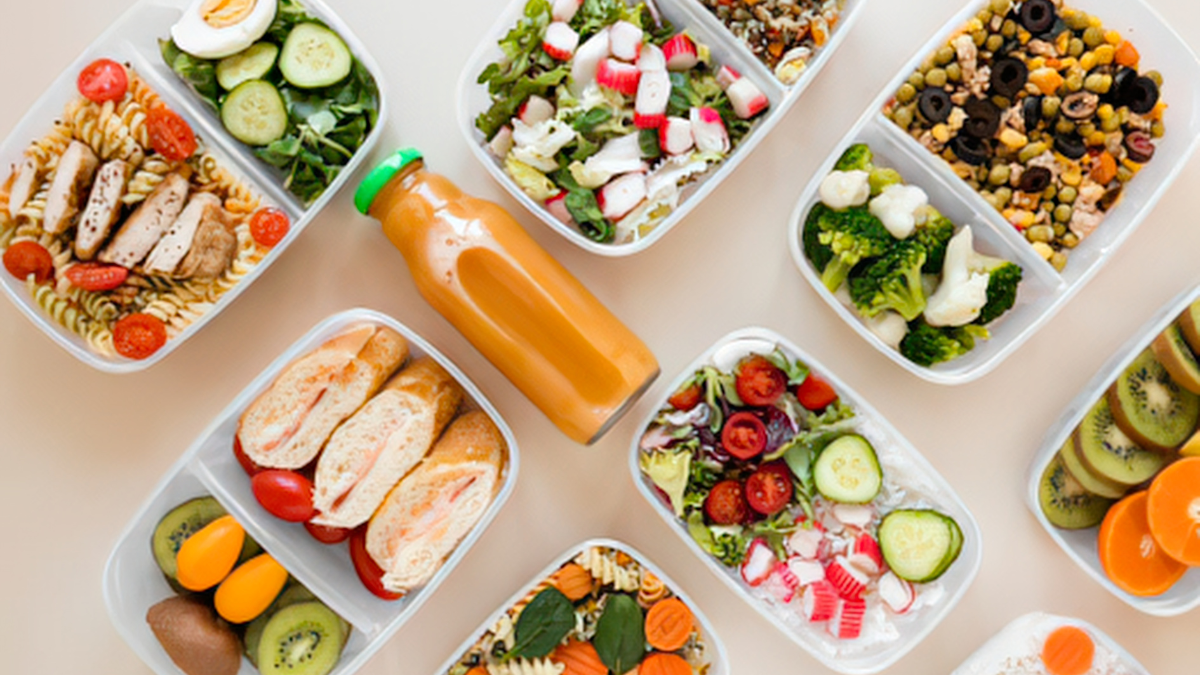
Getting dinner on the table is hard enough without making separate meals that satisfy busy parents and picky kids. Anti-inflammatory eating can be a flexible pattern built around familiar whole foods, such as vegetables, fruit, beans, whole grains, fish, and olive oil, rather than a strict diet or a promise to treat illness.
With simple swaps, you can make nourishing meals that still feel familiar to children. Start with practical food choices, easy family meal ideas, and ways to adapt them for your household, or explore this Mediterranean diet meal plan for inspiration. A busy mom meal prep plan for simple family dinners can also help take the pressure off weeknights.
What makes a family meal supportive of lower inflammation?
A family meal can support a lower-inflammation eating pattern when it regularly features whole, minimally processed foods. Research and major health guidance focus on the overall pattern, often Mediterranean-style, rather than any single “anti-inflammatory” ingredient. These foods are linked with better health as part of that pattern, but no meal can diagnose, prevent, or cure a condition.
Build meals around plants, whole grains, and healthy fats
Start with familiar foods your family enjoys, then add variety over time. Colorful fruits and vegetables can fill half the plate, while beans or lentils, oats and other whole grains, and a source of protein make meals satisfying. Nuts and seeds add texture to oatmeal, salads, or yogurt, and extra-virgin olive oil works well in dressings and cooking.
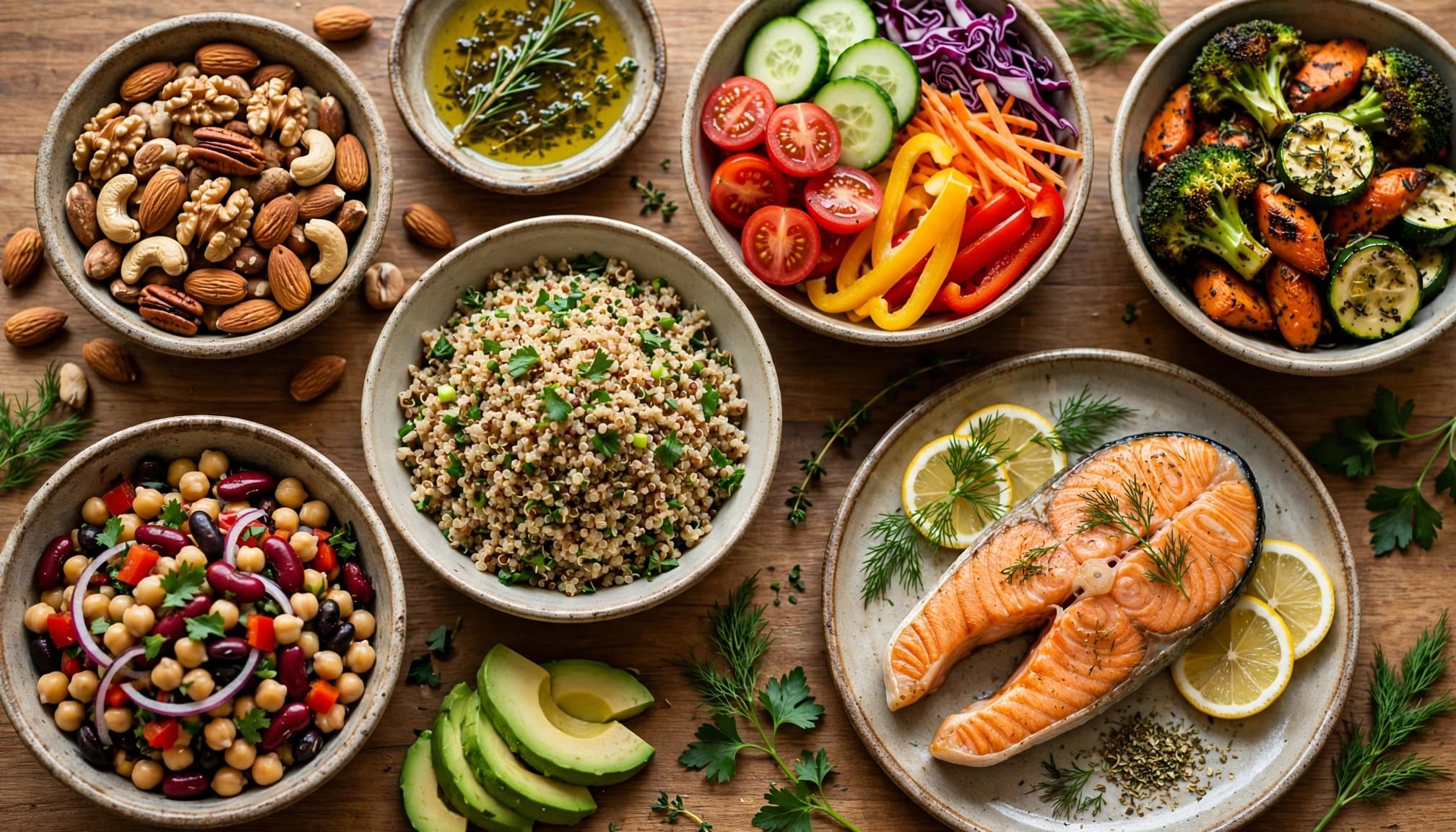
Fish such as salmon or tuna can appear regularly, while poultry, eggs, yogurt, and cheese offer flexible choices. There’s no need to make every meal look identical. Try a grain bowl one night and bean tacos another, or use kid-friendly plant-based dinner ideas when you want meat-free options. The American Heart Association also emphasizes an overall pattern built around vegetables, fruit, whole grains, legumes, nuts, fish, and unsaturated oils in its diet and lifestyle recommendations.
What to limit without turning food into a list of rules
Sugary drinks, sweets, highly processed snacks, and processed meats can show up less often, leaving more room for nourishing everyday foods. That doesn’t mean you need to ban treats or make a child feel guilty for eating them. A flexible approach makes it easier for the whole family to enjoy meals and keep healthy choices practical.
Small shifts are often manageable: offer water or milk more often than soda, add fruit alongside a snack, or choose beans or fish for some meals instead of processed meat. Preferences, budgets, allergies, and medical needs vary, so families don’t all need the same menu. If someone follows a prescribed diet or has a health condition, check with a qualified health professional before making major changes.
Anti-Inflammation Meals For Family: Simple Ideas for Every Part of the Day
A family-friendly eating pattern can include familiar meals built around fruit, vegetables, whole grains, beans, fish, eggs, and other proteins. These ideas keep prep manageable and let each person adjust a plate to their tastes, without suggesting that any single dish treats inflammation.
Breakfasts with fruit, whole grains, and protein
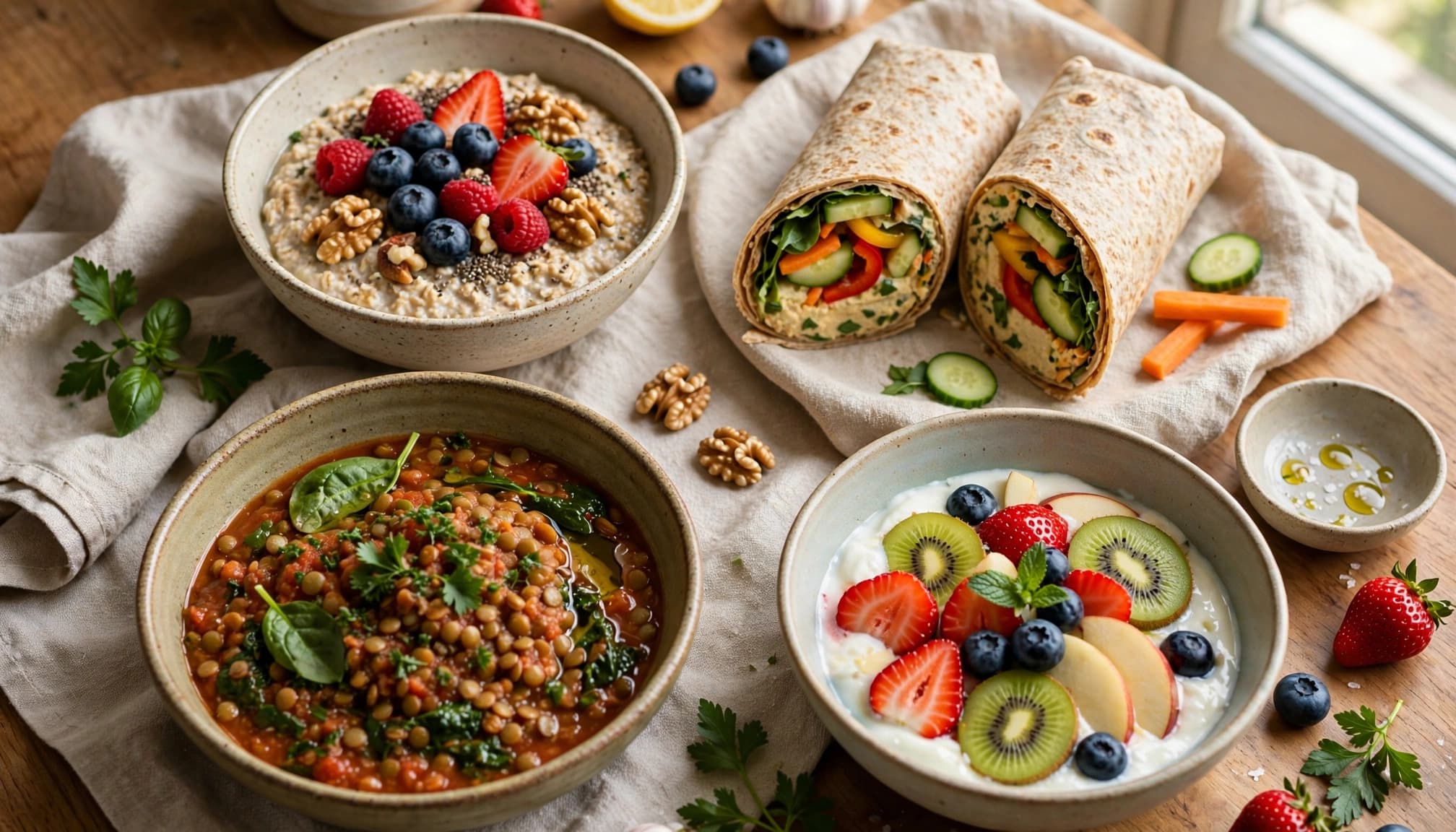
For a quick start, serve oatmeal topped with berries and walnuts, or set out plain yogurt with sliced fruit and seeds. Whole-grain toast with eggs and fruit is another easy combination. These options pair familiar ingredients with whole grains and protein, while giving kids a few toppings to choose from.
Keep nuts and seeds on the side so family members can add them as they like. If allergies are a concern, leave them out or use another tolerated topping, such as fruit. For young children, follow age-appropriate choking guidance and serve foods in safe textures and sizes.
Lunches that pack well and keep kids satisfied
A hummus and vegetable whole-grain wrap travels well in a lunchbox. Lentil soup with whole-grain bread makes a filling option for a thermos, while tuna salad with greens and a grain, such as brown rice, works as a bowl or sandwich filling. Add fruit, sliced vegetables, or yogurt to round out the meal.
For easier packing, keep wet ingredients separate until lunchtime and use an insulated container for foods that need to stay cold or hot. The USDA MyPlate guide offers a simple way to think about food groups when packing a balanced lunch.
Dinners that make vegetables and beans feel familiar
Serve baked salmon with roasted vegetables and brown rice, or make a chickpea and tomato stew with greens. Chicken with vegetables and quinoa is another flexible dinner, especially when you use whatever produce is affordable or already in the fridge. Frozen vegetables can also save money and prep time.
Put sauces, herbs, and toppings on the table instead of mixing everything together. That gives kids room to try a small serving of something new while keeping familiar flavors on their plates. For more weeknight inspiration, browse these family-friendly dinner recipes for busy nights.
Snacks and desserts that round out the day
Between meals, offer fruit with yogurt or hummus with vegetables. A small handful of nuts can work for older children when safe and appropriate; for younger kids, avoid whole nuts and choose a safer texture. If allergies affect your household, swap in a food everyone can eat.
Fruit makes an easy everyday dessert, whether served fresh or with plain yogurt. Family treats can still fit, too. Keeping choices flexible helps meals feel welcoming rather than like a list of rules.
A realistic five-day family meal plan to get started
A five-day plan works best as a flexible guide, not a set of rules. Build most meals with produce, a whole grain or starchy food, protein, and a flavorful fat or sauce, then repeat ingredients to save time.
Use a simple mix-and-match meal formula
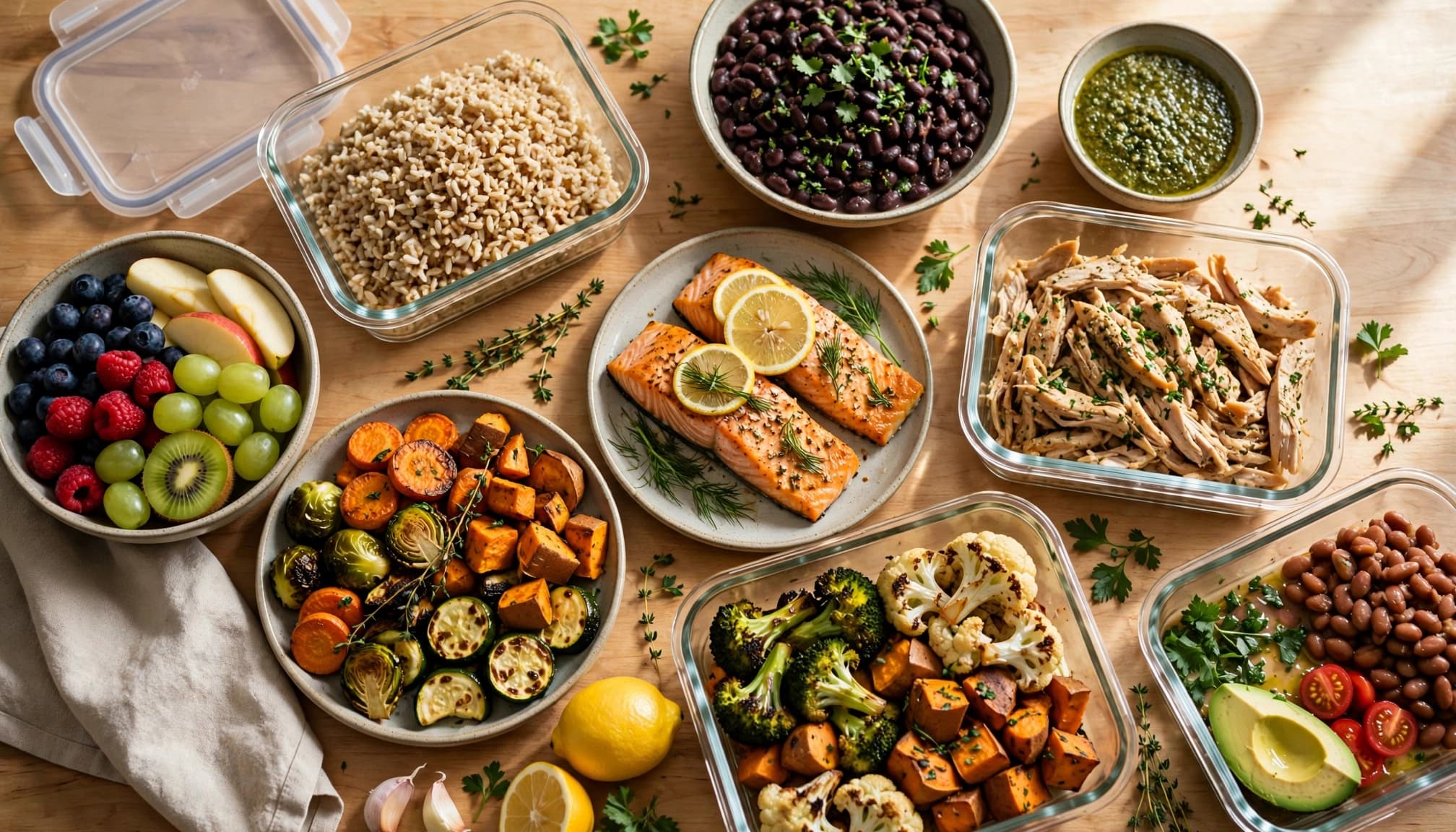
Start with what you have, then add one choice from each food group. For example, pair roasted broccoli with brown rice, salmon, and lemon-olive oil dressing. Or serve black beans with corn, avocado, and whole-grain tortillas. Keep sauces and toppings on the side so each person can adjust the flavor.
Use this sample weekday plan as a starting point. Swap meals around based on your schedule, budget, and family preferences.
| Day | Breakfast | Lunch | Dinner |
|---|---|---|---|
| Monday | Oatmeal with berries and walnuts | Hummus and vegetable whole-grain wrap | Salmon, brown rice, and roasted broccoli |
| Tuesday | Eggs, whole-grain toast, and an apple | Leftover salmon and rice bowl with greens | Sheet-pan chicken, sweet potatoes, and green beans |
| Wednesday | Plain yogurt with fruit and oats | Chicken and vegetable wrap | Bean and tomato chili with brown rice |
| Thursday | Oatmeal with banana and seeds | Leftover chili with whole-grain bread | Whole-grain pasta with chickpeas, spinach, and olive oil |
| Friday | Whole-grain toast with eggs and fruit | Leftover pasta with a side of vegetables | Black bean tacos with cabbage, corn, and avocado |
The plan includes beans, fish, poultry, eggs, and plant foods without requiring a different recipe every night. If a meal doesn’t suit your family, swap in a familiar option and keep the same basic balance.
Plan around leftovers and flexible swaps
Cook extra rice or roast an additional tray of vegetables, then use them in lunch bowls or wraps the next day. Leftover beans can go into soup, tacos, or a quick quesadilla. When you make more than one meal’s worth, label and refrigerate portions promptly.
Canned beans work well in place of dried beans, and frozen vegetables can replace fresh ones in soups, stir-fries, and sheet-pan meals. You can also substitute chicken for fish, or use eggs or chickpeas when you want a meatless dinner. A weekly meal planning routine for families can help you match meals to your schedule and shop for ingredients you’ll reuse.
For safety, refrigerate cooked leftovers within two hours and use them within three to four days. See FoodSafety.gov’s leftover storage guidance for more details.
How to help kids enjoy these meals without food battles
Children may need time to get comfortable with new flavors and textures. Keep meals relaxed, offer choices within the family meal, and let familiarity build at your child’s pace.
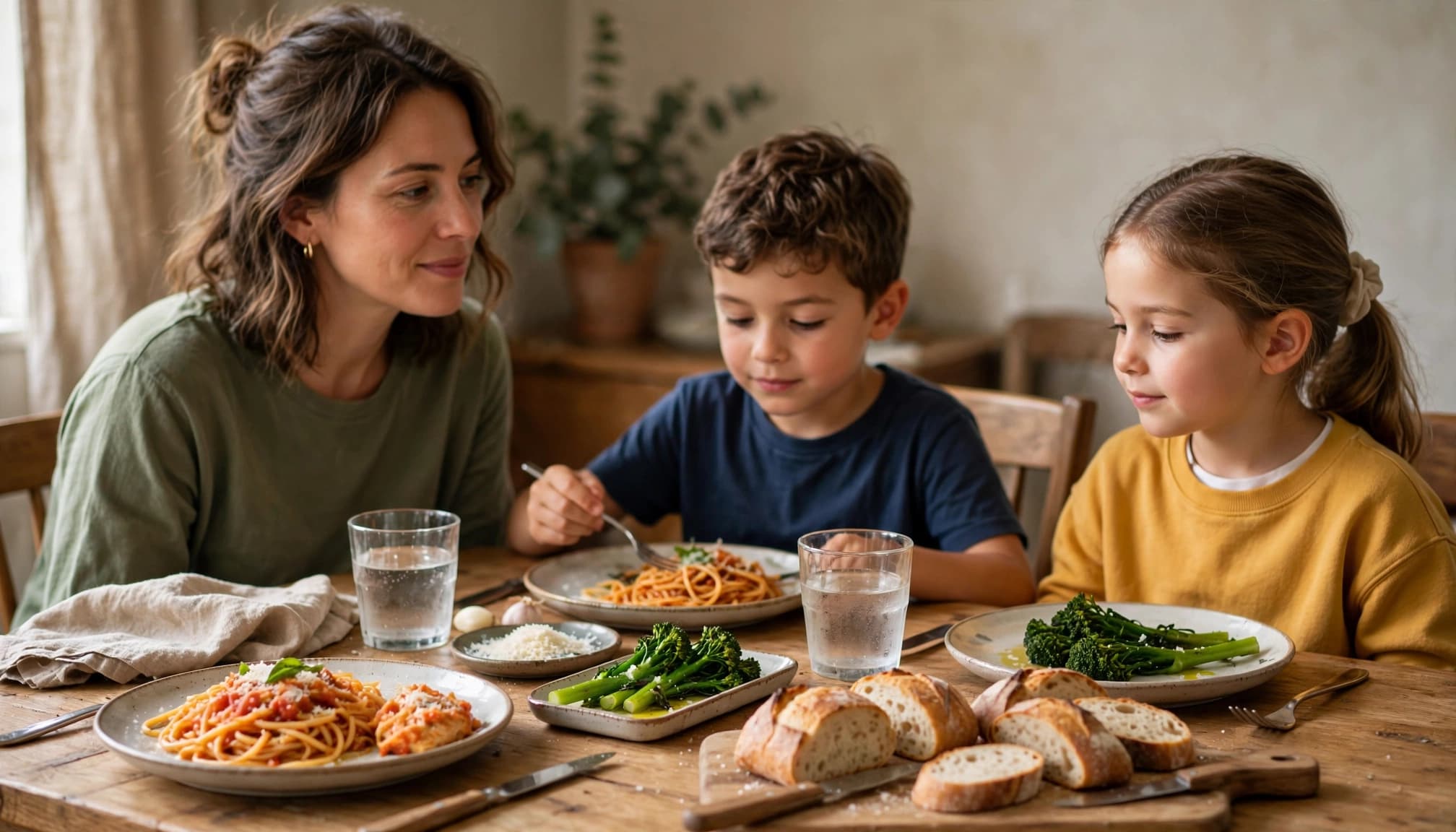
Start with familiar flavors and add one change at a time
Make a small adjustment to a meal your child already likes. Mix whole-grain pasta with regular pasta, add a few beans to a favorite soup, or serve one new vegetable alongside familiar chicken and rice. Keep at least one well-liked food on the table, so trying something new doesn’t feel like the whole meal depends on it.
A child might need to see or taste a food several times before deciding how they feel about it. The American Academy of Pediatrics says it can take 15 to 20 tries for a child to accept a new food. Offer a small portion again another day, without asking for a bite or requiring a clean plate. Your child can explore by looking, smelling, or touching it, too. See the AAP’s guidance on helping picky eaters try more foods.
It also helps when children see you eating a variety of foods. Enjoy the same vegetables or beans you serve, and describe their taste naturally. A simple “These carrots are sweet” keeps the focus on the food, not on whether your child eats it.
Let children help choose, prepare, and serve food
Giving kids a role can make a new meal feel more familiar. Younger children can wash produce or choose between two vegetables, while older kids can stir a pot with supervision or assemble their own wraps. At the table, try dips or build-your-own bowls with ingredients served separately.
These options offer choice without requiring you to cook a separate dinner. For instance, set out beans, rice, avocado, and a mild sauce, then let each person build a bowl. Keep the atmosphere calm if your child skips one ingredient; offer it again another time. For more ideas, browse these build-your-own dinners for picky eaters.
Shop and prep for nourishing meals on a family budget
A nourishing family meal plan doesn’t require specialty ingredients or a full Sunday in the kitchen. Keep a few affordable staples on hand, prep only what saves time, and adjust foods to suit each child’s age and needs.
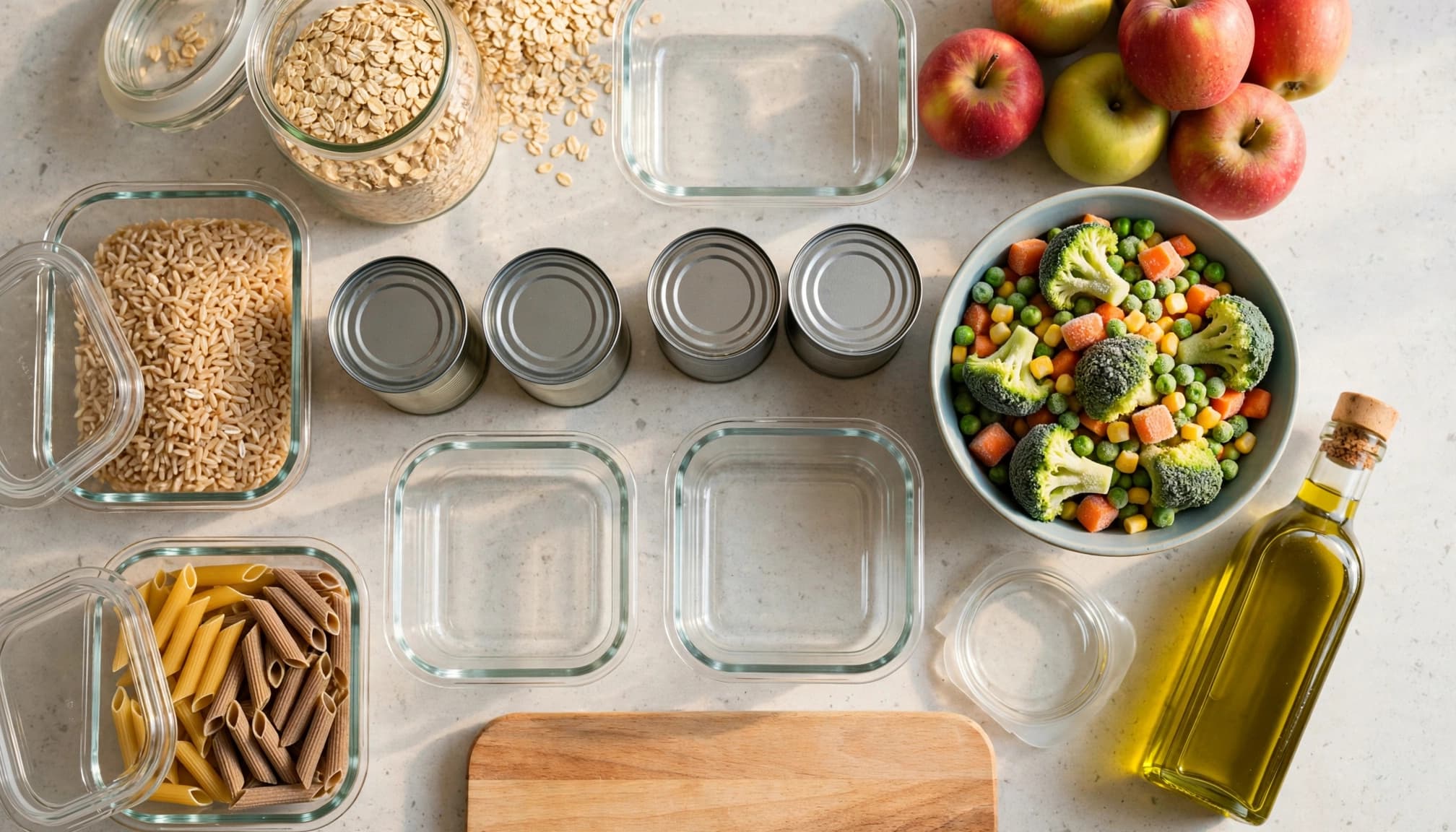
Keep affordable staples ready for quick meals
Oats, brown rice, whole-grain pasta, canned beans, frozen vegetables, seasonal fruit, canned fish, and olive oil can anchor many low-cost meals. For example, combine beans and frozen vegetables with rice, or add canned tuna and olive oil to whole-grain pasta. These ingredients also pair well with fresh foods already in your kitchen.
Frozen and canned produce can be convenient, budget-friendly choices, especially when fresh options are expensive or out of season. Compare labels for added salt or sugar; choose no-salt-added beans when available, or rinse canned beans before using them. For more ways to turn pantry basics into dinner, try these quick and easy 30-minute dinners.
Prep a few ingredients, not a full week of perfect meals
A little preparation can make weeknight cooking easier without locking you into a rigid menu. Wash fruit, chop vegetables you’ll use soon, cook a batch of rice or beans, or mix one versatile dressing or dip. Then use those ingredients in bowls, wraps, pasta, or as sides.
Store prepared foods in clean, covered containers and refrigerate cooked grains, beans, and other leftovers within two hours. The USDA recommends using refrigerated leftovers within three to four days; check its leftover storage and safety guidance when planning ahead.
Adapt meals for allergies, young children, and health needs
Serve foods in textures and sizes your child can manage safely. Whole nuts, whole beans, raw carrot sticks, and hard chunks of fruit can pose choking risks for young children. Cook or soften firm foods, and mash or cut ingredients into age-appropriate pieces. The CDC’s guidance on choking hazards offers practical preparation advice.
If your family is managing food allergies, a medical condition, growth concerns, or another special dietary need, ask your pediatrician or a registered dietitian for individualized guidance. Avoid major food restrictions without professional advice, especially for children, whose nutritional needs change as they grow.
Conclusion
Family-friendly anti-inflammatory eating works best as a steady, flexible habit, not a search for perfect meals or strict food rules. Start simply: add a fruit or vegetable, choose beans or whole grains more often, and cook with olive oil. These family meals with whole grains and beans can fit different tastes and busy schedules.
Choose one simple meal from the plan to try this week, then adjust it to suit your family. Small, repeatable changes can make nourishing meals feel like a natural part of family life.
Save pin for later


- Summer Sensory Bin Ideas - September 25, 2026
- 15 Keto Breakfast Ideas For Family - September 25, 2026
- Anti-Inflammation Meals For Family - September 24, 2026