
Your 4- to 7-year-old racks up 2 to 3 hours of screen time each day. That’s double the recommended limit for young kids. No wonder attention spans shrink and creativity dips.
You crave simple swaps that fit busy home life. Screen-free learning activities match their quick shifts in focus and hunger for hands-on play. Kids this age thrive on touch, movement, and real-world mess.
These ideas sharpen motor skills through building and climbing, fire up imagination with story retelling, and tighten family bonds during shared hunts or art sessions. 2026 trends push unplugged fun like indoor treasure hunts, kitchen math, and block forts for steady skill gains. Best part: they use stuff you already own, like pillows, rice, or paper.
Check out age-appropriate activity ideas for more inspiration tailored to growth stages.
Next, dive into five easy categories packed with setups you’ll love.
Boost Language Skills Through Everyday Storytelling
Stories pack a punch for kids’ language growth. They hear new words, follow plots, and practice their own chatter. Ages 4 to 7 soak up vocabulary during these chats, plus they learn to picture feelings in characters. Skip screens; grab books or toys instead. These tricks fit right into your day and beat passive videos every time.
Make Read-Aloud Time an Adventure
Pick books that match their world. Go for ones with rhymes, funny animals, or simple adventures. Bright pictures pull them in fast. Titles like The Gruffalo or Where the Wild Things Are work well because kids predict wild twists.
Read with flair. Use silly voices for monsters, soft tones for sleepy parts. Wave your arms; scrunch your face. Your energy hooks them.
Pause often. Ask, “What happens next?” or “How does the bear feel?” They guess and build prediction skills.
Act it out next. Grab spoons as swords or pillows as boats. Kids jump in, mimicking lines. This boosts listening because they track details to play along. It grows empathy too; they feel the hero’s joy or fear.
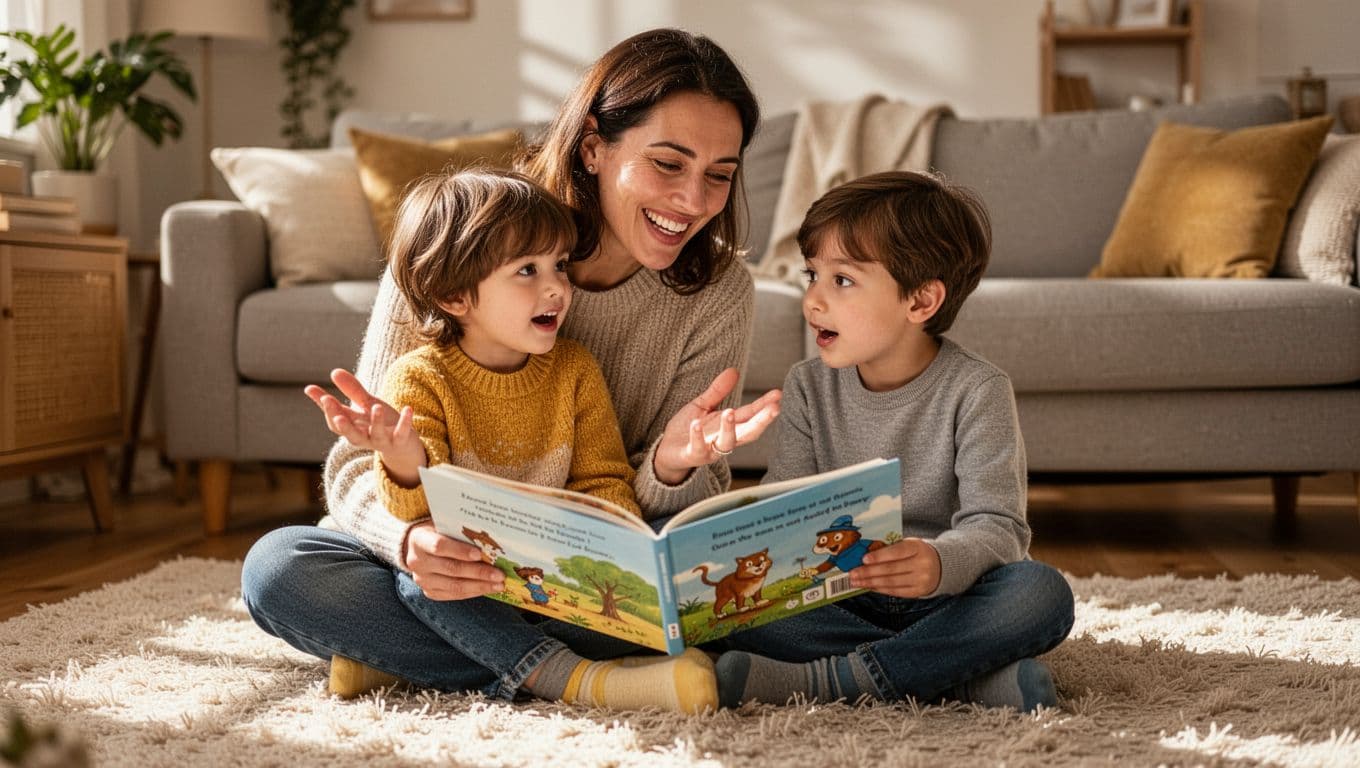
Daily sessions, even 10 minutes, stack up. Kids speak fuller sentences as a result.
Retell Favorites with Toys for Better Recall
Kids remember stories better when they touch them. After reading, hand over stuffed bears or blocks. Let them stage the tale.
Start simple. Say, “Show me where the pig flies the kite.” They line up toys in order: first the farm, then the chase.
Your 4-year-old grabs the bear for Goldilocks. The 6-year-old builds porridge bowls from blocks. They swap roles and add details you missed.
This fixes event order in their heads. Details stick because hands move with words. Practice sharpens recall for school talks later.
For more ideas on interactive story play with stuffed animals, check family-tested tips.
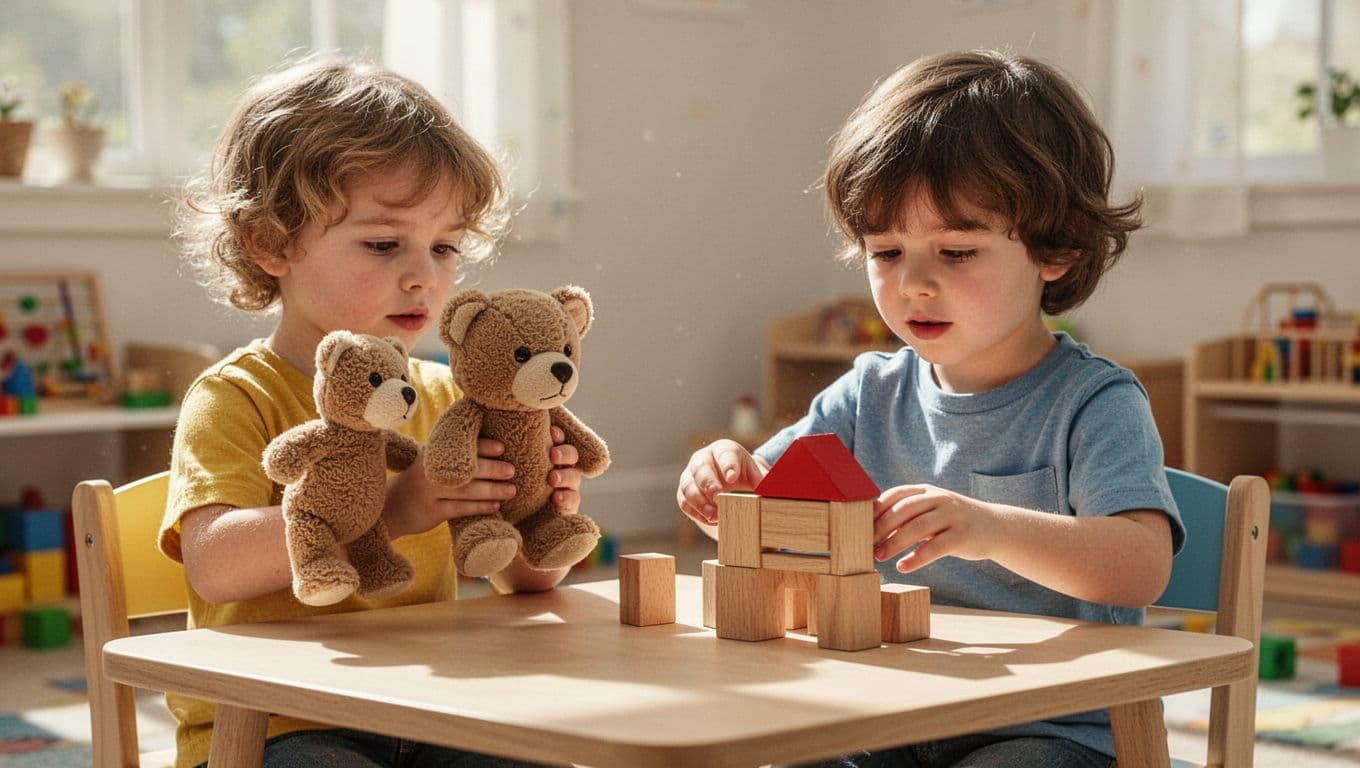
Keep toys close; no prep needed. Watch their chatter grow.
Create Tales Together in a Circle
Pull everyone to the floor in a circle. No books; just your voices. Start with “Once a bunny hopped into…”
Take turns. You add one line; kid fills next. A 5-year-old says, “The bunny found a magic carrot.” Dad jumps in with rain clouds.
Gestures amp it up. Wave for wind; hop for bunny steps. Laughter flows as plots twist silly.
This frees their ideas. No right answer means bold creativity. They hear full sentences from you, then try their own.
Even shy ones join because turns feel safe. Family bonds tighten too.

Do it at dinner or bedtime. Their words tumble out freer each round. For step-by-step storytelling with pics and sticks, see this quick guide.
Turn Kitchen Time into Hands-On Math Lessons
Kitchens buzz with math chances for 4- to 7-year-olds. You measure, count, and sort during snack prep. These moments build number sense without worksheets. Kids grab real tools and see results right away. Plus, they eat the proof. Start small to keep mess low and fun high.
Measure and Sort Ingredients for Yummy Snacks
No-bake trail mix turns snack time into a math party. Grab dry goodies like raisins, nuts, cereal, and M&Ms. Kids love the colors and crunch.
Set out bowls and measuring cups first. Ask your child to fill a 1-cup measure with raisins. Then do nuts. Count each cup as “one, two, three” scoops if smaller spoons help.
Next, sort by color. Pour M&Ms into piles: red here, blue there. Count each group. “How many reds? Six. Add yellows: nine total.”
Finally, mix and tally. “Two cups raisins plus one cup nuts equals three cups.” They dump it all and recount the big bowl.
This hits counting, sorting, and adding. Hands stay busy, so focus lasts.
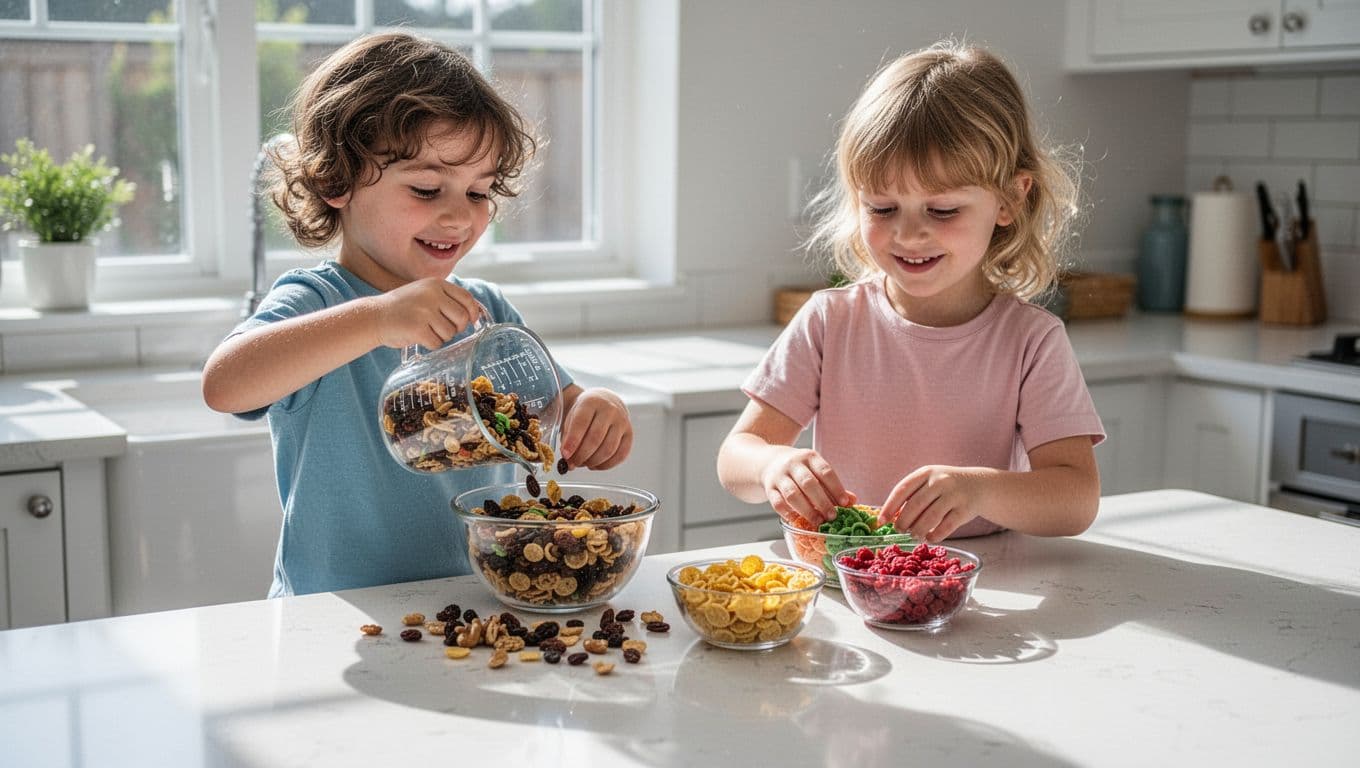
Try cooking math activities like pizza fractions for recipe twists.
Stack Cups High and Count the Wins
Measuring cups stack like blocks for tower fun. Pull out plastic ones in sizes from 1/4 cup to 1 cup. Set them on the table with fruits nearby for cheer.
Your kid starts at the bottom with the big cup. Add smaller ones on top. Count each layer out loud: “One base, two middle, three top.”
Watch it wobble. When it falls, chat about why. “The small cup tips because it’s top-heavy. Balance needs a wide base.” They rebuild wider and taller.
Compare towers. “Your five-layer beats my three. Add two more?” This sneaks in counting up and physics basics like stability.
Laughter flows as towers crash. They learn numbers stick through play.
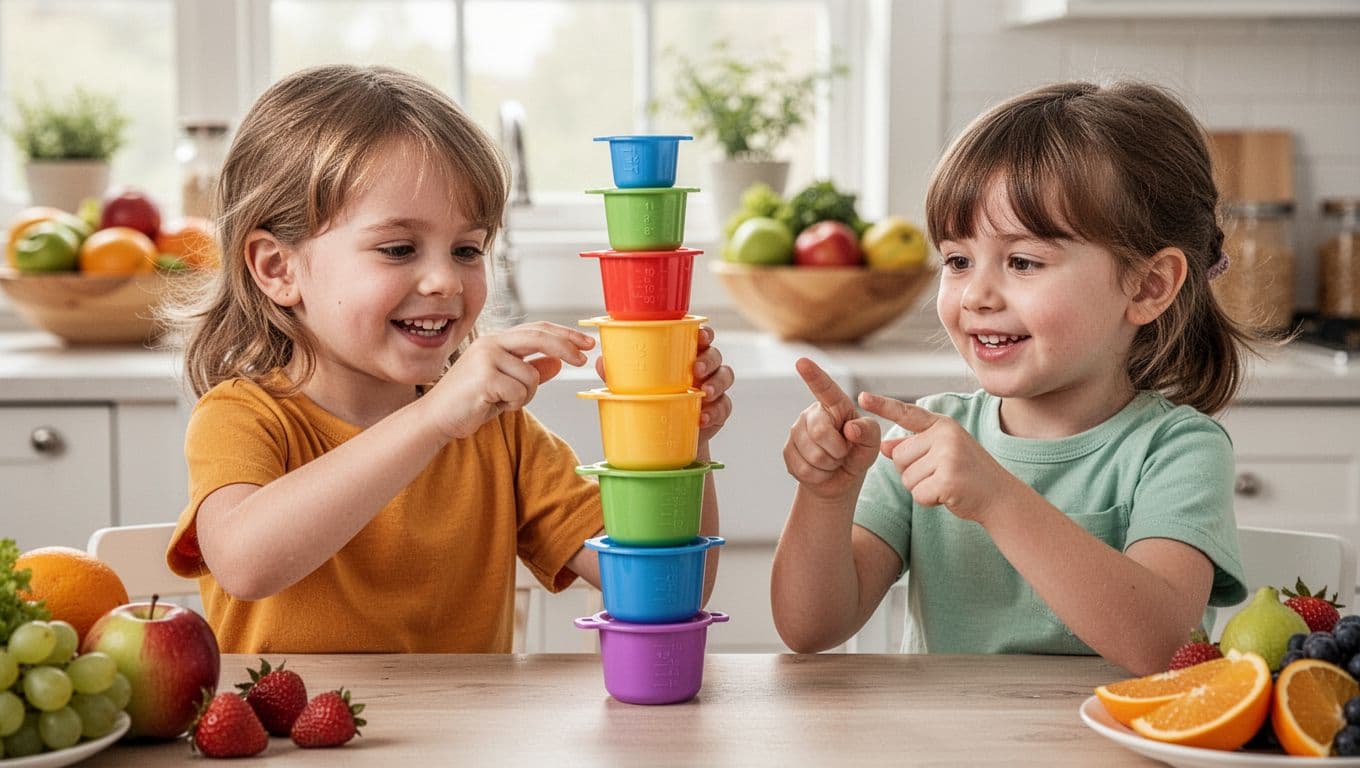
Keep cups handy for repeat wins. Skills grow bite by bite.
Explore Senses and Creativity with Easy Crafts
Kids ages 4 to 7 learn best through touch and sight. These crafts wake up their senses and spark wild ideas. You need basic supplies like bins, paints, or flashlights. No screens required. They build fine motor skills while kids dig, paint, and trace. Recent trends favor simple setups with rice or dough for calm focus. Start today; messes wipe clean fast.
Dig into Sensory Bins Full of Textures
Grab a shallow bin or tray. Fill it with safe items like dry rice, beans, pasta, or oats. These create different feels: crunchy, smooth, or silky. Add scoops, cups, or small toys for fun.
Your child plunges hands in first. They pour rice between fingers. Then sort beans by color or pasta shapes. “Red ones here, curly there,” they say. This sharpens focus because touch links to sorting.
Hide treasures inside. Bury plastic animals or buttons. Kids hunt and name them. Scooping strengthens hand muscles too. For quick ideas, check DIY sensory bins for toddlers.
Change themes weekly. Farm with straw and animals one day. Beach with shells next. They play longer as senses fire up.
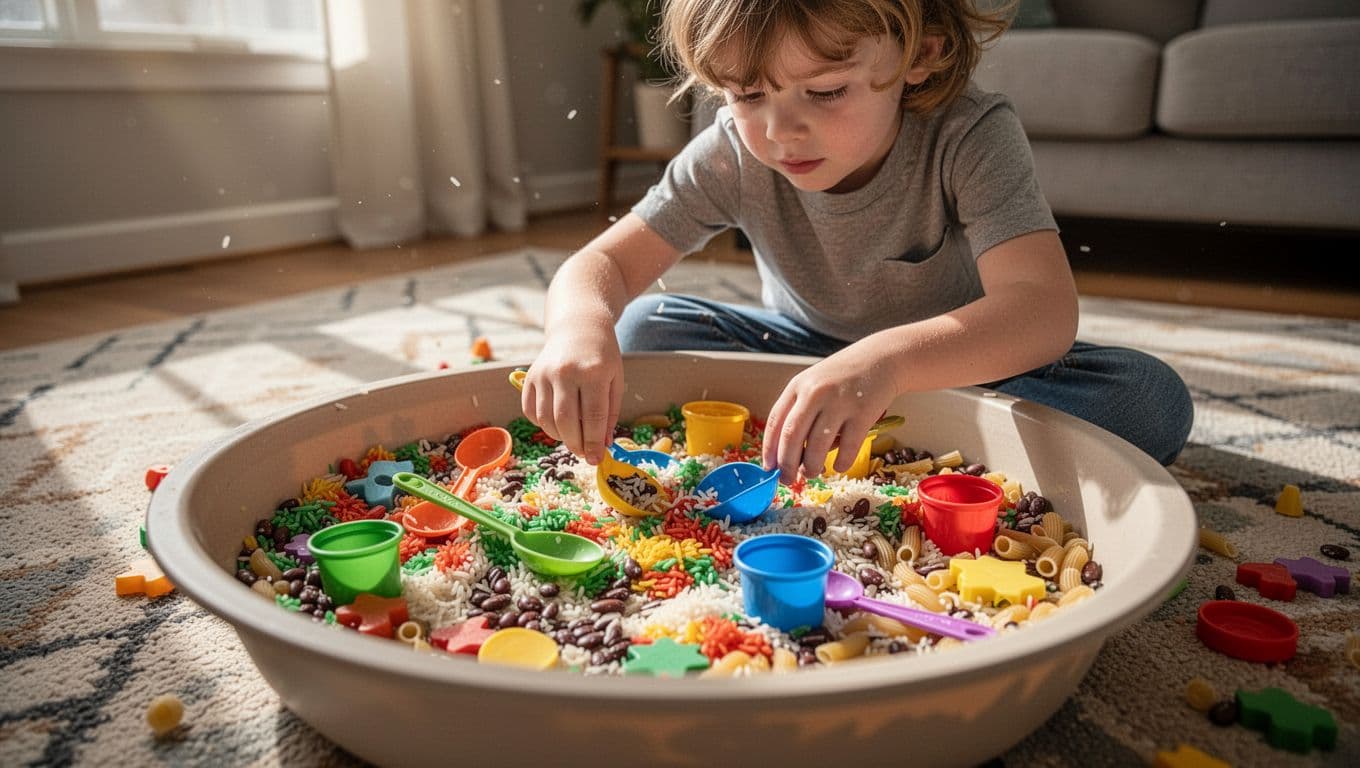
Sessions last 20 minutes easy. Skills grow with each scoop.
Paint Rocks or Dough into Masterpieces
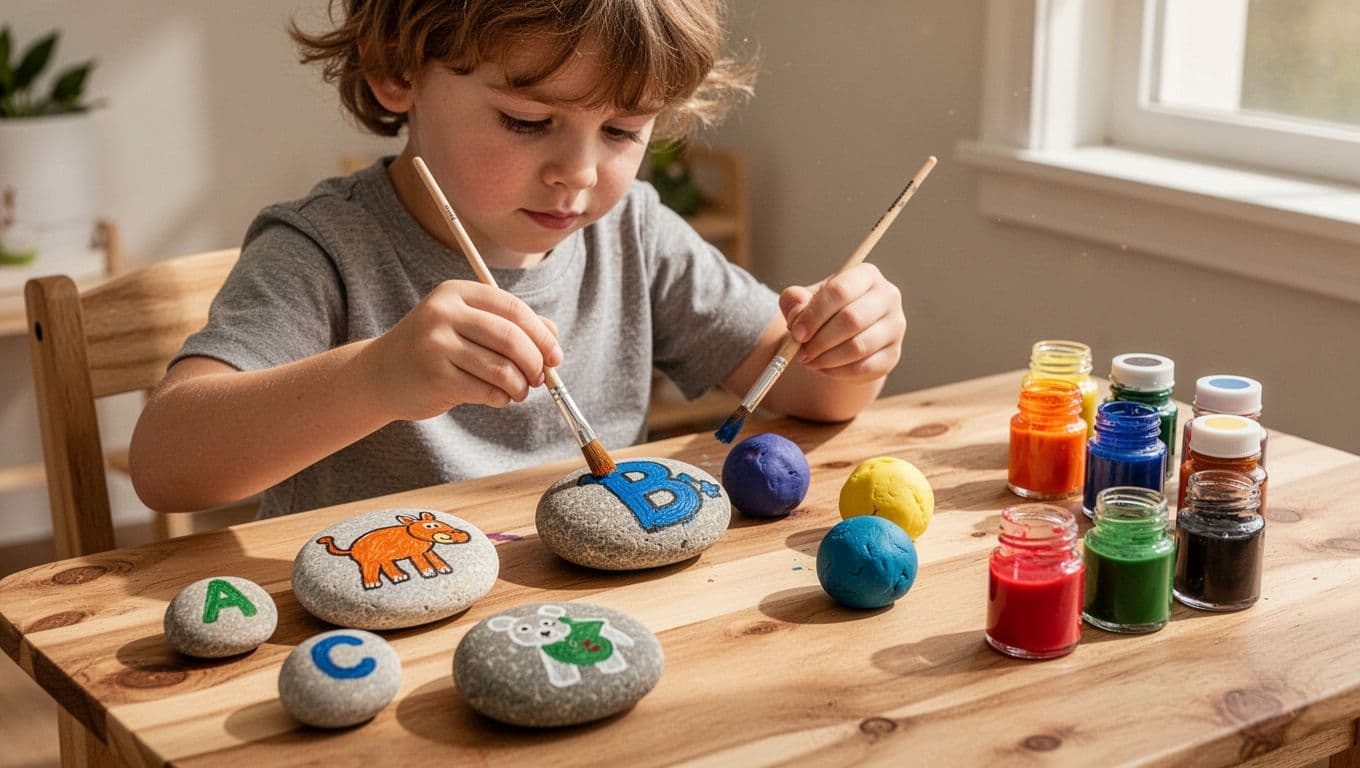
Hunt smooth stones outside or use playdough balls. Set out washable paints and brushes. Kids press tips to form lines, letters, or animal faces.
Small grips build control. They dot eyes on a rock frog. Roll dough snakes with stripes. Fingers steady as designs take shape.
Praise their work. “That cat looks sneaky.” They beam and add whiskers. This boosts confidence because results show right away.
Try patterns next. Paint ABCs on rocks for letter hunts. Shape dough into numbers. Hands get stronger; ideas flow free. See rock painting ideas for kids for more designs.
Dry pieces become toys. They stack or trade them later.
Trace Shadows for Shape Discoveries
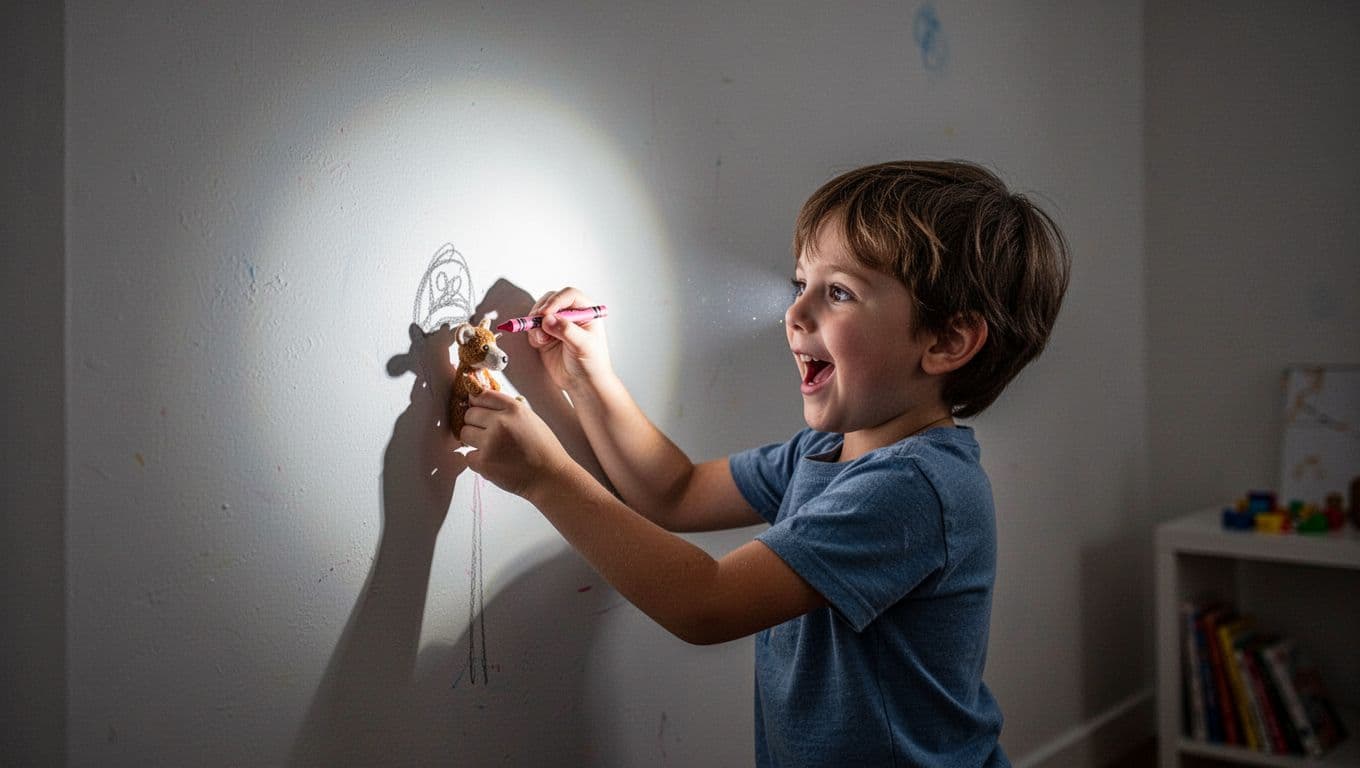
Dim the lights. Shine a flashlight on a toy against the wall. The shadow stretches big. Hand your child crayons and paper.
They trace the outline slow. Dino spikes curve wild. Hands follow forms steady. Turn the toy; watch shapes shift.
Ask questions. “Make it bigger?” Step back the light. Smaller? Bring it close. They experiment and giggle at changes.
Add hands or blocks. Trace puppet birds or block towers. This teaches light basics plus drawing control. Follow steps in this shadow tracing guide.
Color the shapes after. Walls stay clean; creativity soars.
Spark Problem-Solving with Indoor Hunts and Games
Kids ages 4 to 7 build sharp minds through play that challenges them to think. Indoor hunts and games turn your home into a puzzle zone. They practice clues, tests, and fixes without screens. These setups use paper and kitchen items. Plus, they match short attention spans with quick wins. Watch confidence grow as they crack codes and beat distances.
Hide Clues for a Thrilling Treasure Hunt
Simple riddles spark reading and logic. You write clues on paper slips. Hide them around rooms; end with a small prize like stickers or fruit snacks.
Start with easy ones for 4-year-olds. “Find me where you brush your teeth.” Next spot: “Look under the soft pillow.” Add pictures if words stump them.
Older kids handle rhymes. “I’m cold and hold your milk” leads to the fridge. They read aloud, think, then dash off. This boosts word skills because clues link ideas.
Set a chain of five clues. Time it loosely for fun. Teams work if siblings join; they debate spots together.
For ready clues, see 25 indoor scavenger hunt ideas.
They cheer at the prize. Repeat with new hides. Thinking sticks through the hunt.
Launch Paper Planes and Measure Flights
Folding paper planes teaches trial and error. Kids tweak designs, fly them, then measure. Basic math pops in as distances add up.
Grab printer paper. Show a simple fold: triangle nose, wide wings. Let them copy or change flaps.
Clear a hall or room corner. Mark a throw line with tape. Fly three times per plane; use a tape measure or string lengths.
Record flights. “Plane A went 5 feet, then 6, then 4. Average?” They add and divide with your help. Best flyer wins a high-five.
Test indoors on calm days. Fans off for fair throws.
Try paper airplane math for graphing distances.
New folds beat old ones. They learn experiments pay off.
Decode Secret Messages with Lemon Juice
Lemon juice makes invisible ink. Heat reveals words for a science kick. Kids write codes, then play spy.
Squeeze juice into a bowl. Dip a cotton swab; scribble on white paper. “I love you” or shapes dry clear.
Wait till dry. Hold near a lamp bulb, not too close. Brown lines appear as heat cooks the juice.
Explain simply. Acids in lemon char first. They test spots: too hot burns; right heat works.
Swap messages with family. “Meet at the toy box.” Decode together.
Follow easy lemon juice invisible ink steps.
Magic turns to “I did that!” Science hooks them early.
Build and Move with Active Play Creations
Kids ages 4 to 7 burn energy best through hands-on builds and chases. These activities sharpen gross motor skills, balance, and quick thinking. You use household items for setups that last 20 to 30 minutes. They fit right after meals or quiet time. Recent trends favor block towers and open builds because kids learn physics basics while they move.
Transform Boxes into Epic Forts or Cars
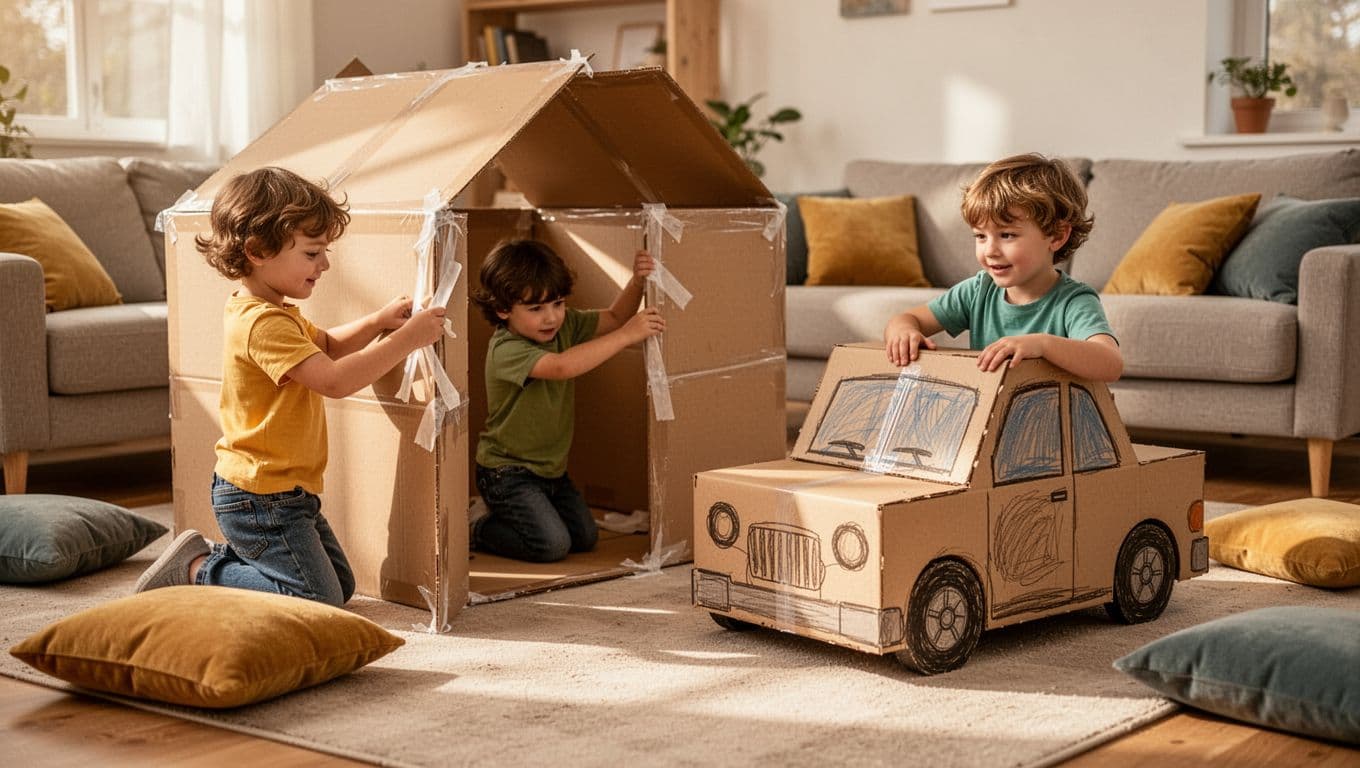
Large boxes spark big dreams. Save delivery ones from appliances or groceries. Tape flaps shut for sturdy bases.
Your child stacks boxes for fort walls. Add a blanket roof held by chairs. They crawl inside and defend from dragons. Or shape one into a race car. Cut windows; draw headlights with markers. Roll string wheels on the bottom.
Tape holds it all. They test doors by pushing in and out. This builds spatial skills because they fit pieces tight. Ask, “Does the door stay open?” They adjust and retry.
Strengthen grips from ripping tape. Plus, they run missions around the creation.
See step-by-step DIY cardboard box car instructions for extra details.
Store extras in outdoor toy trunks for blocks and cars when play ends.
Stack Big Blocks and Watch Physics in Action
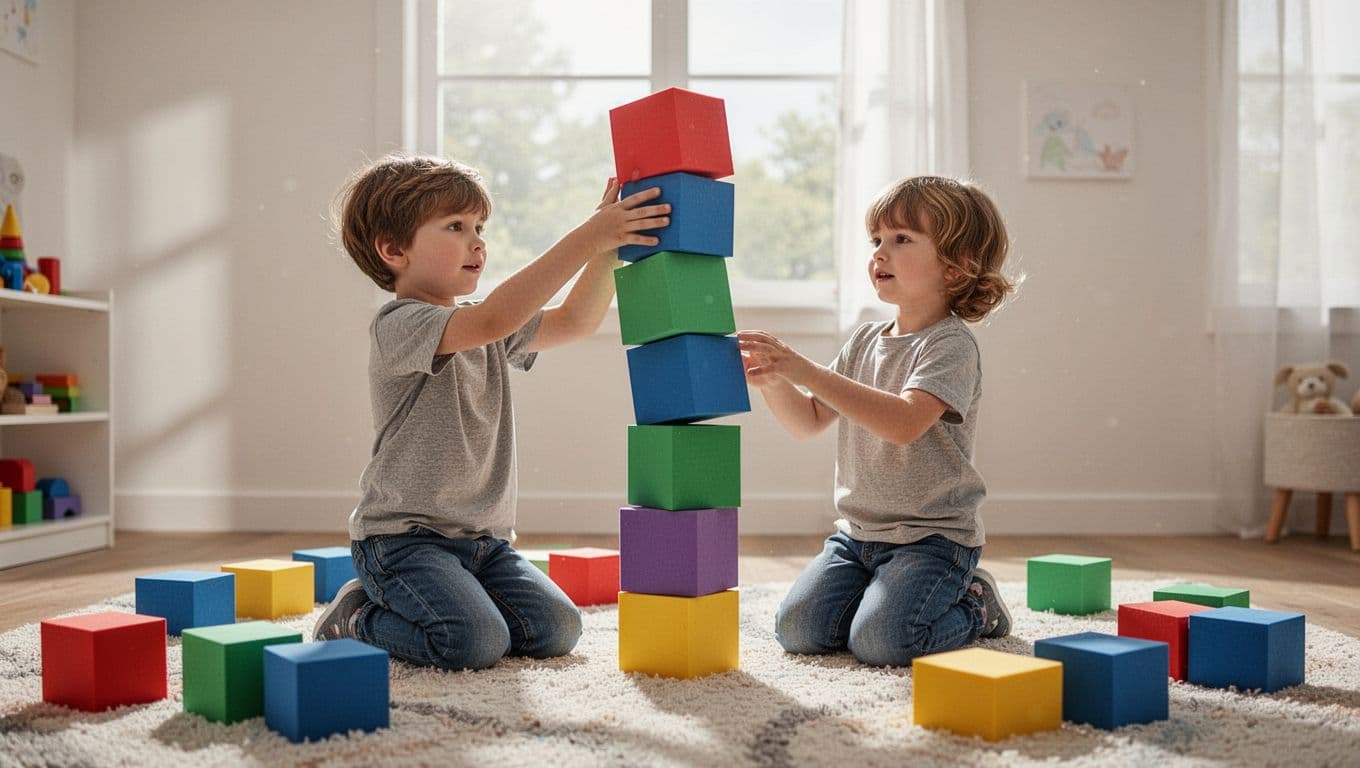
Pull out foam or wooden blocks in big sizes. Dump them on a rug for soft falls. Kids sort by color first; red with red.
Build patterns like pyramid bases or zigzag towers. Wide bottoms hold tall stacks steady. Your 5-year-old adds one block at a time. Count layers out loud.
It wobbles; they freeze and balance. Crash happens; laugh then chat. “Why did it fall? Too skinny on top?” Rebuild wider next time.
This shows gravity in real life. Hands get strong from lifting. They predict better after five tries.
To discuss stability more, check this structural engineer’s block guide.
Repeat daily. Patterns stick as muscles grow.
Play Balloon Tennis for Coordination Fun
Grab paper plates, craft sticks, and tape. Attach one stick to each plate back for a paddle. Balloons float slow; perfect for hits.
String a tape line across the room as net. Blow up one balloon. Kids tap it back and forth.
Count points aloud. “You got three! Mine’s two.” Switch sides after five. They chase misses and reset.
Eyes track the balloon. Arms swing full range. Feet shuffle for position. This boosts hand-eye links fast.
Add rules like no drops. Games last till arms tire.
Try KiwiCo’s balloon tennis setup for paddle tips.
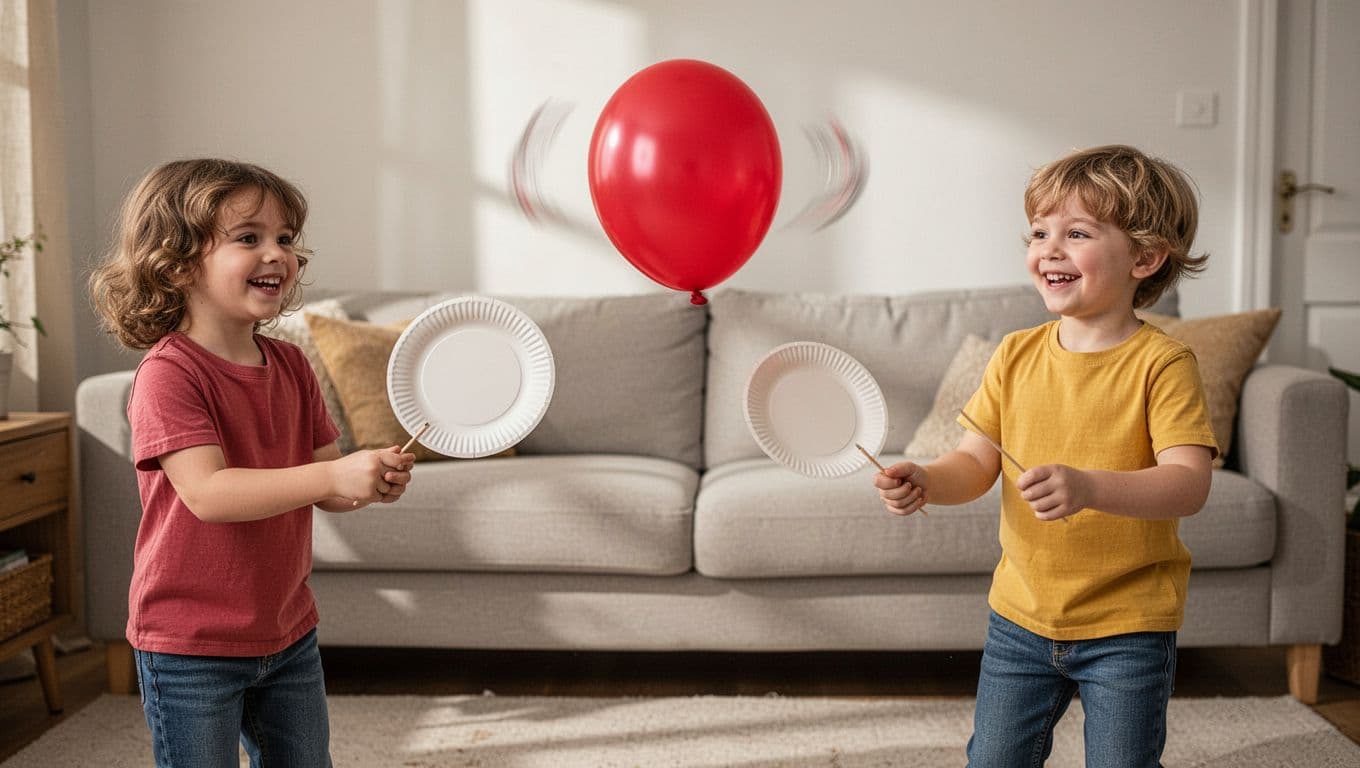
Play pairs siblings or you join. Coordination jumps after a week.
Conclusion
Screen-free activities deliver real wins for kids ages 4 to 7. They sharpen language through stories, math in the kitchen, and problem-solving on hunts. Plus, crafts and builds boost motor skills and creativity that last into school years.
Start easy with 15 to 20 minutes a day. Rotate setups to match moods; switch from balloon tennis to sensory bins when energy dips. Kids stay hooked because play feels natural.
Keep a fun journal to track progress. Jot down fuller sentences or steady towers. You’ll see gains fast.
These hands-on swaps fit 2026 unplugged trends perfectly. Gather family for laughs and bonds. What’s your top pick so far? Try one today and drop your favorite in the comments.
Save the pin for later

- 12 Things Pregnant Women Do When They’re Alone - June 7, 2026
- 25 Healthy Pregnancy Snacks You Should Try - June 7, 2026
- 100 Funny Baby Jokes That Will Make You Laugh - May 15, 2026