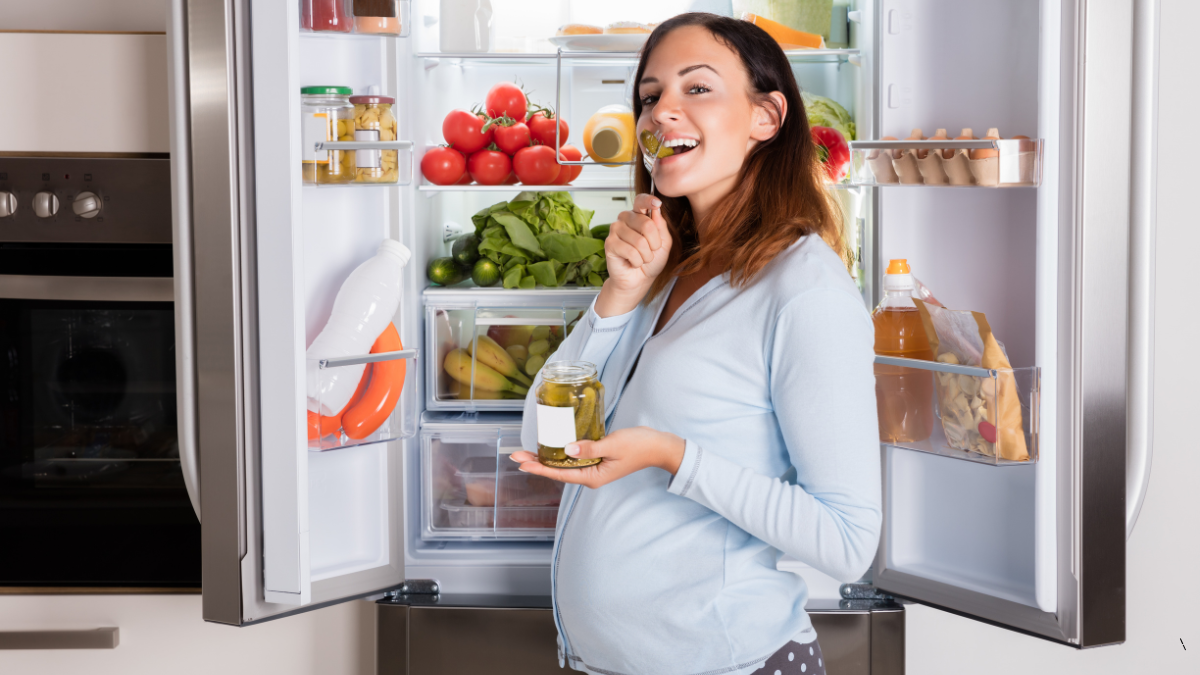
A simple third-trimester pregnancy meal plan works best when it feels realistic. You want meals that steady your energy, keep hunger in check, and sit well in a smaller stomach. That usually means a mix of protein, fiber, healthy fats, and gentle carbs spread through the day.
The sample below shows one balanced day of eating. You can swap foods based on what you like, what you tolerate, and what you have in the house.
A filling breakfast that starts the day strong
Breakfast should give you enough staying power to make it through the morning. Oatmeal, eggs, yogurt, fruit, whole grain toast, and smoothies all work well because they bring protein and fiber to the table. That combo helps with energy, and it can ease nausea if your stomach still feels touchy.
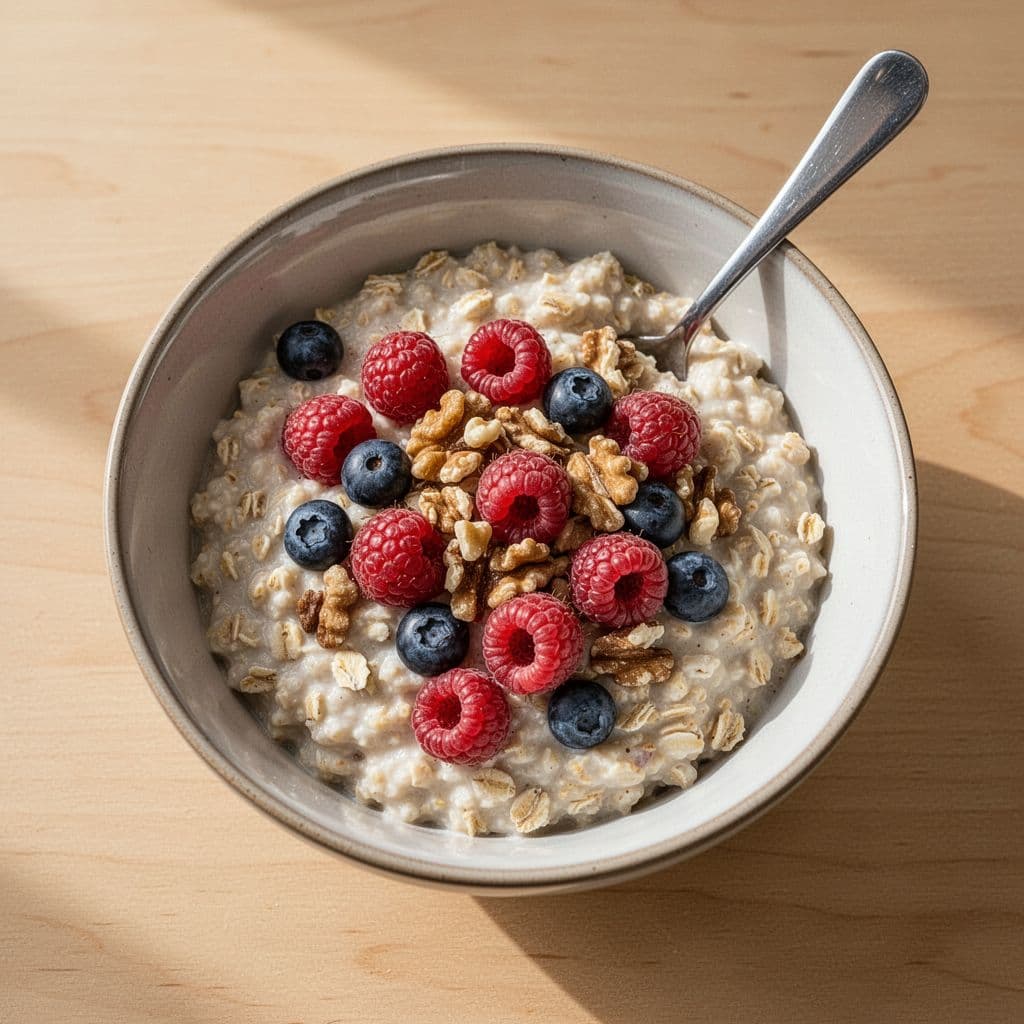
A warm bowl of oatmeal topped with berries and walnuts is a strong choice. Add milk or a spoonful of Greek yogurt on the side if you want more protein. If you prefer something savory, try scrambled eggs with whole grain toast and sliced avocado, or a veggie omelet with fruit.
A smoothie can also be a good fit when you do not want a big meal. Blend Greek yogurt, banana, spinach, and peanut butter for a quick breakfast that feels light but still keeps you full.
If you want more ideas for foods that support mood and steady energy during pregnancy, simple habits for a happier pregnancy journey pairs well with this kind of meal planning.
A few easy breakfast examples:
- Oatmeal with berries, walnuts, and milk
- Scrambled eggs, whole grain toast, and orange slices
- Greek yogurt with granola and sliced banana
- Smoothie with yogurt, spinach, fruit, and nut butter
Mid-morning and afternoon snacks that keep energy steady
Snacks matter in the third trimester because long gaps between meals can lead to energy dips. They can also leave you so hungry that you overeat later, which may make heartburn worse. A better approach is to keep snacks small, balanced, and easy to grab.
Look for a snack that pairs protein with carbs. That keeps blood sugar steadier and helps you stay satisfied longer. Fruit with nut butter, yogurt with berries, cheese with crackers, or hummus with veggies are all solid choices.
You might eat one snack mid-morning and another in the afternoon. If your day is busy, keep them simple enough to eat without much prep.
Some easy pairings include:
- Apple slices with peanut butter
- Greek yogurt with berries
- Cheese with whole grain crackers
- Hummus with carrot sticks and cucumber
- Banana with almonds
These kinds of snacks also work well when nausea comes and goes. A small bite can be easier than waiting until you feel empty and uncomfortable.
Lunch and dinner ideas that are balanced and simple
Lunch and dinner are easier to build when you follow a simple formula. Start with a protein, add a whole grain or starchy vegetable, then include at least one vegetable. That gives your body the mix it needs without making meal prep feel hard.
A chicken and rice bowl with broccoli is a good everyday lunch. Lentils with roasted vegetables and quinoa also give you protein, fiber, and iron in one bowl. For dinner, salmon with sweet potato and green beans is a strong option, especially because salmon brings omega-3s. Tofu bowls with brown rice, edamame, and mixed vegetables also work well if you want a meatless meal.
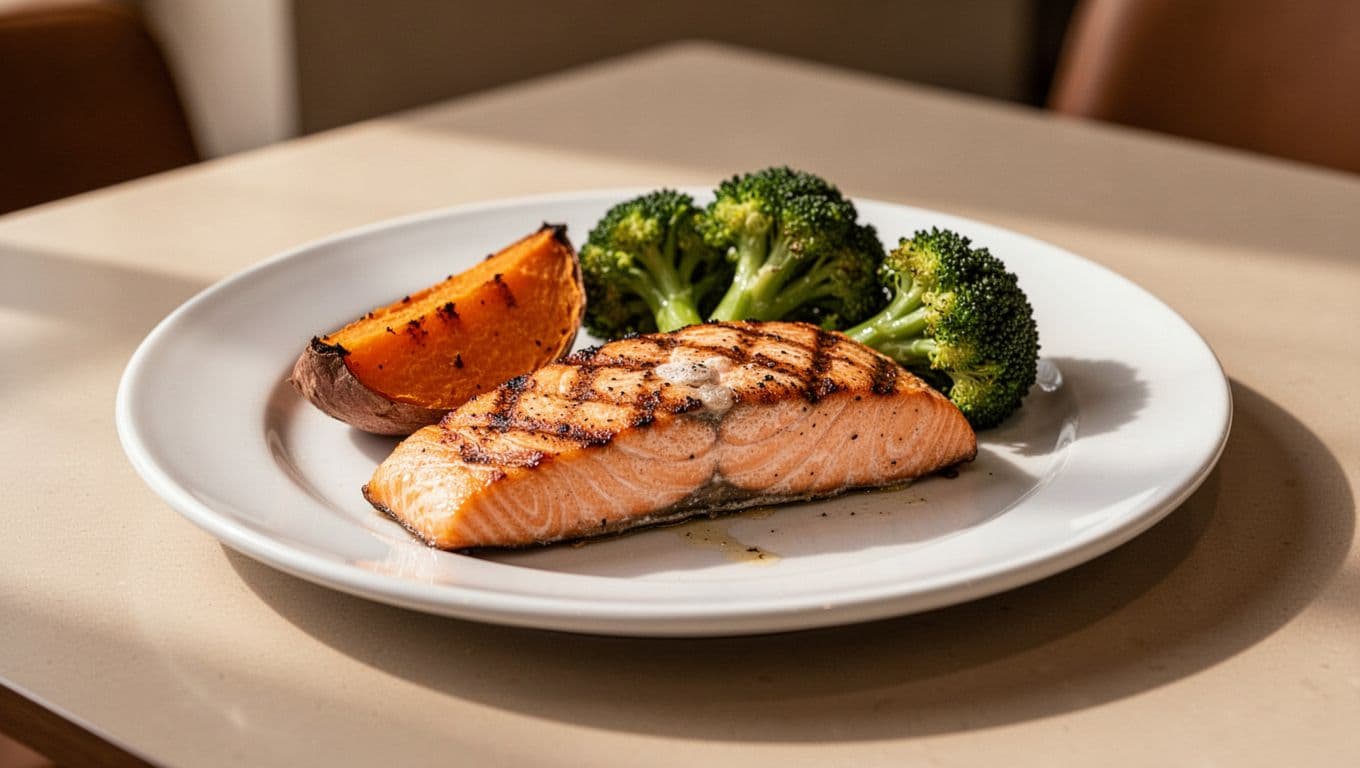
A balanced plate can be as easy as this:
| Part of the meal | Easy choices |
|---|---|
| Protein | Chicken, salmon, eggs, lentils, tofu, beans |
| Whole grain or starch | Brown rice, quinoa, oats, whole wheat pasta, sweet potato |
| Vegetable | Broccoli, spinach, carrots, peppers, green beans |
| Healthy fat | Avocado, olive oil, nuts, seeds |
For general third-trimester food guidance, healthy eating in your third trimester gives a helpful overview of foods to focus on. The main idea is simple, keep meals balanced and regular so you feel better throughout the day.
A sample lunch might look like this:
- Grilled chicken
- Brown rice
- Roasted carrots and zucchini
- A small side salad with olive oil
A sample dinner might look like this:
- Baked salmon
- Sweet potato
- Steamed broccoli
- A few slices of avocado
A bedtime snack that may help with hunger and sleep
A small bedtime snack can help if hunger wakes you up or if your stomach feels too empty at night. It can also be easier on heartburn than going to bed with a growling stomach. Keep it light, gentle, and easy to digest.
Good bedtime choices include toast with nut butter, yogurt with fruit, a banana with a few nuts, or whole grain crackers with cheese. If dairy sits well with you, warm milk or kefir can feel soothing too. The goal is not to eat a second dinner, just to take the edge off.
A few smart options:
- Whole grain toast with peanut butter
- Plain yogurt with sliced banana
- Crackers with cheese
- A small smoothie with milk or yogurt
If bedtime snacks help you sleep better, keep a few ready in the fridge or pantry. That way, you are not stuck searching for food when you are already tired.
The best foods to put on your plate each day
A strong third-trimester plate is built around a few steady food groups, not fancy recipes. You want foods that are easy to find, simple to cook, and packed with nutrients your body can actually use. When you build meals this way, you get more energy, better fullness, and a better chance of meeting your daily needs without overthinking every bite.
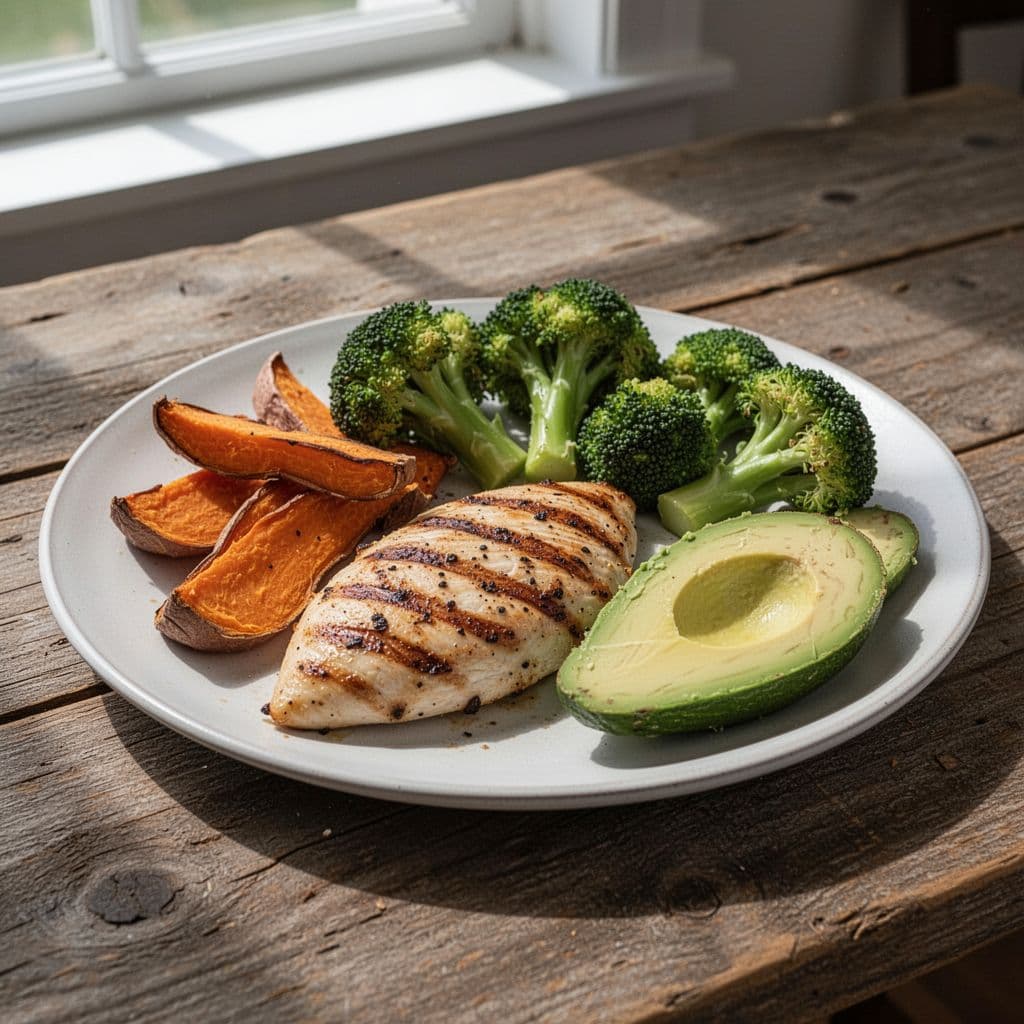
A balanced plate also makes it easier to eat enough when your stomach feels crowded. Instead of chasing perfect meals, focus on protein, smart carbs, calcium-rich foods, and healthy fats. That mix gives you more staying power and helps support your baby’s growth.
Protein foods that help build baby’s body
Protein should show up at every meal in the third trimester. It helps build your baby’s body and also supports your own energy needs, which can dip fast late in pregnancy.
Good choices include eggs, chicken, turkey, beans, lentils, tofu, fish low in mercury, and Greek yogurt. These foods are easy to mix into meals you already eat, like scrambled eggs at breakfast, chicken at lunch, or lentils at dinner.
A few practical ideas:
- Eggs with toast or vegetables
- Greek yogurt with fruit
- Chicken or turkey in a grain bowl
- Lentils or beans in soup, chili, or salad
- Tofu with rice and vegetables
- Salmon or other low-mercury fish
The Mayo Clinic pregnancy nutrition guide is a helpful reference for protein-rich pregnancy foods and other key nutrients.
Smart carbs that give you steady energy
Carbs are not the enemy here. The right ones help you stay fueled, and they can also keep hunger from swinging up and down all day. In the third trimester, that matters a lot.
Reach for oats, brown rice, quinoa, whole wheat bread, sweet potatoes, and fruit. These foods give you energy with more fiber, which helps with constipation and keeps meals more filling.
Fiber also slows digestion a bit, so your energy feels steadier after eating. That makes it easier to avoid the crash that comes from sugary snacks or refined grains. Whole grains plus fruit are a simple win, and they fit well into breakfast, lunch, or snacks.
If constipation is part of your pregnancy routine, fiber and water should go together. One without the other often falls short.
Calcium-rich foods for bones and teeth
Calcium helps both mom and baby. Your baby needs it for bones and teeth, and your body needs it too. That makes calcium-rich foods a daily priority, not an afterthought.
Build in foods like milk, yogurt, cheese, fortified plant milks, and calcium-rich vegetables such as broccoli, kale, and bok choy. If dairy sits well with you, it’s an easy way to get calcium without much prep. If not, fortified plant milks can fill the gap.
A few easy ways to add more:
- Drink milk with breakfast
- Add yogurt to a snack
- Melt cheese onto eggs or beans
- Use fortified plant milk in oatmeal or smoothies
- Serve greens with lunch or dinner
Healthy fats and omega-3s for baby brain growth
Healthy fats help keep meals satisfying, and omega-3s support baby brain growth. You do not need a lot of them at once. You just need them often.
Use avocado, nuts, seeds, olive oil, chia seeds, and low-mercury fish like salmon. These are easy add-ons, so they fit into meals without much effort. A few slices of avocado, a spoonful of chia seeds, or a drizzle of olive oil can make a simple plate more complete.
For a quick check on seafood choices, WebMD’s third-trimester food guide gives a helpful overview of low-mercury fish and other pregnancy-friendly foods.
Foods and habits to limit in the third trimester
The third trimester is a good time to be a little more selective with food. Your stomach is smaller, heartburn is more common, and food safety matters even more now. A few smart limits can make meals feel much easier on your body.
Foods to avoid for food safety
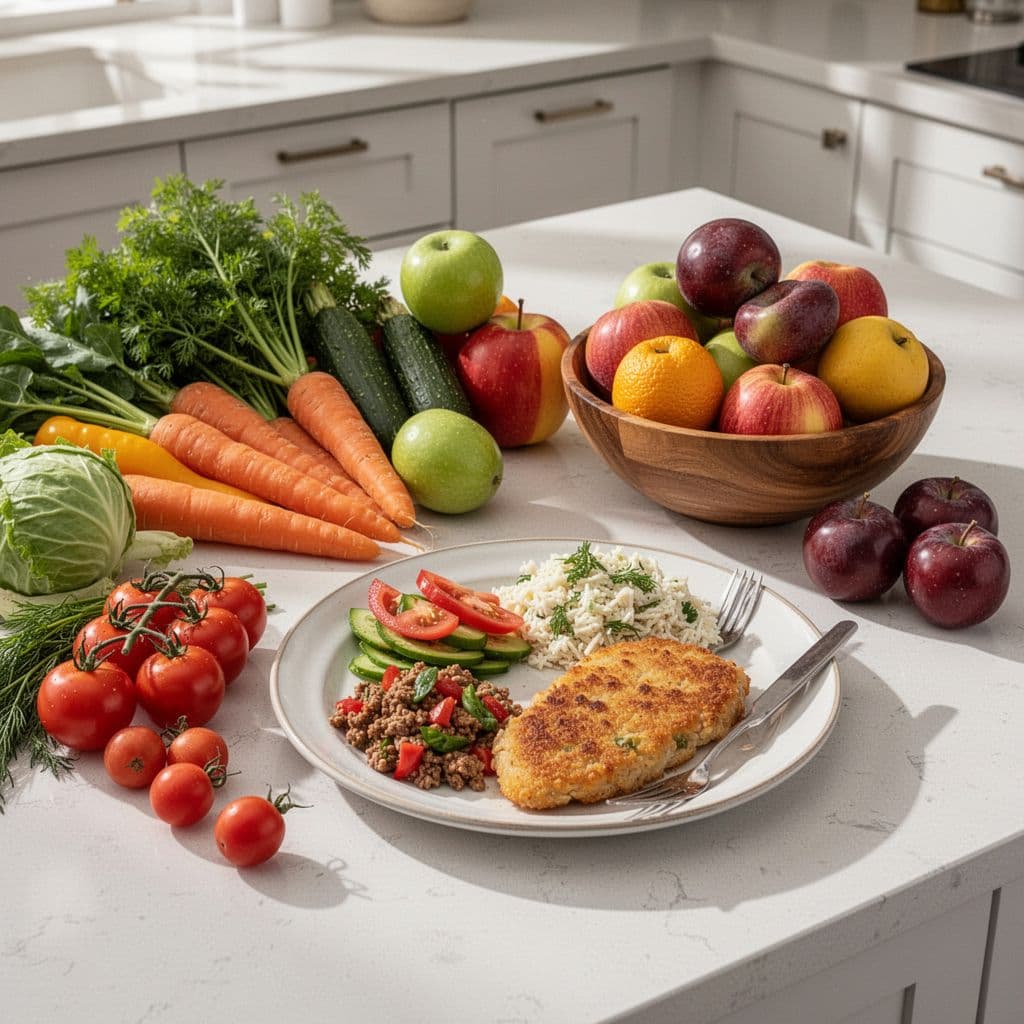
Some foods carry a higher risk of germs that can hurt you or your baby, so it’s best to skip them. That includes high-mercury fish like shark, swordfish, king mackerel, and tilefish, plus raw or undercooked meat, raw eggs, unpasteurized dairy, and raw sprouts. These foods can expose you to bacteria or parasites that are much easier to avoid than treat.
Deli meats, hot dogs, and refrigerated smoked seafood are safer only when reheated until steaming hot. For a fuller list, foods to avoid during pregnancy can help you spot the common problem foods fast.
The CDC also notes that pregnant women are more likely to get sick from foodborne germs such as Listeria, which is why careful handling matters so much in late pregnancy. See CDC food safety tips for pregnancy for a clear safety breakdown.
Foods that may make heartburn or swelling worse
Some foods are safe, but they may still make you feel worse. Greasy foods, very spicy foods, sugary snacks, and overly salty processed foods can all be trouble in the third trimester. Greasy meals often sit heavy, spicy foods can burn on the way down, sugary snacks can leave you hungry again fast, and salty foods may add to swelling.
Triggers vary from person to person, though. One mom might feel fine after pizza, while another gets heartburn from one slice. Paying attention to your own pattern matters more than following a rigid rule list.
A few common discomfort triggers include:
- Fried fast food
- Extra-spicy sauces
- Candy, pastries, and sweet drinks
- Chips, packaged soups, and processed lunch meats
When a prenatal vitamin is still not enough
A prenatal vitamin helps fill gaps, but it can’t replace food. Your body still needs calories, protein, fiber, and fluids from meals and snacks to keep you going through the day. If you skip too many meals, a supplement won’t fix low energy or an empty stomach.
Food gives your body what a pill can’t, especially when appetite changes late in pregnancy. Small, regular meals still matter, even on days when eating feels like a chore.
Easy meal prep tips that make healthy eating less stressful
A good third-trimester meal plan works better when the food is already halfway done. You do not need a full week of perfect prep. You just need a few shortcuts that make breakfast, lunch, dinner, and snacks easier to pull together when energy drops.
The goal is simple, save time and cut down on decision fatigue. When the fridge has a few ready-to-eat basics, healthy eating feels less like a chore and more like a habit you can repeat.
How to build a grocery list around a few core foods
Start with a short list of mix-and-match staples instead of planning dozens of meals. Pick a few items for each category, then repeat them in different ways through the week. That keeps shopping simple and makes meals faster to assemble.
A strong grocery list might include:
- Breakfast foods like eggs, Greek yogurt, oats, fruit, and whole grain toast
- Lunch and dinner basics like chicken, salmon, beans, rice, quinoa, and sweet potatoes
- Snack staples like cheese, hummus, crackers, apples, bananas, nuts, and carrots
Once those are in your kitchen, you can build meals without starting from zero. For a little more structure, meal planning for busy parents can help you set up a routine that takes less mental energy each week.
Simple prep ideas for days when you have no energy
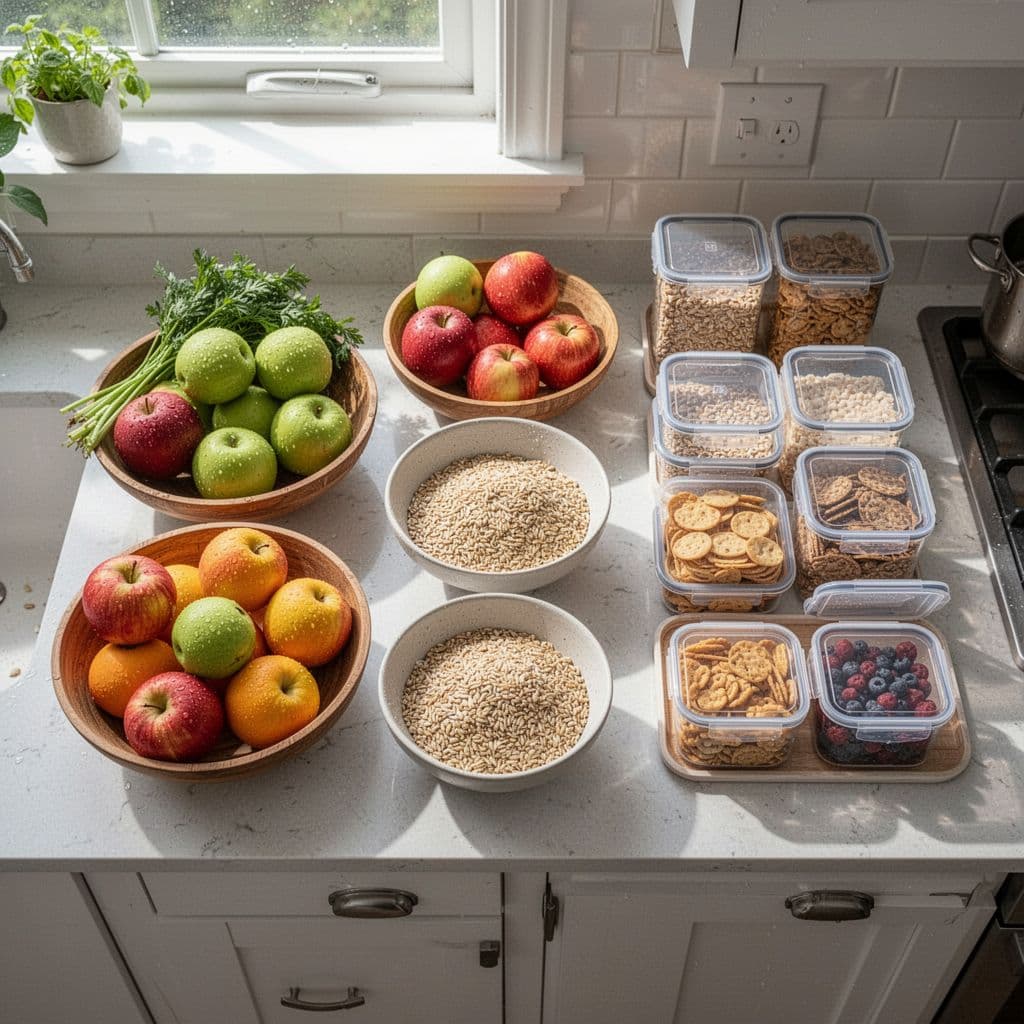
On tired days, prep the parts that save the most effort. Wash fruit as soon as you bring it home, cook a batch of grains, and hard-boil a few eggs for fast protein. Keep snack boxes in the fridge with cheese, fruit, nuts, or cut vegetables so you can grab them without thinking.
Batch cooking also helps a lot. Make one or two bigger recipes, then portion them into containers for lunch or dinner later in the week. A little prep goes a long way when your stomach is small and your energy is lower.
A few easy habits can make the week feel lighter:
- Wash and dry produce right after shopping.
- Cook rice, quinoa, or oats in batches.
- Store hard-boiled eggs at eye level in the fridge.
- Prep snack boxes for quick grab-and-go options.
- Freeze extra portions for the busiest days.
If you want a broader look at pregnancy-friendly prep ideas, the Nourish pregnancy meal plan has helpful examples you can adapt at home.
Healthy eating gets much easier when your kitchen does some of the work for you.
Conclusion
The best meal plan during your third trimester is one that is flexible, sustainable, and easy to follow. You don’t need perfection to fuel your baby and keep your own energy stable as you near your due date. Focus on filling your plate with plenty of protein, colorful fruits and vegetables, whole grains, calcium-rich options, and healthy fats. Most importantly, stay consistent with hydration to support your body through these final weeks.
These nutritional choices are part of the larger picture of preparing your body for labor. Remember that every pregnancy is unique, and your needs might change based on your comfort levels or health requirements. If you deal with persistent nausea, gestational diabetes, anemia, or ongoing food aversions, reach out to your doctor or a dietitian. They can help you tailor your eating habits to better support you and your baby throughout the rest of your pregnancy.
Save pin for later

- 12 Things Pregnant Women Do When They’re Alone - June 7, 2026
- 25 Healthy Pregnancy Snacks You Should Try - June 7, 2026
- 100 Funny Baby Jokes That Will Make You Laugh - May 15, 2026