
Your body is changing. Muscles are loosening, hormones are shifting, and your center of gravity is beginning to move.
As a parent, you’re entering one of the most challenging and rewarding times of your life. If you’re expecting a child, now is the time to focus on bringing your body and mind into balance.
Balance prepares your body for the strains of pregnancy and labor. It also calms your mind, bringing you closer to the new life you are nurturing. Prenatal yoga is an excellent way to maintain that balance throughout pregnancy.
This gentle practice is a form of low-impact exercise that strengthens and stretches the body through carefully designed poses and breathing techniques.
Expectant mothers use it to prepare for childbirth while fostering a sense of mental calm. Whether you’re a yoga beginner or an experienced practitioner, prenatal yoga can support you at every stage of pregnancy.
In this post, you’ll learn why prenatal yoga is so important and the many benefits it offers for both you and your baby. You’ll also find an easy, effective routine you can do at home.
Benefits of Prenatal Yoga
Pregnancy is a remarkable journey, but it also brings challenges—from the physical stress of carrying a baby to the emotional uncertainty of becoming a parent. Prenatal yoga can help you manage both.
Physical and Mental Benefits of Prenatal Yoga
Prenatal yoga supports both your physical and mental preparation for childbirth and provides a wide range of other benefits.
1. Prepares the Body for Birth
Prenatal yoga strengthens the pelvic floor, hips, and lower back, helping your body support the growing belly. These muscles play a vital role during labor and delivery.
2. Improves Flexibility and Stability
As your center of gravity shifts during pregnancy, yoga helps you maintain balance. The poses also increase flexibility, which keeps you comfortable and reduces the risk of strain.
3. Alleviates Discomfort
Pregnancy can cause aches, swelling, and stiffness. Gentle stretching and mindful movement improve circulation and ease discomfort in areas like the lower back, hips, and legs.
4. Encourages Relaxation and Deep Breathing
Prenatal yoga teaches deep, controlled breathing that calms the mind and relieves stress. These breathing techniques are also invaluable during labor to help manage pain and stay centered.
5. Builds Mindfulness and Connection
Yoga helps you slow down and connect more deeply with your body and your baby. It nurtures mindfulness and strengthens the emotional bond between mother and child.
Related: 15 Fun Ways to Exercise with Baby, Post-Pregnancy
Safety Tips
Consult your doctor or midwife
Always speak with your healthcare provider before beginning prenatal yoga or any new exercise routine.
Modify poses when necessary
Avoid deep twists, intense bends, or poses that strain the abdomen, especially after the first trimester. Move gently and listen to your body.
Stay hydrated
Drink plenty of water before, during, and after your session.
Avoid overheating
Practice in a cool, well-ventilated room and wear light, breathable clothing.
Ease into and out of poses
Move slowly and smoothly when transitioning between positions.
Listen to your body
If any movement causes pain or discomfort, stop immediately. Pregnancy is not a time to push limits.
An Easy Prenatal Yoga Routine at Home
You can do this routine in your living room or bedroom. You’ll need a yoga mat, a few pillows or cushions, and a chair or wall for support. Practice three to four times a week for about 30–45 minutes.
Begin each session by centering yourself and focusing on your breath.
1. Centering and Breath Awareness (5 minutes)
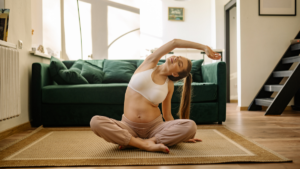
Sit cross-legged on your mat or on a cushion with your back straight.
Place one hand on your belly and the other on your heart.
Close your eyes and take deep breaths in through your nose and out through your mouth.
Focus on the rise and fall of your belly. Feel your baby’s movements and let your breath connect you both.
This quiet practice brings calm and focus, helping you transition into your yoga session.
Related: Safe Sleeping Positions During the Second Trimester of Pregnancy
2. Cat-Cow Stretch (5 minutes)
Begin on all fours, with your wrists under your shoulders and knees under your hips.
As you inhale, arch your back and lift your head and tailbone (Cow Pose).
As you exhale, round your back and tuck your chin toward your chest (Cat Pose).
Move gently through 5–10 breaths, flowing from Cow to Cat and back again.
This sequence stretches your spine, relieves back pain, and keeps your abdomen comfortable.
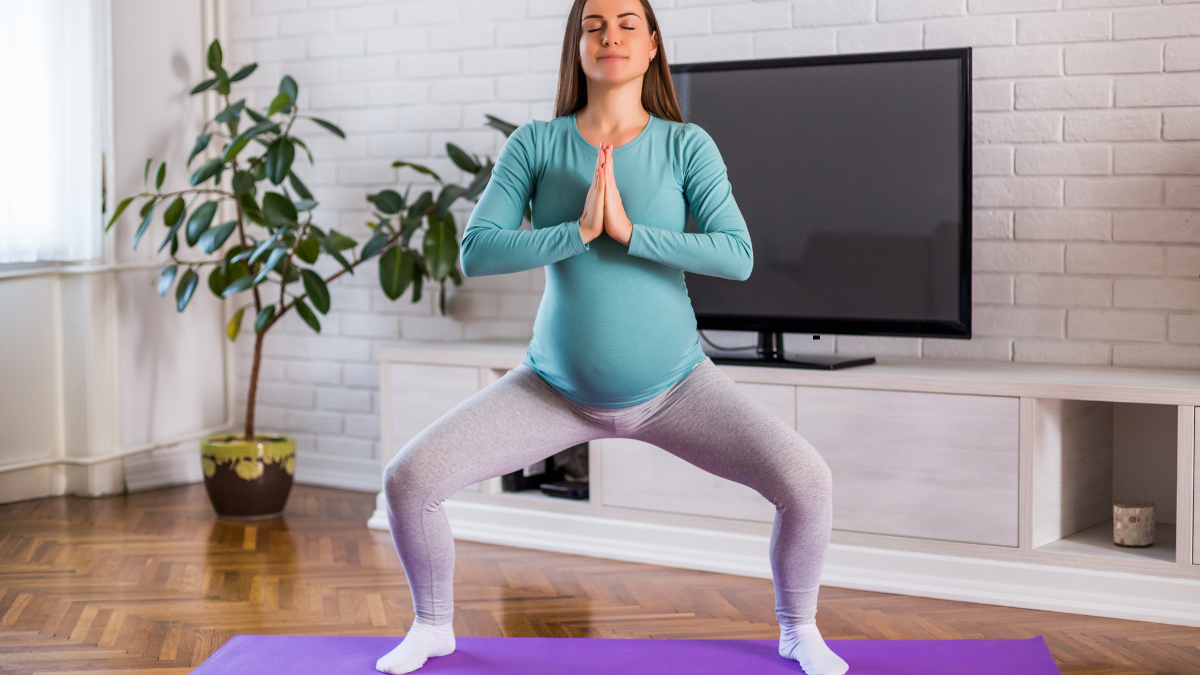
3. Supported Goddess Pose (5 minutes)
Stand with your feet wide apart and toes turned slightly outward.
Bend your knees gently, keeping your back straight.
Bring your hands together at your heart or rest them on your thighs.
Hold for 5–8 breaths, focusing on the strength of your legs.
This pose opens the hips, strengthens the pelvic floor, and prepares your body for labor.
If needed, rest your back against a wall for support.
Related:10 Types of Housework Pregnant Women Should Avoid
4. Warrior II (5 minutes)
Stand with your feet about three feet apart.
Turn your right foot out 90 degrees and your left foot slightly inward.
Bend your right knee directly above your ankle.
Extend your arms at shoulder height and gaze over your right hand.
Hold for 5–6 breaths, then switch sides.
Warrior II strengthens your legs, builds stamina, and opens your hips.
5. Wide-Legged Forward Bend (5 minutes)
Stand with your feet wide apart.
Inhale deeply, then exhale and hinge at the hips, bending forward slightly.
Rest your hands on a chair, yoga blocks, or the floor.
Keep your spine long and your knees slightly bent.
This pose relieves tension in the lower back and provides a gentle stretch without pressing on your belly.
6. Seated Bound Angle Pose (5 minutes)
Sit with the soles of your feet touching and knees open to the sides.
Place cushions under your knees for support.
Hold your feet and lengthen your spine as you breathe slowly and deeply.
This pose opens the hips, promotes circulation in the pelvic area, and soothes the body.
Soft music and dim lighting can make it even more relaxing.
Related: Fetus Not Moving? Try These 7 Tips At Home
7. Side-Lying Savasana (10 minutes)
Lie on your left side with a cushion between your knees and another under your head.
If needed, place a pillow under your belly for support.
Close your eyes and focus on your breathing.
This position improves blood flow to both you and your baby and helps your body fully relax.
You may also lie on your right side for balance.
How Often to Practice
Prenatal yoga can be done throughout pregnancy with slight adjustments:
-
First trimester: Keep movements gentle. Focus on breathwork and relaxation.
-
Second trimester: Energy often increases. Add poses like Warrior II and Goddess Pose for strength.
-
Third trimester: Emphasize relaxation, stability, and deep breathing. Use a chair, wall, or cushions for extra support.
Aim for 30 minutes of yoga daily. If you’re short on time, even 10 minutes of gentle movement followed by a walk can make a difference.
Related:10 Types of Housework Pregnant Women Should Avoid
Emotional Benefits of Prenatal Yoga
Pregnancy brings waves of emotion—joy, anticipation, fear, and uncertainty. Yoga helps you process and release these feelings.
As you move and breathe, you cultivate awareness and calm that carry into everyday life. Many mothers say yoga helps them feel more connected to their bodies, more confident about labor, and more present during pregnancy.
It also encourages self-compassion. Through yoga, you learn to value your body for its strength and purpose rather than its appearance—a deeply healing shift in perspective.
Post-Yoga Reflection
After your session, take a few quiet moments to reflect.
Feel your heartbeat, notice your baby’s gentle movements, and thank your body for its strength and resilience.
Whisper a few affirmations:
I am strong.
I am calm.
I am ready.
This small ritual helps you carry the peace of your practice into the rest of your day.
Conclusion
Prenatal yoga is a bridge between you and your child. It teaches patience, resilience, and acceptance as your body changes. With regular practice, you’ll strengthen your body, steady your mind, and prepare for birth with confidence and grace.
Every deep breath and gentle movement is an act of love—for yourself and your baby.
Unroll your mat, take a deep breath, and begin. Your body already knows what to do. Yoga simply helps you listen.
Save the pin for later

- 50 January Baby Shower Ideas for a Cozy Winter Celebration - July 26, 2026
- 15 Signs You Should Stop Working During Pregnancy - July 23, 2026
- A Little Boo Is Due Baby Shower Ideas - July 17, 2026