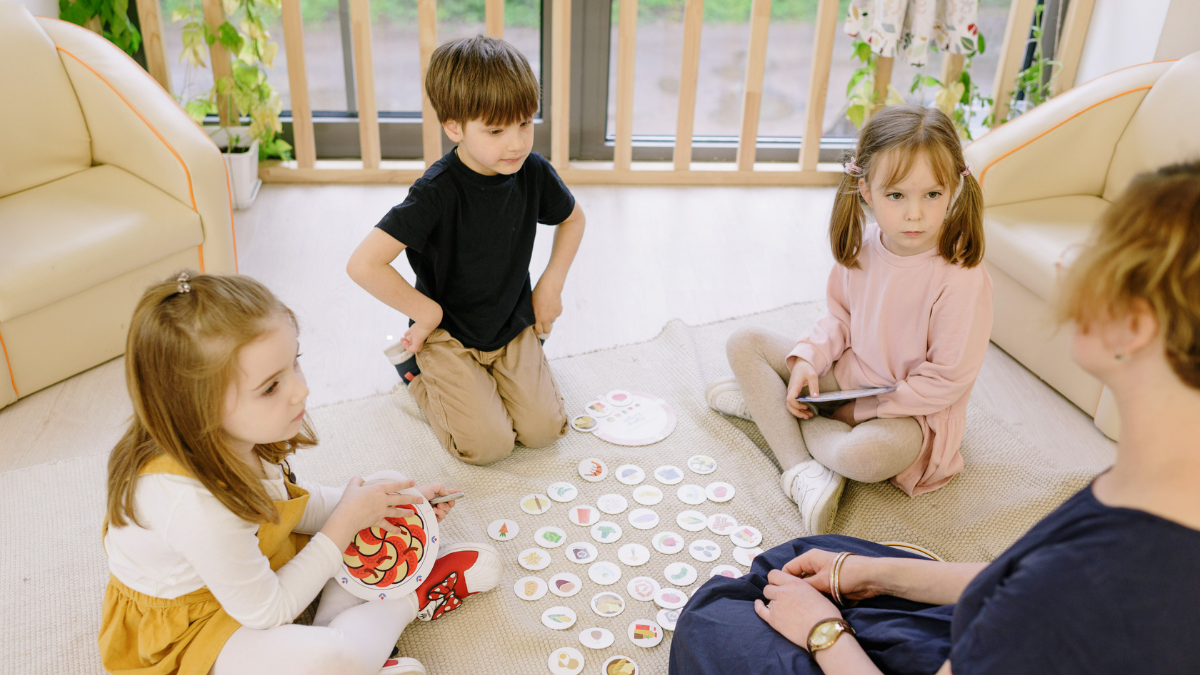

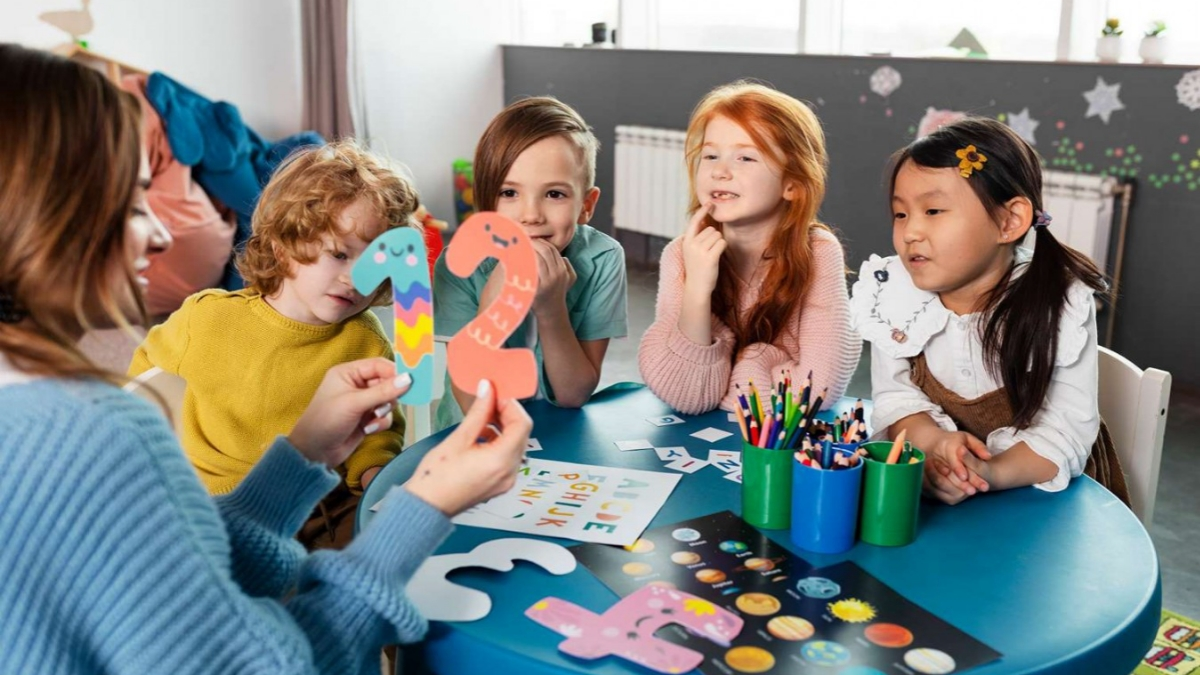
Playful learning is one of the most effective and powerful methods for engaging children and helping them develop skills and knowledge. In fact, it is an important part of every child’s life.
Kids love learning through play, but you, as their parent, caregiver, or teacher, should encourage playful learning by incorporating it into their routine.
How To Encourage Playful Learning In Kids
1. Set Up the Learning Environment
You can encourage playful learning by providing an environment and atmosphere where your child will want to discover and learn new things. Playful learning requires an organized, open, and engaging play area or classroom.
The space doesn’t need to be large or filled with expensive toys. On the contrary, it should have simple, interesting materials that allow your child to interact with objects and the environment around them.
Arrange toys, games, and books within their reach so they can choose what they want to play with at any time. Introduce a sensory play area with playdough, a water table, or a sandbox, or offer different sensory play activities.
Make sure your child can explore the materials freely and interact with them as they please. The better the environment for your child to play in, the more opportunities for learning they will have.
Related: How to Teach Kids to Write
2. Use Open-Ended Toys
Open-ended toys can be used in various ways to allow children to develop their creativity. These toys include building blocks, art supplies, puppets, and simple household objects such as cardboard boxes, spoons, and pots.
For instance, when playing with blocks, a child can build a castle, a garage, or a simple tower. Or, they can make a house out of a cardboard box. This kind of play can engage your child for hours and will also help them explore problem-solving, cause-and-effect relationships, and creativity.
3. Add Movement to the Learning Process
Children are naturally very energetic and love to be active. They often learn best when they are moving around.
Combining physical activities with learning is a great way to enhance the learning experience and keep your child engaged. By doing this, you can help them improve their attention span, coordination, and focus, as well as develop a better understanding of the subject you are teaching.
Try incorporating activities that involve movement, such as playing educational games that require your child to move around, using actions and gestures to illustrate a learning point, or even teaching them to dance or do yoga.
Related: 50 Fun Indoor Activities for Kids (That Don’t Involve Screens)
4. Let Nature Be Your Classroom
Playing outdoors is also an excellent way to encourage your child to learn more. Nature is a great classroom that can teach kids about the world around them.
It also offers endless opportunities for exploration, and children can learn a lot just by observing it. When you take your child outdoors, consider turning it into a learning experience.
Plan activities such as a scavenger hunt where you ask your child to find specific objects or look for different types of plants and animals.
You can also play games that teach your child to identify different colors, numbers, and shapes. Don’t forget about sensory learning—encourage your child to touch the leaves, listen to the sounds of the birds, and smell the flowers.
5. Encourage Pretend Play
Pretend play or imaginary play is another great way to stimulate your child’s imagination and creativity. This type of play helps kids practice problem-solving and develop their social skills.
You can create different scenarios and let your child play different roles, such as a doctor, chef, teacher, or even an explorer.
You can also give your child simple props such as a toy phone, a kitchen set, or a pair of dress-up clothes.
Then, you can ask them questions to make them think more critically about the situation they are in. For example, “What would you do if you were the president?” or “How do you think a firefighter feels when they put out a fire?”
6. Make Use of Books and Storytelling
Reading books and telling stories to children is another fun and effective way to promote learning. Storytelling is an excellent way to engage your child’s imagination and teach them important lessons in a meaningful way.
Read with your child every day, but don’t just read the words on the page. Engage with the story and ask open-ended questions such as, “What do you think will happen next?” or “How do you think the character is feeling right now?” You can even encourage your child to act out the scenes or come up with their own endings.
Storytelling doesn’t have to be limited to reading books. You can also create your own stories together and let your child take the lead in building the plot or coming up with the characters. You can also create storybooks with your child, drawing pictures and writing words together.
Related: 5 Ways to Help Your Kids Listen
7. Use Music and Dance
Music and dance are great tools to help your child learn and have fun. They are not only enjoyable but also help children develop rhythm, coordination, and motor skills. Music and dance can also improve your child’s memory, attention, and emotional regulation.
Sing nursery rhymes with your child or teach them to play musical instruments. Dance around the house or try playing games that involve moving to the beat of the music or imitating animal movements. In this way, you will not only help your child stay active but also introduce them to essential concepts.
8. Make Learning Social
Children learn a lot from playing with their peers or family members. By engaging in social play, your child will learn important skills such as cooperation, sharing, conflict resolution, and empathy. They will also learn to work as a team and work towards common goals.
Try to organize playdates or group activities that allow your child to engage in cooperative learning. For example, you can build a fort together, play a board game, or work on a craft project. These activities will help your child practice teamwork and learn to navigate social situations.
Related: 6 General Safety Rules You Should Teach Your Children
9. Provide Time for Free Play
Free play is another essential part of a child’s life. This is the type of play that children choose themselves, and it helps them develop creativity, independence, and problem-solving skills. It is important to allow children to have enough time for free play so they can explore their interests and express themselves without any pressure.
By giving children the freedom to choose their activities and guide their own learning, you are giving them a sense of ownership. This will help your child develop self-confidence and self-esteem and will also make learning more enjoyable for them.
10. Model Curiosity and Learning
Finally, one of the most effective ways to encourage playful learning in kids is to be a role model for them. Children often mimic the behavior of the adults around them, so if they see you are interested in learning, they are more likely to be interested in it themselves.
Try to be curious and excited about learning yourself and show your child that learning can be fun and enjoyable. Ask questions, explore new activities, and express your interest in your child’s learning process. When children see that you are actively participating in their learning, they are more likely to adopt the same attitude towards it.
Conclusion
Encouraging playful learning in kids is all about providing an environment conducive to exploration, discovery, and learning.
By offering a range of activities that combine movement, imagination, nature, books, music, and social interaction, you are giving your child the tools they need to develop and grow into well-rounded and confident individuals.
Remember that learning should never be a chore for your child, but rather a fun and exciting experience. When children learn through play, they are not only gaining knowledge but also developing a love for learning that will stay with them for life.
Save the pin for later

- How to Help a Child Deal With Anxiety at Home - September 12, 2026
- How to Prepare Your Child for the First Day of School - September 12, 2026
- Age-Appropriate Chores for Kids by Age Group - September 12, 2026