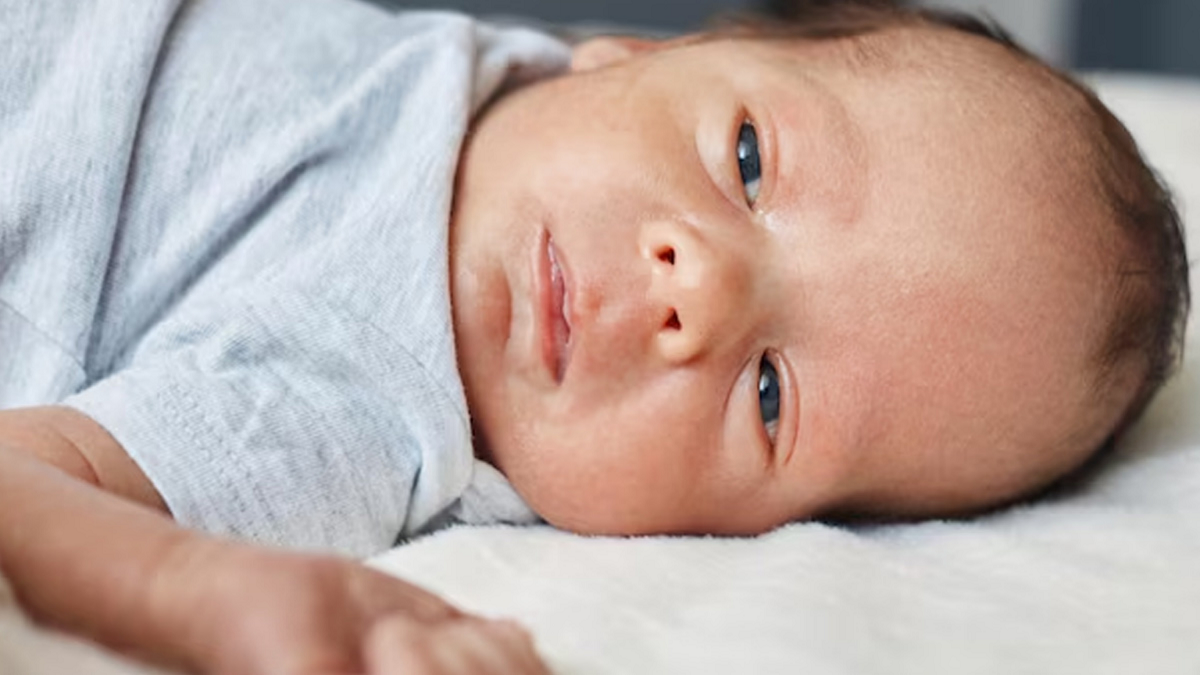
Your newborn has finally arrived, and you can’t wait to see their precious little face. But here’s a fun fact to help you in those early months: just like all the other senses, their vision is underdeveloped, too.
How well can a newborn baby see, then? We answer all of your questions about babies’ vision, including details about their color vision and whether they can focus properly.
How Well Do Newborns See?
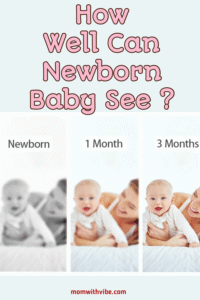
In short, a newborn can see. But it’s not nearly as clear as it will be later on. Their vision is somewhat limited in many ways. In terms of what they can see at birth, expect the following:
-
Blurry vision: Babies are born nearsighted, meaning they can only see objects clearly that are up to 8 to 12 inches (20 to 30 centimeters) away. That’s the distance between their eyes and your face when you’re holding them.
-
Sensitive to light: Babies have a harder time with bright lights and direct sunlight, which is why they tend to squint or turn away. This is normal and should improve as their vision develops.
-
Black and white: Babies can see black, white, and shades of gray right away, but color vision is somewhat limited.
-
Little depth perception: Because depth perception is a complex visual skill that requires both eyes to focus on the same object at the same time, babies don’t have much of it.
At What Age Do Babies Start Seeing Clearly?
Vision should start to improve by the time they’re 2 months old. It takes a few weeks for a newborn to start focusing on objects that are more than 12 inches away. By around 2 months, a baby will be able to track (follow) moving objects with their eyes. Here’s how babies’ visual development progresses:
1. The First Few Weeks: Focus on Faces
Babies’ vision in the first few weeks is focused primarily on close-up objects, generally the face of the person holding them. They are born with a preference for human faces, and your baby will likely appear to be looking right at you, even though they’re probably only seeing a blurry outline of your face.
The key factor here is contrast. Babies are most interested in high-contrast patterns, such as black-and-white photos or graphics, the edges of your face, or black-and-white toys or mobiles.
Related: 10 Benefits of Co-Sleeping with Your Baby
2. Around 1 Month: Tracking Objects
Around 1 month, babies begin to gain control of their eye muscles and will follow moving objects with their eyes. However, their ability to track is still limited. You might notice that their eyes don’t always move together, which is common at this age. Babies can “cross” their eyes or appear to look in different directions; this is normal, and eye coordination will improve with age.
3. 2 to 3 Months: Color Vision Begins
By 2 months, a newborn can see color, but they can’t yet tell the difference between shades of red and green. Color vision continues to develop after birth and should reach full capacity by 6 months. In the early weeks, babies are primarily seeing in black and white, but after a month or two, they start to see more colors and develop an interest in primary colors such as blue and yellow.
Related: What Your Baby’s Birth Weight Tells You
4. 4 to 6 Months: Better Depth Perception
Depth perception becomes more refined between 4 and 6 months. At this point, babies are able to focus better on objects at different distances. Their eyes also start to align properly, and they should be able to focus on objects more easily. This is an important stage in babies’ visual development because this is when they start to form a clear, consistent image of the world around them.
5. 6 to 12 Months: Fully Focused Vision
By 6 months of age, your baby should be able to focus on distant objects as well as nearby ones. Their eye coordination will continue to improve, and they will be able to track moving objects more easily. They are also starting to learn to recognize faces and objects and can spot familiar items from across the room.
Can Newborns See Colors?
Newborns do not have well-developed color vision. In fact, they don’t start to see color in anything but black and white until around 2 months old.
-
At Birth: Your newborn can see black and white, but color vision is somewhat limited. This is because the cells in the retina responsible for color vision are not fully developed at birth.
-
At 1 Month: By 1 month old, a newborn’s color vision is still developing and will improve significantly over the next few months. However, your baby will be able to see some color at this age and will be particularly attracted to primary colors like blue and yellow.
-
At 2 to 3 Months: By 2 to 3 months old, babies can see a full range of colors, but their color vision is not as sharp as adults’. They will be able to distinguish between basic colors but may have difficulty seeing more subtle shades or colors with low contrast.
-
At 4 to 6 Months: A newborn’s color vision is still developing at 4 to 6 months old, but it will be almost fully developed by this age.
Related: 18 Weird But Normal Things About Newborns
What Newborns See vs. Don’t See
Newborns can see objects at a distance of 8 to 12 inches and can detect motion. Here’s a quick look at what your newborn sees and what they do not:
What Babies Can See:
-
High contrast, bold patterns and edges, such as the shape of a face.
-
Faces—they have an instinctive preference for faces.
-
Movement.
What Babies Can’t See:
-
Fine details: A newborn’s vision isn’t sharp, so they can’t pick out small objects or patterns.
-
Distance: Babies can’t judge distance well.
-
The full color spectrum: Newborns can’t see all colors right away, especially red.
Tips for Helping Your Baby’s Vision Develop
Here are some tips to help your newborn’s vision develop:
-
Provide them with high-contrast visuals for the first few months, such as black-and-white mobiles or toys. This will help stimulate their vision and encourage them to focus.
-
Hold your baby close and let them look at your face as much as possible. This will help them learn to recognize faces.
-
Talk to your baby and use facial expressions when you do so. This will help them learn to read facial cues and associate words with objects.
-
Introduce bright colors gradually as their color vision develops.
-
Play games like peek-a-boo to help them track moving objects with their eyes.
-
Take them on walks so they can observe the world around them.
Related: 15 Fun Things To Do With Your New Born Baby
Eye Problems
Babies’ eyes should be fully developed at birth. However, some issues can develop that can affect their vision as they get older. Here are some common problems that can occur with a newborn’s eyes:
-
Strabismus: This is when the eyes are misaligned, and it can cause double vision. Strabismus can be present at birth or develop later on. If you notice that your baby’s eyes are crossed or misaligned, be sure to see a pediatrician or an eye doctor.
-
Lazy Eye: A lazy eye is when one eye doesn’t develop correctly and can lead to vision loss in that eye. Lazy eye can be caused by various factors, including genetics, trauma, or diseases.
-
Amblyopia: Amblyopia is a condition where one eye is weaker than the other and can also lead to vision loss. It is often caused by strabismus or a lazy eye.
-
Visual Impairment: This is when a baby has difficulty seeing, and it can be due to various causes, including genetics, diseases, or injuries.
-
Retinopathy of Prematurity (ROP): This is a condition that affects premature babies and can lead to vision loss. ROP is caused by abnormal blood vessel growth in the retina.
Conclusion
In summary, a newborn can see, but not very well. Their vision is blurry, and they have difficulty distinguishing colors. They are also sensitive to light. As they get older, their vision will improve. By the time they are a few months old, they should be able to see much better.
Save the pin for later

- How to Help a Child Deal With Anxiety at Home - September 12, 2026
- How to Prepare Your Child for the First Day of School - September 12, 2026
- Age-Appropriate Chores for Kids by Age Group - September 12, 2026