
By the time you start looking for parenting and baby advice, a ton of information is already available on the internet.
It’s hard to come up with parenting advice or play tips that are truly new and unique in some way. With that in mind, here are a few little-known activities to play with a newborn that you might not have tried.

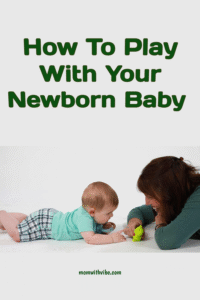
How To Play With Your New Born Baby
1. Experiment with Pitch and Volume of Your Voice
Yes, babies love hearing voices and will become instantly interested in anyone who’s talking. But did you know they’re also extra sensitive to changes in your voice’s pitch?
Try varying high and low voices, going from soft and quiet to an exaggerated sing-song voice. This works both for auditory stimulation and emotional response. They might even start smiling or cooing in response to a new pitch they haven’t heard yet.
Related: 10 Benefits of Co-Sleeping with Your Baby
2. Slow Blinking
Babies are some of the most observant people you’ll meet, even if it doesn’t always feel like it. A simple trick is exaggerating simple gestures, such as blinking slowly and deliberately. It might sound strange, but babies pick up on your expressions quickly.
By blinking slowly and deliberately, your baby will begin to attempt to mimic you. It’s part of the development of social cues and the mimicry required for speech.
3. Practice Some Breathing Exercises With Your Newborn
Your baby is highly sensitive to your breathing patterns and speed. If you want to try an unconventional activity, simply stop and take slow, deep breaths while holding your baby.
By taking slow, deep breaths throughout the day, you’ll be able to calm your child. You can even have them mimic your breathing by inhaling as you exhale. This is a subtle but powerful exercise for parent/child bonding.
Related: How to Bathe a Baby
4. Switch It Up by Changing Perspectives
While it’s traditional to hold your newborn baby upright in your arms, try giving them a brand-new view. For a few seconds at a time, you can invert your baby (slowly and with care, supporting their head and neck) just to give them an entirely different sensory input.
This will stimulate different parts of your baby’s sensory experience. By briefly “upside down”-ing your baby, it will surprise them in the most delightful way as they begin to understand more and more about up and down.
5. Play with Textures on Their Feet
It’s not uncommon to use your baby’s hands to help them develop reflexes. But what about their feet? Stroke your index finger from heel to toe on the bottom of their feet to help them get used to pressure and physical contact.
And, if they’re old enough to start kicking their legs, hold different textured fabrics up to their feet during tummy time. Give them silky, cotton, or woolen textures, all underfoot. As babies develop, these new textures will be another way to experience new sensory input.
6. Create a Wind Tunnel With Your Hand
Newborns are fascinated by air movement. Create a “wind tunnel” with your hand by moving it back and forth near their face, and they’ll be engaged by this new form of sensory input.
They’ll be able to see the movement of the air as it flows through their visual field, and they’ll be able to hear it. The visual and aural stimulation is a neat activity for your baby.
Related: Baby’s Ear Piercing: Right Age and 10 Things to Know About It
7. Mimic Baby Sounds
Infants and newborns will make all kinds of noises, such as coos, gurgles, sighs, and other charming sounds. When you play with your baby, instead of just smiling or replying with a word, try mimicking their exact sound.
With the same inflection and tone, mimic your baby in a soft cooing voice. They’ll learn to play back and forth with you, which will encourage language development and teach them that their voice is powerful and worth listening to.
8. Soft Shadows and Visual Stimulation
Newborns and infants are particularly sensitive to and interested in light and shadows. Have some fun playing with visual stimulation by moving shadows across the room and letting your baby follow them with their eyes.
Position yourself near a light source and move your hand or other objects to create a shifting shadow to keep your baby entertained. The simple movement and shadows are a fun, quiet way to interact with your baby.
Related: 9 Reasons Why You Don’t Love Your Newborn Baby at First Sight
9. Sync Gentle Rhythms Together
Babies are incredibly sensitive to rhythms. Try syncing a gentle, rhythmic activity with your baby. This could be rocking your baby in your arms to a song or tapping your foot to the rhythm of their breathing.
When you create a rhythm between you and your baby, it will put your baby at ease and create a sense of emotional attunement and connection. It will also help them process patterns of movement, touch, and sound.
10. Play With Your Baby Silently
Some of the best playtime is spent with your newborn simply by being in the same room and silently playing together. Sit with your baby and, together, observe the world around you.
You can make eye contact, but let your baby explore all the sensory information they’re given without the addition of toys, music, or other distractions. This is a great way to engage with your baby in a mindful way that is quiet and calm.
11. Wrap Your Baby in a Soft Object While Rocking Them
Swaddling is well known as a way to calm babies. You can take it one step further and add a soft object, like a light stuffed animal or a small piece of cloth, for them to hold onto while you swaddle and rock them.
The extra layer of soft fabric against their body and the added stimulation of having a safe object to hold onto creates an additional source of comfort and soothing.
Related: What Your Baby’s Birth Weight Tells You
12. Mirror Play by Moving and Dancing With Them
Newborns and babies love staring at themselves in a mirror. Try taking things further by moving your baby’s hands and feet in time with you while you move in front of a mirror.
Begin to sway from side to side while in front of the mirror, using your baby’s hands or feet and moving them as you move. Your baby will be entranced by the motion, and you can have fun “dancing” with them.
13. Create a Quiet Symphony of Household Objects
Skip the noisy toys and playtime music by making a “soundtrack” out of your own household items. Use empty glasses to tap on, a bag of rice or beans to shake, or a metal surface with a spoon.
This creates a subdued atmosphere of simple sounds and rhythm that will capture your baby’s attention. As your child grows, the auditory stimulation is a different way to create engagement than with regular toys.
14. Stroke Their Hands With a Massage-Like Touch
As much as we want to just hold and cradle our babies, using more structured touch can help with their sensory development. Gently stroke your baby’s hands in a “massage-like” fashion, tracing over each individual finger.
The slow and deliberate touch helps them focus on their own body while also improving their sensory awareness. A light circular motion on the palms or fingertips is also soothing and feels wonderful for your baby.
Related: How to Get Your Baby to Accept a Bottle
15. Use a Soft Fabric Tunnel to Encourage Movement
Spread out a soft piece of fabric or cloth on the floor, such as a soft scarf or towel, and make a tunnel. Encourage your baby to reach through the “tunnel” with their hands or feet and start to push on the fabric.
They’ll push at it, and you can assist them by guiding their hands or feet through. The tunnel provides a tactile experience and encourages them to use their own limbs to explore.
16. Use Soft Aromatherapy (Baby-Safe)
Add a sensory component to your playtime by using baby-safe essential oils (lavender, chamomile). Apply a few drops of a safe oil diluted with water to a cloth or your own body.
By using an essential oil (vetted by a pediatrician) and gently massaging your baby’s back or chest, you can offer a multi-layered sensory experience. Just be sure that the oils you use are safe for infants before applying them.
17. Take Advantage of the Outdoors
Use your outdoor environment to bring your baby some natural sensory play. Let them feel the wind on their skin or the sun on their cheeks.
Take them by a tree with rustling leaves or to a fountain where they can see the moving water. Nature provides a source of sights, sounds, and even smells that no toy or indoor play experience can duplicate. The birdsong and soft wind can be incredibly soothing for a baby and their development.
Conclusion
As you can see, there are all sorts of unique activities to play with a newborn. And while the list is far from exhaustive, you can see that many of the activities we can do are instinctual or natural behaviors.
Save the pin for later

- Dry Cough in Kids: 5 Causes and Safe Solutions - September 23, 2026
- How to Help a Child Deal With Anxiety at Home - September 12, 2026
- How to Prepare Your Child for the First Day of School - September 12, 2026