Picture this: You’re nestled in bed, engrossed in a riveting novel, with your cooing baby peacefully sleeping by your side.
Your breastfeeding journey is off to an ideal start; it’s natural, fuss-free, and painless. You and your baby are latching perfectly and feeding like champs. You can’t wait to continue this beautiful breastfeeding experience for months to come, and you want to enjoy every moment of it. But alas, new mothers can quickly become jaded when their nipples become sore and painful to the touch.
Sore nipples usually occur in the first couple of weeks of breastfeeding and range from mild discomfort and sensitivity to sharp, shooting pains in the nipple area. If your nipples are tender, cracked, chapped, or bleeding, it can affect how you experience breastfeeding, but that doesn’t have to be the case.
Today, we will guide you through five essential tips to heal your sore nipples and allow you to continue breastfeeding comfortably.
5 Ways to Heal Sore Nipples from Breastfeeding
1. Get the Right Latch
Proper latching is essential for comfortable and effective breastfeeding. If your baby is not latching correctly, it can cause significant pain and discomfort to the nipples.
A deep latch ensures that your baby’s mouth is covering a large portion of the areola, not just the nipple, and this will help avoid excessive friction on your nipple, making your nursing experience more comfortable.
Make sure your baby’s body is aligned with yours and their tummy is against your chest. Their head should be tilted back a little, with their chin touching the breast.
Check for a correct latch by ensuring your baby takes a big mouthful of the breast, not just the nipple, and that their mouth is wide open with the lips flanged out instead of tucked in. To encourage this position, hold your breast with your fingers in a “C” shape to keep the nipple close to the baby’s mouth and allow them to open wide and latch on deeply.
When your baby has latched on, you should feel no discomfort, pain, or pinching of the nipple. You may experience some discomfort or pain when they first latch on, but this should quickly subside as they start sucking. As you progress with your breastfeeding journey, you’ll get better at encouraging a deep latch, and your baby will get used to latching correctly.
Related: Is Ginger Tea Safe While Breastfeeding?
2. Apply Nipple Creams or Ointments
If your nipples are cracked, chapped, or sore, applying nipple creams or ointments can work wonders. Many over-the-counter nipple creams and ointments have soothing ingredients, such as lanolin, coconut oil, or shea butter, that can moisturize and repair the skin.
Choose natural and hypoallergenic products to prevent further irritation or infection. These products create a protective barrier to prevent further irritation, and some have moisturizing properties that can help your nipples heal. Here are some of the best options for soothing sore nipples:
-
Lanolin Creams: Lanolin is a natural oil derived from sheep’s wool. It is one of the most effective and safest ointments for mothers and their babies. You don’t need to wipe off the lanolin before feeding, as it’s safe for your baby to ingest.
-
Coconut Oil: Coconut oil has natural anti-inflammatory properties that can soothe inflamed and sore skin. It also has antimicrobial properties that can help prevent infection. Coconut oil is safe for babies to ingest.
-
Aloe Vera: Aloe vera is a natural plant extract that has cooling and soothing properties. It can help with sore, cracked, or blistered nipples.
Apply nipple cream or ointment to your nipples after every feed or as often as your nipples feel dry and sore. This will help reduce pain and aid in the healing process.
Related: How To Increase Breast Milk Supply
3. Let Your Nipples Air-Dry After Breastfeeding
Air-drying your nipples after each feed is an excellent way to heal sore nipples. When you keep your nipples covered by clothing or nursing pads, moisture and sweat are trapped against the skin, creating a breeding ground for bacteria and further irritation.
Give your nipples a few minutes to air dry after each feed, as this will keep them dry and aid in the healing process. You can also gently pat the area with a clean towel or cloth to remove any extra moisture. If you’re comfortable going braless, it’s also a good idea to let your nipples breathe when you’re at home.
Related: How To Stop Breast Feeding A Two Year Old
4. Use a Nipple Shield Temporarily
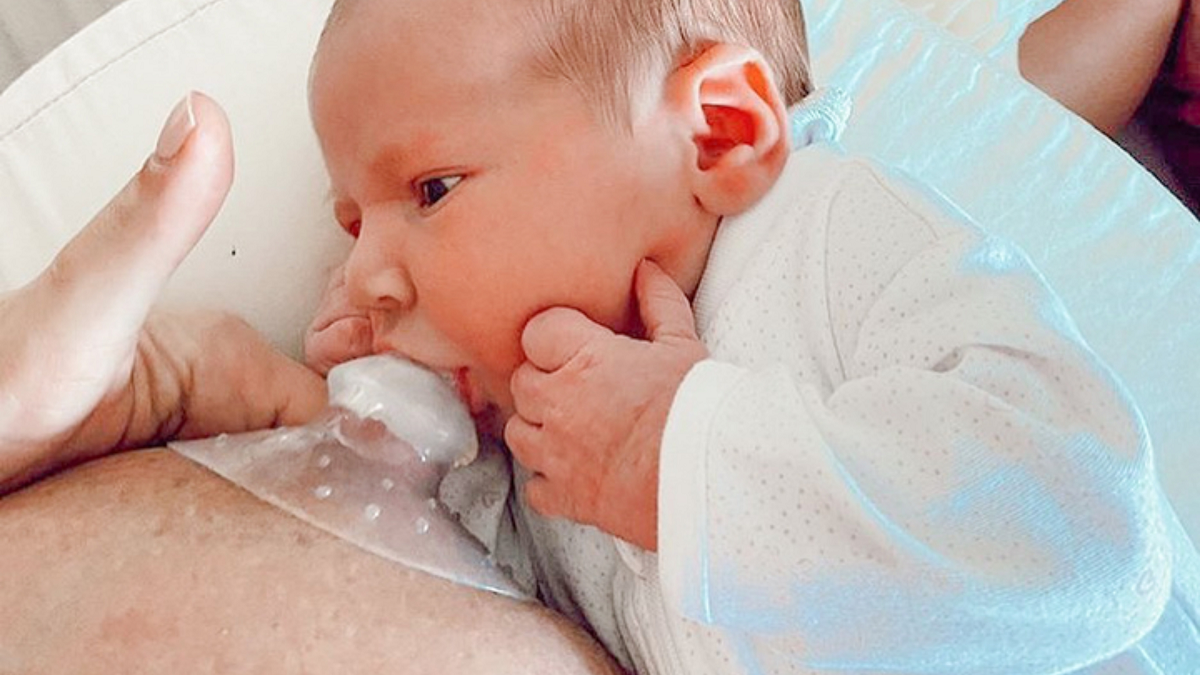
A nipple shield can offer a temporary solution to severe nipple pain. A nipple shield is a soft and flexible silicone nipple that fits over your nipple during breastfeeding.
Nipple shields can be beneficial if:
-
Your nipples are cracked, bleeding, or sore: The nipple shield creates a protective barrier between your nipple and your baby’s mouth and can help prevent further damage to the nipple.
-
Your baby is latching too aggressively: A nipple shield can help cushion the area against your baby’s aggressive latch.
-
Your nipples are flat or inverted: Nipple shields can help babies latch more easily, even if you have flat or inverted nipples.
If your nipples are painful, you can use a nipple shield temporarily to help ease your baby onto the breast and feed comfortably. The nipple shields come in various sizes and have one small hole for the nipple and others for the baby’s mouth.
Ensure you consult a healthcare provider or lactation consultant for the correct fit. Keep in mind that using nipple shields for an extended period can affect milk flow and the baby’s feeding patterns, so work on improving your baby’s latch to wean them off it.
Related: What Are White Curds in Babies? Causes, Symptoms, and What to Do
5. Take Good Care of Your Skin and Breast Hygiene
Skin infections can be a cause of sore nipples. Thrush, a yeast infection in the breasts and nipples, and mastitis, a bacterial infection in breast tissues, are caused by fungi and bacteria in the breasts, nipples, and surrounding areas.
Maintaining good breast hygiene is essential in preventing and healing sore nipples. Proper hygiene can also help identify potential infection sources, such as saliva, yeast infection, or improperly cleaned breastfeeding equipment.
Wash your breasts and nipples with warm water and a mild, unscented soap daily and be gentle on the skin. Avoid heavily scented soaps, lotions, or sprays on your breasts, as they can cause skin irritation.
Change wet or soiled nursing pads frequently and wash your bras after each use, too. If you have flu-like symptoms such as pain in the breasts, consult your doctor, as you may have an infection that can be transmitted to the baby if left untreated.
Conclusion
Sore nipples don’t have to ruin your breastfeeding experience. Remember that nipples take time to heal, so be patient with the process. Healing sore nipples is gradual and varies from mother to mother.
With the right latch, nipple cream or ointments, and breast hygiene, you can expect to heal faster and continue breastfeeding without any further problems.
Contact your doctor or a lactation consultant if the pain persists, increases, or continues after your nipples have healed. Lactation consultants can help you determine the cause of your nipple pain and improve your latch so you can continue breastfeeding without further issues.
Breastfeeding isn’t for everyone, and in some cases, mothers should supplement with formula. While breastfeeding can come with some pain, the rewards make it all worthwhile. By following these expert tips, you can continue breastfeeding in comfort and enjoy every moment of the journey with your baby.
Save the pin for later

- Dry Cough in Kids: 5 Causes and Safe Solutions - September 23, 2026
- How to Help a Child Deal With Anxiety at Home - September 12, 2026
- How to Prepare Your Child for the First Day of School - September 12, 2026